The literary landscape of young adult fantasy has been forever shaped by the feline-led epic Warriors. For over two decades, Erin Hunter’s sprawling saga of territorial clans, celestial prophecies, and intergenerational conflict has captured the imaginations of millions. Now, as the franchise prepares for a massive expansion—bolstered by the recent announcement of a collaborative animated adaptation from Tencent and Disney—a new generation of readers is discovering the forest. At the heart of this resurgence is a bold creative undertaking: the adaptation of the original novel arcs into a refined, high-fidelity graphic novel format.
Leading this charge is the latest release in the New Prophecy graphic novel series, a masterful reimagining that proves even the most storied sagas can be revitalized through the lens of sequential art.
The Prophecy Awakens: Core Narrative and Stakes
The narrative of The New Prophecy picks up long after the initial peace of the forest has begun to fracture. Brambleclaw, a warrior of ThunderClan burdened by the legacy of his villainous father, Tigerstar, finds himself at the center of an existential crisis. When StarClan—the ethereal collective of ancestral spirits—delivers a cryptic vision of a “sun-drowned place” and an impending doom, the Clans must look beyond their petty borders to survive.
Brambleclaw is tasked with leading a group of representatives from each of the four Clans on a perilous quest to “listen to Midnight.” What follows is a journey that pushes the limits of feline endurance and forces the characters to confront a truth that will fundamentally alter the structure of their society. As Brambleclaw navigates the wilderness, he is accompanied by the mischievous Squirrelpaw, whose drive often mirrors the intensity of her father, Firestar, back in the crumbling heart of the forest. The stakes are nothing short of cataclysmic, promising a future that threatens the very existence of the Clans.
A Chronology of the Transformation
To understand the significance of these graphic novels, one must look at the trajectory of the series. The original Warriors novels, published over many years, established a dense, serialized lore that can be daunting for new readers.
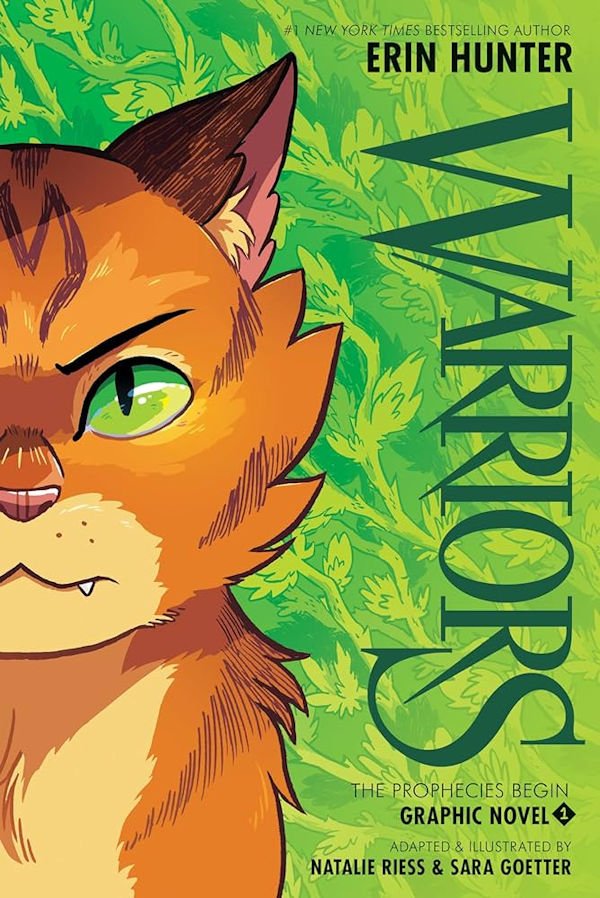
- The Foundation (The Prophecies Begin): Initially, skepticism surrounded the decision to adapt completed arcs. However, the first graphic novel set, illustrated by Natalie Riess and Sara Goetter, silenced critics. It transformed the prose-heavy origin story into a visual triumph, proving that the medium could handle the nuance of the Warriors universe.
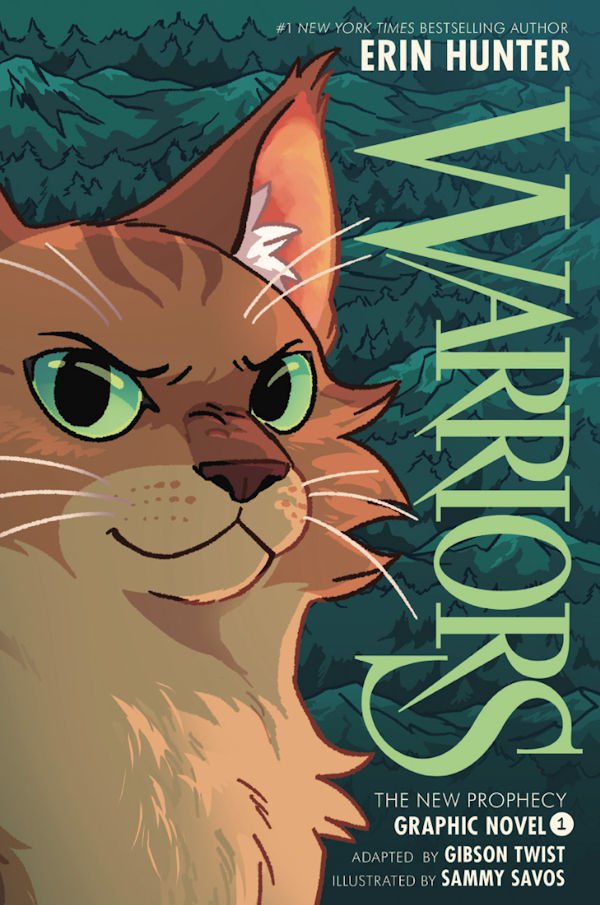
- The Current Chapter (The New Prophecy): The current adaptation, brought to life by the artistic vision of Sammy Savos and the narrative restructuring of Gibson Twist, focuses on the second major arc. This set effectively compresses six novels into three graphic volumes, a feat of editing that maintains narrative momentum without sacrificing the "everyday" atmosphere that fans cherish.
- The Future (The Animated Horizon): The momentum of these graphic novels serves as a vital bridge toward the upcoming Disney and Tencent animated project. By modernizing the character designs and visual language of the series, the graphic novels are setting the aesthetic tone for how Warriors will be perceived in the era of streaming media.
Artistic Fidelity and Character Depth
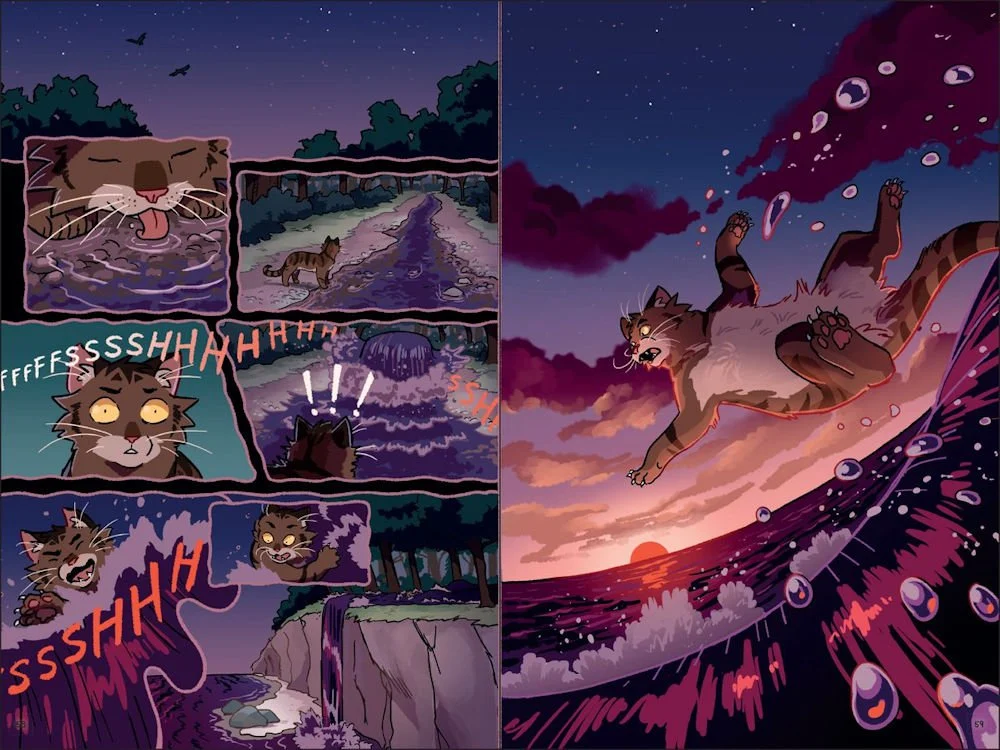
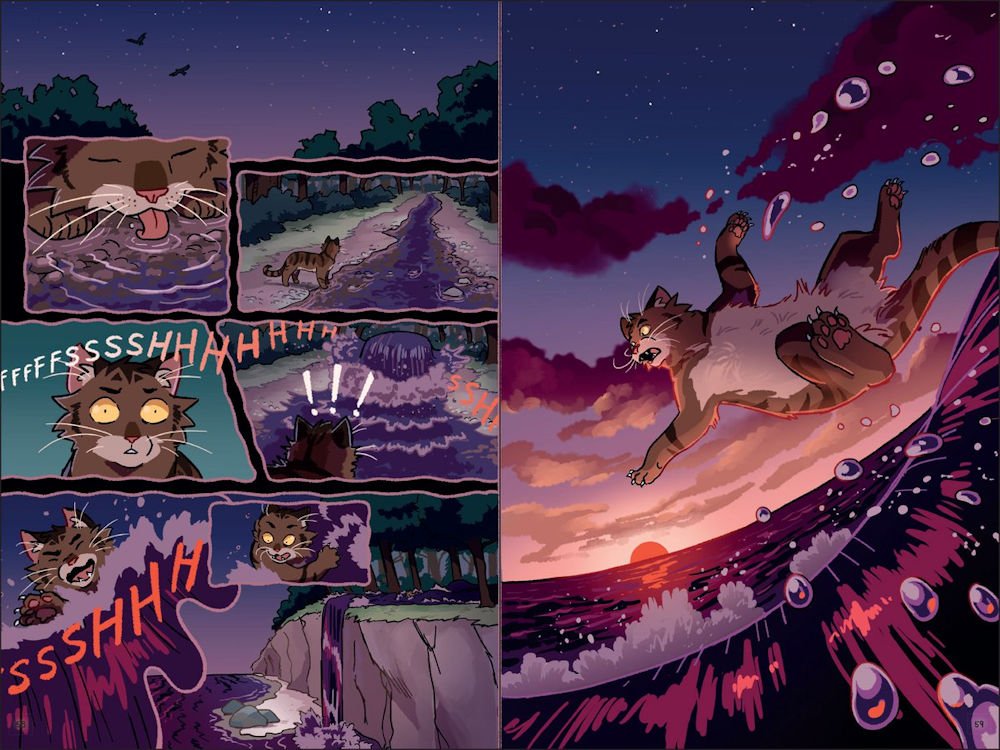
One of the most profound challenges in adapting prose to a graphic medium is the interpretation of internal monologue. In the original novels, character development is often conveyed through lengthy passages of thought. In the New Prophecy graphic novel, artist Sammy Savos replaces internal narration with emotive character design.
Subverting Archetypes
The adaptation excels at adding dimension to characters who were previously viewed as one-dimensional. Take, for instance, Crowpaw. In the novels, he is often relegated to the role of the "prickly apprentice" whose dialogue is frequently dismissive. Savos’s artistic interpretation reveals a deeper layer of insecurity and a desperate need for validation. His visual expressions communicate a vulnerability that text alone struggled to capture, transforming him from a source of conflict into a character of genuine pathos.
Similarly, Squirrelpaw is depicted with a level of precociousness and self-awareness that moves her beyond the "spoiled daughter" trope. By showing, rather than telling, the creative team has allowed readers to empathize with her motivations, making her journey feel earned.
The Power of Background Storytelling
Perhaps the most striking aspect of this adaptation is the "environmental storytelling." Savos and Twist utilize the background of their panels to maintain the sense of a living, breathing community. The inclusion of Cloudtail and Brightheart—appearing in the margins, sharing chores, and interacting in quiet, intimate moments—provides a grounding force that the original text often sidelined in favor of plot-heavy sequences. These visual cues serve as a testament to the world-building, ensuring the forest feels like a home, not just a battlefield.
Supporting Data: Balancing Adaptation and Abridgment
Adapting six novels into three volumes is a dangerous endeavor. Historically, such compressions result in pacing issues or the loss of "filler" content that provides necessary world-building. However, the creative team behind The New Prophecy has demonstrated a surgical precision in their pacing.
The decision to end the first graphic novel at the climax of the original book Moonrise was met with critical acclaim. By choosing a high-stakes, narrative-appropriate conclusion, the team avoided the "awkward cliffhanger" syndrome that plagues many serialized adaptations. Furthermore, the inclusion of "hunting scenes" and "apprentice lessons" ensures that the reader never feels the world is empty. The Gathering scenes, in particular, are rendered with a scale that feels grand yet intimate, avoiding the clutter of unidentifiable characters and focusing on the weight of the moment.
Implications for the Franchise
The success of these graphic novels carries significant implications for the future of the Warriors brand.
- Accessibility for New Readers: As the franchise prepares for a wider audience via animation, these graphic novels serve as the perfect entry point. They provide a "low-barrier" experience that respects the source material while offering a modern visual style that resonates with current design trends in YA literature.
- A Shift in Editorial Strategy: The positive reception of these adaptations suggests that HarperCollins and the Erin Hunter team may shift their strategy toward "reimagining" rather than just "republishing." This opens the door for potential expansions, side stories, or even further visual adaptations of the later arcs.
- The "Legacy" Effect: By involving talent like Savos and Twist, the publishers have signaled that the Warriors brand is not merely a nostalgia play for older readers. It is a living, evolving intellectual property capable of attracting high-level artistic talent, which is essential for maintaining relevance in a competitive market.
Final Reflections
In the crowded market of fantasy literature, Warriors has maintained its dominance through sheer consistency and a loyal, ever-growing fan base. The graphic novel adaptation of The New Prophecy is more than just a summary of events; it is a profound enhancement of the original story.
Whether you are a long-time reader returning to the forest after a decade, or a newcomer drawn in by the promise of the upcoming animated series, this adaptation offers a compelling reason to revisit the clans. It is a reminder that the best stories are those that can be retold, reshaped, and revitalized for each new generation. With the final volumes on the horizon, the future of the Warriors series looks not only bright but more vibrant than ever before. For those looking for an escape that balances high-stakes drama with the comforting, grounded rhythms of nature, the search ends in the pages of this forest-bound epic.