Asro
Asro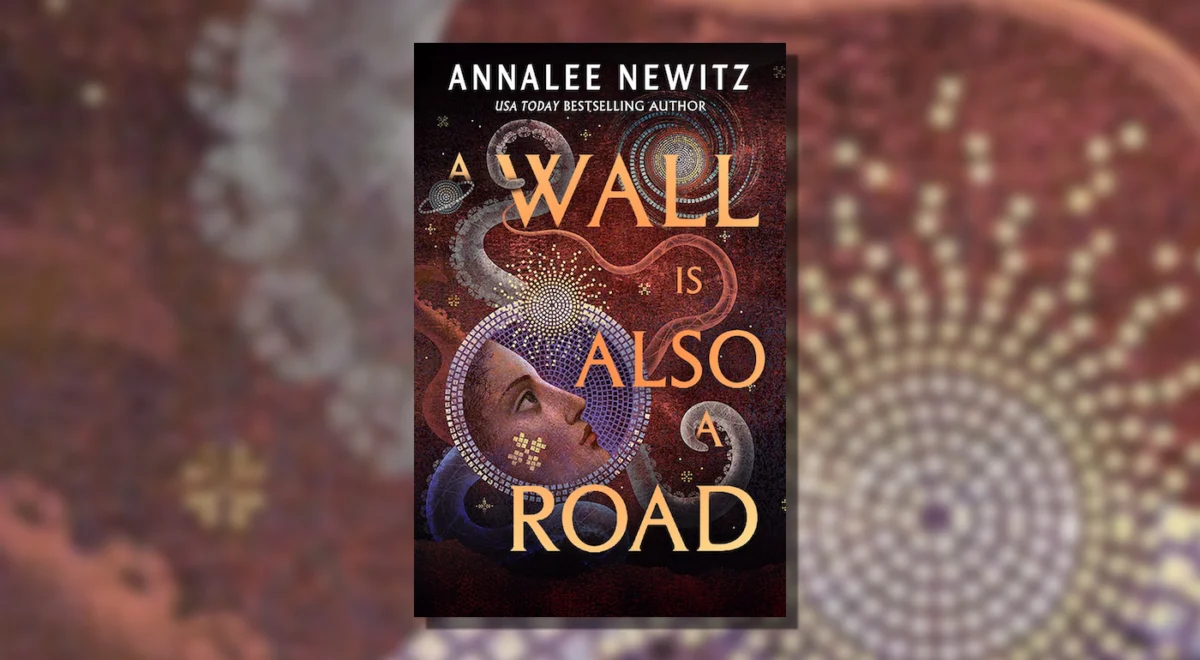
On October 6th, the literary landscape will shift toward the stars—or rather, toward the space between them—with the release of Annalee Newitz’s latest science fiction tour de force, A Wall Is Also a Road, published by Tor Books. Newitz, known for their ability to blend rigorous scientific extrapolation with profound sociological inquiry, offers a narrative that challenges the very definitions of personhood, academia, and the nature of connection.
The novel introduces readers to Gardenpath, a graduate student from an ancient, space-faring civilization of slime molds. While pursuing a high-stakes academic career, Gardenpath discovers a remote, seemingly insignificant planet, only to find it teeming with complex ecosystems and, more shockingly, a form of multicellular life that defies their current understanding of evolutionary biology.
Main Facts: A Paradigm-Shifting Discovery
The core premise of A Wall Is Also a Road centers on the friction between institutional ambition and the chaotic, messy reality of discovery. Gardenpath, an ambitious amoeba-scholar, journeys to a remote spiral arm of the galaxy intending to complete their research and secure their place in the scientific canon.
However, the protagonist’s arrival on a planet they call "the Spigot" upends their trajectory. They are not merely observing a biological anomaly; they are witnessing a world of "Animal2"—a multicellular, high-functioning, and seemingly conscious species that exists in stark contrast to the prokaryotic life Gardenpath expected to find. This discovery is not merely a win for their CV; it is a catalyst for an existential crisis. Gardenpath’s journey from a cold, data-driven academic to a compassionate observer of a burgeoning culture forms the narrative spine of the novel.
Chronology: The Evolution of a First Contact
The progression of Gardenpath’s research on the Spigot follows a slow, meticulous timeline, mirroring the rigors of scientific fieldwork.
- Arrival and Initial Mapping: Gardenpath lands on a rocky, tectonically active peak. Their initial goal is "ground-truthing"—confirming the geological stability of the site. They are surprised by the presence of a vast ocean and complex plant life.
- The Prokaryotic Discovery: Gardenpath identifies nitrogen-exchanging plants and simple prokaryotic organisms, which they initially assume are the primary life forms.
- The Multicellular Revelation: The discovery of a writhing, complex invertebrate triggers a shift in perspective. Gardenpath realizes the planet is a thriving, multi-layered ecosystem, not a barren field of proto-life.
- The Observation of Animal2: Over the course of hundreds of rotations, Gardenpath observes "Animal2," a creature composed of twenty trillion eukaryotes. They record the creature’s "nonrandom vibrations," which mimic syntax, suggesting a level of social organization previously thought impossible for multicellular animals.
- The Personal Pivot: As Gardenpath interacts with Murtis, a resident of the city of Pompeii, the focus shifts from data collection to cultural immersion. The professional objective of "passing the Fifth Exam" begins to lose its luster compared to the lived experience of understanding the residents of the lupanar.
Supporting Data: The Biological Paradox
Newitz builds the world of the Spigot on a foundation of "hard" science, utilizing concepts from evolutionary biology and astrobiology to make the setting feel lived-in and authentic. The "Animal2" organisms are the central scientific puzzle.
In Gardenpath’s records, the organisms are described as having specialized apertures that emit complex, repeated phrases. Their behavior is social, and their physical structure is a "grotesque beauty" of elongated, rhythmic forms. Gardenpath’s data collection—which includes 700 life-forms—indicates that these creatures are not just biological accidents but deliberate agents. The contrast between these "clusters" of cells and the "Rational People" of Gardenpath’s home world serves as a commentary on how we define intelligence. Are we defined by our individual autonomy, or by the communal intelligence of our cells? Newitz suggests that the latter is far more complex than the academy is willing to admit.
Official Responses: The Academic Burden
Within the narrative, the "official response" to such a discovery is one of skepticism and institutional gatekeeping. Gardenpath is acutely aware of the shadow cast by Professor Arch, a mentor who warned them that discovery is rarely rewarded fairly.

The pressure on Gardenpath is twofold:
- The Burden of Complexity: Because the life on the Spigot is so vastly different from the standard models taught in the galaxy’s universities, Gardenpath knows their findings will be dismissed as noise or error.
- The Institutional Bias: The academic structure of Gardenpath’s home civilization favors the "Rational People." For a slime mold to succeed, they must work five times harder than their peers, like the favored student Wainscot.
This creates a "publish or perish" dilemma that is elevated to the level of species survival. If Gardenpath publishes, they risk professional ruin. If they don’t, they leave a world of wonder uncatalogued. This tension serves as a critique of the real-world pressures faced by researchers today, who often find themselves trapped between the desire for genuine discovery and the rigid, often exclusionary demands of academia.
Implications: A New Way to Belong
The most profound implication of A Wall Is Also a Road is the redefining of "home." Through their friendship with Murtis, a local who takes the star-traveling slime mold into her care, Gardenpath discovers that "a wall is also a road."
This metaphor, central to the book’s title, suggests that the barriers we build between ourselves—whether they are biological, cultural, or academic—can, if navigated correctly, become pathways to understanding. Gardenpath’s evolution is not just about the science; it is about the emotional labor of belonging. By letting go of the need for academic validation, Gardenpath begins to value the "nonrandom vibrations" of connection over the cold, sterile data of the Fifth Exam.
Final Thoughts: The Intersection of Science and Sentiment
Annalee Newitz has crafted a novel that is as much about the process of learning as it is about the thrill of discovery. By placing a slime-mold graduate student in the middle of a seaside town populated by immigrants and shopkeepers, Newitz uses the lens of science fiction to examine the human (and post-human) condition.
The beauty of the Spigot—its orange and pale-ice skies, its bioluminescent nights, and its inhabitants who "touch each other, winding arms like friends"—serves as a poignant reminder that existence is meant to be felt as much as it is to be measured. For readers who enjoy the meticulous world-building of Le Guin or the sociological curiosity of Octavia Butler, A Wall Is Also a Road is an essential addition to the canon. It is a story for anyone who has ever felt like an outsider in their own field of study, and a testament to the idea that the greatest discoveries are often the ones we don’t plan for.
A Wall Is Also a Road by Annalee Newitz is available for purchase starting October 6th through Tor Books. As Gardenpath concludes in their own research notes: "There was so much to do, and their ultimate reward would probably be a failing grade on the First. Discovering nothing was bad, but discovering everything? That was worse." It is precisely that "everything" that makes this novel impossible to put down.


 Asep Darmawan
 Rifan Muazin