
 Dwi Wanna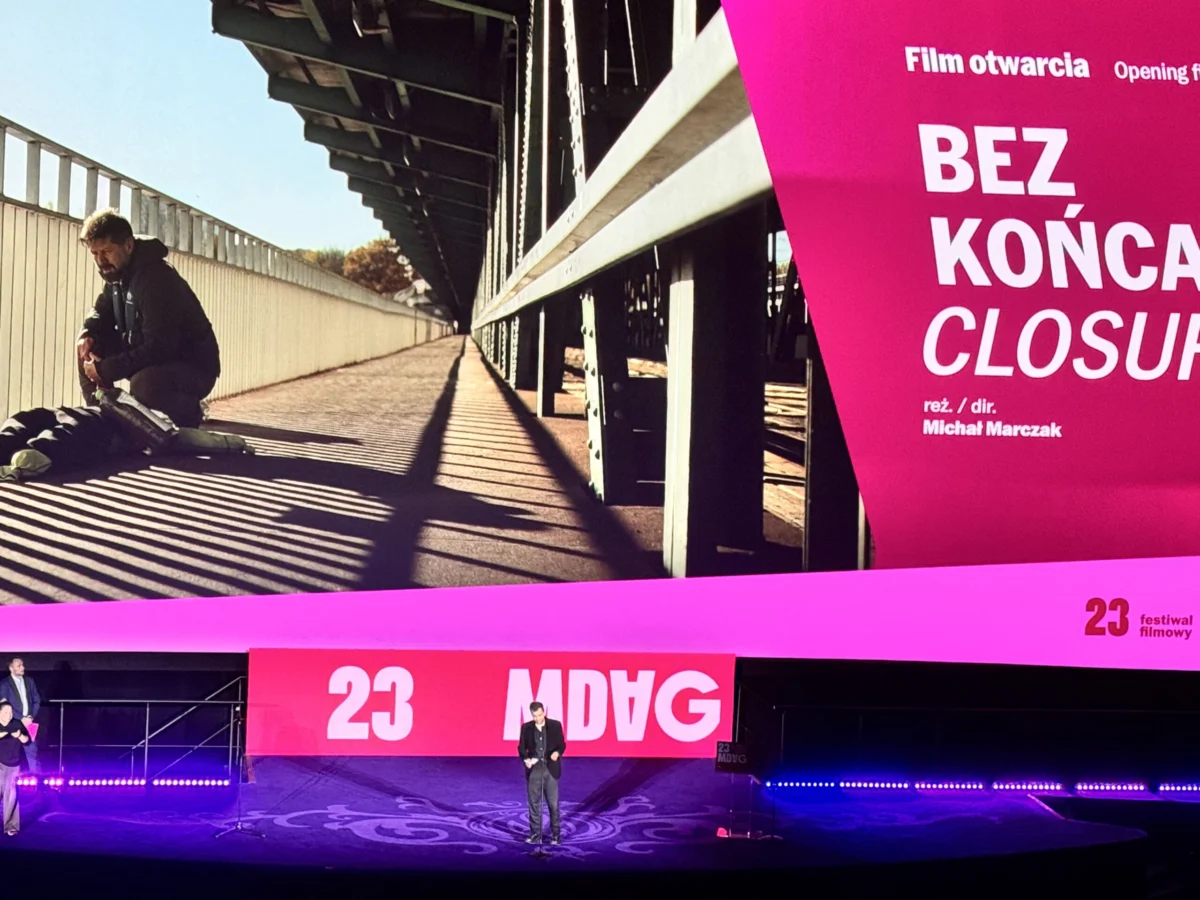
The prestigious Millennium Docs Against Gravity film festival in Poland has officially kicked off, drawing international attention not just for its curation, but for its choice of opening film: Closure, a haunting, deeply intimate documentary by Warsaw-born filmmaker Michała Marczak. Following a critically acclaimed circuit that included a premiere at the Sundance Film Festival’s World Cinema Documentary Competition and a top-tier win—the Golden Alexander—at the Thessaloniki International Documentary Festival in Greece, Closure has firmly established itself as one of the most significant non-fiction works of the year.
At its core, Closure is a meditation on the liminal space between hope and despair. It tracks the agonizing, solitary journey of a father, Daniel, who spends his days scouring the murky waters of the Vistula River in Warsaw. His mission: to find his teenage son, Chris, who was last seen on a bridge overlooking the river, leaving behind a void that no police report or official statement could ever fill.
The Genesis of a Modern Odyssey
The origin of Closure is as accidental as it is profound. Marczak, who was scouting locations for a separate fiction project, found himself drifting along the Vistula on a family raft. It was here that he encountered Daniel, a man whose intensity stood in stark contrast to the languid flow of the river.
"I noticed a man plying the waters intently," Marczak recalled in an interview with Deadline’s Doc Talk podcast. "He wasn’t fishing for leisure. He was searching."
Upon engaging him in conversation, Marczak learned that Daniel was retracing his son’s final known moments. CCTV footage from the Warsaw Bridge had captured Chris standing in place for 20 minutes. As the camera rotated away and back, the frame was empty. Whether Chris had jumped, or if he had simply wandered into the city’s shadows to start a new, unreachable life, remained the central, agonizing ambiguity of the film.
"The father decided to search the river by himself," Marczak explained. "He built this custom-made boat—a vessel outfitted with cameras, sonars, and drones to probe the murky depths. It’s an Old Man and the Sea type of story, a Fitzcarraldo-esque character fighting against all odds to find the truth."
Chronology of a Search
The production of Closure was a race against both time and the elements. Marczak and his crew spent 14 months from the initial meeting to the final cut—an incredibly rapid pace for a documentary of this emotional magnitude.
"We were editing as we went," Marczak noted. "We were constantly stretching our resources, trying to capture the raw, unfolding reality of Daniel’s search while maintaining the integrity of the narrative."

Throughout the year of shooting, the lines between director and subject blurred. Marczak and Daniel spent long, cold nights camping on the riverbanks and islands, waiting for the sonar to ping or for the water to reveal something that would either break Daniel’s heart or provide him with the peace he so desperately sought.
"After searching for hours, you sit down at night, exhausted, by the campfire," Marczak said. "All these thoughts come to you—about what I could be doing better, how I navigate the challenges of raising my own two sons in this world, and where we, as a society, have gone wrong. Totally desolate, empty nature yields these kinds of metaphysical conversations. We would sit and contemplate our lives. He would ask me for advice, I would ask him, and that’s how we became close."
The Psychological Toll: Beyond the River
Closure is not a true-crime thriller; it is a psychological study of the "missing." The film delves into the lives of other families who have faced similar tragedies at the same bridge. It explores the suffocating weight of the unknown.
For Daniel, the inability to confirm his son’s fate creates a state of suspended animation. His life is defined by the search, yet those around him—including his own father—often counsel him to stop, fearing that his obsession is not a path to healing, but a descent into further trauma.
"It’s a psychological film about the effects of that situation on the family and on Daniel," Marczak explained. "It’s about the ripple effect of grief."
The Impact: A Global Resonance
The film’s power has been recognized globally, from the mountains of Greece to the plains of the American Midwest. After its Sundance premiere, the film moved through the circuit at the True/False Film Festival in Columbia, Missouri, and is slated for upcoming screenings at the Sheffield DocFest in the UK and the Sydney Film Festival in Australia.
The reaction from audiences has been, by all accounts, transformative. During the opening at the Multikino Złote Tarasy in Warsaw, Millennium Docs Against Gravity Artistic Director Karol Piekarczyk shared that the film served as a vital tool for his own personal journey through grief.
Perhaps the most poignant testament to the film’s efficacy came via a voicemail left for Marczak after a screening in Thessaloniki. A viewer, who had been struggling with his own dark, suicidal ideation, reached out to the director.

"He said, ‘Listen, I’ve had some bad days. I’ve had really deep, dark thoughts. But after I saw your movie, I know that I’m never, ever going to commit suicide,’" Marczak recalled, his voice heavy with emotion. "I cried when I heard that message."
Implications for Documentary Ethics and Mental Health
The success of Closure forces a conversation about the role of the documentarian when confronted with acute human suffering. Marczak’s approach—one of proximity, empathy, and patient observation—bypasses the exploitative nature of "true crime" tropes. Instead, he treats the subject with a sanctity that allows the audience to witness the search without feeling like voyeurs.
The film serves as a mirror for society’s relationship with mental health. By focusing on the survivor—the one left behind—Marczak highlights the often-ignored tragedy of those who must continue to live in the wake of a sudden, unexplained disappearance.
As the film continues its festival run, it acts as a lighthouse. It provides a space for viewers to confront their own fears, their own losses, and their own questions about the nature of existence. Whether Daniel ever finds his son is almost secondary to the film’s ultimate message: that in the face of profound, insurmountable tragedy, the act of witnessing—of standing by someone as they search for the truth—is an act of profound love.
Conclusion
As Closure continues to move through international festivals, it is clear that Michała Marczak has crafted more than just a film; he has created a space for communal healing. By documenting the impossible search of a father on the Vistula, he has reminded us all of the fragility of life and the endurance of the human spirit.
In a world that often demands quick answers and tidy resolutions, Closure offers something much more difficult and much more necessary: the courage to sit with the unknown, the strength to continue the search, and the realization that while some doors may never close, we do not have to walk through the darkness alone.
The journey of Daniel and the lens of Marczak have merged into a singular, powerful statement on what it means to be human in the face of the ultimate loss. As the festival season progresses, Closure will undoubtedly remain a touchstone for those seeking to understand the complexities of grief, the necessity of hope, and the unbreakable bond between a parent and a child.


 Pevita Pearce
 Asep Darmawan




