Nana Muazin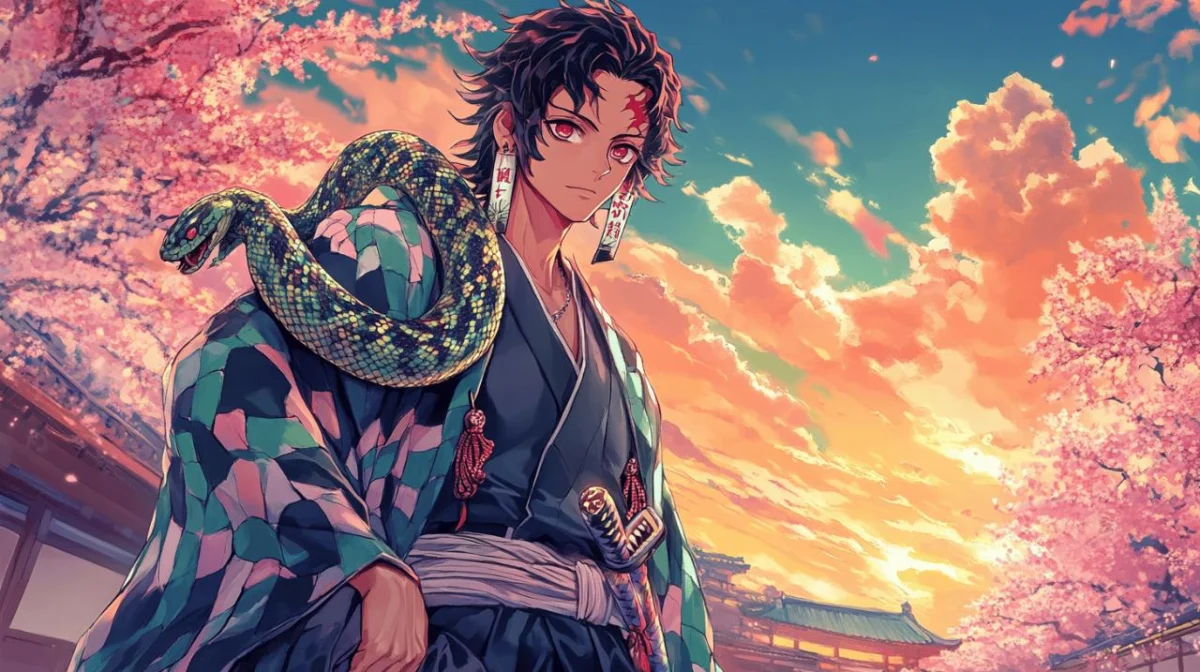
Obanai Iguro, the Serpent Hashira, stands as one of the most enigmatic and psychologically complex figures in the Demon Slayer: Kimetsu no Yaiba universe. Within the ranks of the Demon Slayer Corps, he is not merely a master swordsman but a living testament to the trauma and resilience that define the organization’s elite. His journey—from a captive in a cult-like household to the frontline of the final battle against Muzan Kibutsuji—serves as a narrative pillar for the series’ themes of inherited trauma, self-redemption, and the purity of human devotion.
I. Main Facts: The Anatomy of a Hashira
Obanai Iguro is defined by a striking aesthetic and a specialized combat methodology that deviates from the conventional strength-based tactics of his peers. Standing at a slight 162 cm and weighing 53 kg, he represents a "dexterity-first" archetype.
- Combat Style: The Serpent Breathing (Hebi no Kokyu), a derivative of Water Breathing, focuses on non-linear strikes. By mimicking the undulating, unpredictable path of a serpent, Iguro bypasses traditional defenses.
- Signature Weapon: His Nichirin sword is uniquely curved, resembling a sinuous blade, which allows him to strike from blind angles.
- Tactical Asset: His companion, a white serpent named Kaburamaru, acts as an extension of his senses. In the chaotic heat of battle, Kaburamaru compensates for Iguro’s partially blinded right eye, reading the microscopic muscle twitches of opponents to predict their next move.
- The Crimson Blade: Like other elite Hashira, he eventually forces his Nichirin blade to turn bright red, a state achieved through immense grip strength and friction, which hampers the regenerative capabilities of high-ranking demons.
II. Chronology: From Captivity to Heroism
The history of Obanai Iguro is one of the most harrowing backstories in the franchise, providing the foundation for his stoic and often abrasive exterior.
The Cursed Lineage (Early Life)
Obanai was born into a family of thieves that functioned like a religious cult. For 370 years, his family had produced only women, making his birth as the first male in centuries a catalyst for disaster. The clan worshipped a demon serpent, and Obanai was kept in a cage for the first twelve years of his life, his mouth ritually mutilated to resemble a serpent’s maw—a permanent scar that would dictate his need to cover his face with bandages for the rest of his existence.
The Breaking Point
His escape was a turning point. After the demon serpent slaughtered fifty members of his family, Obanai was saved by the Flame Hashira, Shinjuro Rengoku. This interaction ignited his desire to join the Corps. However, the guilt of his family’s crimes and the physical trauma he endured left him with a deep-seated self-loathing, believing himself to be "tainted" and unworthy of companionship.
The Final Conflict: The Countdown to Dawn
During the Infinity Castle Arc and the subsequent battle against Muzan, Obanai’s arc reached its zenith. Despite being blinded during the struggle, he unlocked the "Transparent World," a state of heightened perception, and his Demon Slayer Mark. His survival and participation in the final assault were instrumental in wearing down the Demon King, culminating in his tragic but triumphant conclusion alongside Mitsuri Kanroji.
III. Supporting Data: Training and Martial Proficiency
The effectiveness of the Serpent Hashira is not derived from raw muscular power, but from a relentless, almost masochistic training regimen.
The "Obstacle" Training Method
Iguro’s mastery of the Serpent Breathing is the direct result of training in environments laden with human obstacles. By forcing himself to maneuver through dense, shifting formations while wielding a blade, he developed a level of agility that allows him to attack from the ground up, the sides, or even while upside down. This makes him nearly impossible to track in one-on-one combat.
Comparative Stats
- Agility: Exceptional. He is widely considered one of the fastest Hashira in terms of reaction time.
- Endurance: High. He fought Muzan Kibutsuji after sustaining significant wounds, demonstrating a pain threshold that defied his slender frame.
- Coordination: Peerless. The symbiotic relationship between man and snake is a biological and tactical anomaly in the Demon Slayer Corps, providing a unique "dual-vision" strategy that compensates for his impaired sight.
IV. The Dynamics of the Corps: Relationships and Internal Politics
Obanai’s personality is frequently described as cold, strict, and cynical. However, these traits act as a defense mechanism for his deep-rooted insecurities.
The Bond with Mitsuri Kanroji
The relationship between Iguro and Mitsuri is the emotional heartbeat of the series. Mitsuri’s warmth acted as the antithesis to Iguro’s dark, shadowed existence. Their bond was not one of immediate passion but of slow-burning mutual respect that blossomed into a profound, selfless love. Their promise to be reborn into a peaceful world and marry is perhaps the most poignant humanizing element in the entire narrative.
Interactions with Peers
Initially, Iguro was highly critical of Tanjiro Kamado, viewing the presence of a demon (Nezuko) as a violation of the Corps’ mandate. His eventual acceptance of Tanjiro signifies his growth—moving from a dogmatic adherent to his family’s cycle of violence to a leader who trusts in the potential for redemption in others.
V. Implications: The Legacy of the Serpent Hashira
The death of Obanai Iguro at the end of the Taisho era leaves a significant void in the Demon Slayer legacy. His life serves as a cautionary tale about the cycles of abuse and a heroic example of how one can choose their own path.
Tactical Influence
Post-Muzan, the training techniques developed by the Hashira, including Iguro’s agility drills, became the standard for future generations of demon slayers. His legacy ensures that even the most "physically limited" recruit can find a path to greatness through unconventional movement and sensory synergy.
Thematic Significance
Iguro represents the "broken man" who finds purpose through sacrifice. His story argues that one’s birth and family history do not define their moral worth. By turning his family’s "curse"—the serpent motif—into a symbol of protection, he subverted the legacy of his ancestors.
VI. Conclusion
Obanai Iguro is more than a weapon of the Demon Slayer Corps; he is a complex character study on the necessity of connection. From his early days as a caged child to his final moments as a savior of humanity, his life was defined by the struggle to overcome a dark origin. Whether it is through his mastery of the Serpent Breathing or his unyielding love for Mitsuri, Iguro’s footprint on the Demon Slayer lore is permanent. He reminds the reader that even in a world defined by darkness and blood, the most enduring light is the one we cultivate for others.
As we analyze the "Countdown to Dawn" arc, it is clear that without the specific, unorthodox contributions of the Serpent Hashira, the victory over Muzan Kibutsuji would have been an impossibility. Obanai Iguro, the man who was born in chains, died as the ultimate symbol of liberation.


 Siti Muinah
 Azzam Bilal Chamdy