Nila Kartika Wati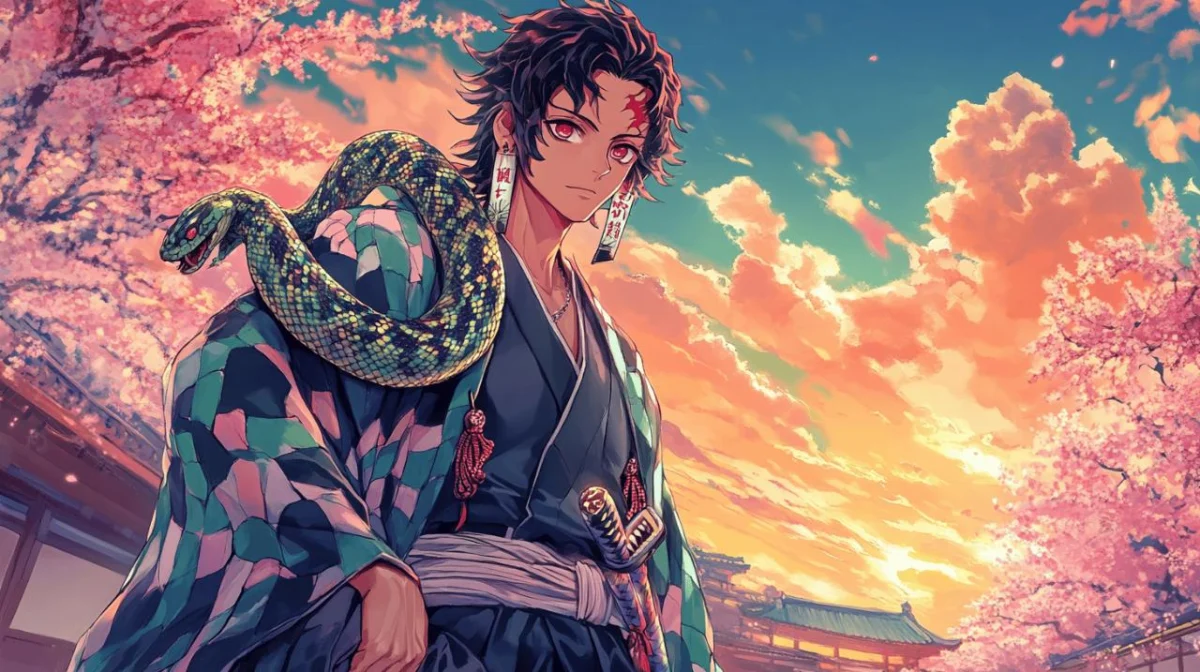
Obanai Iguro, the Serpent Hashira of the Demon Slayer Corps, stands as one of the most enigmatic and psychologically complex figures in Koyoharu Gotouge’s Demon Slayer: Kimetsu no Yaiba. Often characterized by his biting tongue, bandaged visage, and unyielding skepticism, Iguro is a character defined by the duality of his tragic origins and his absolute dedication to the eradication of Muzan Kibutsuji’s demonic kin. As we dissect his role within the Corps, we uncover a narrative of redemption, hidden vulnerability, and a tactical prowess that redefined the standards of the Hashira.
I. Main Facts: The Anatomy of a Pillar
At the core of the Demon Slayer organization, the Hashira represent the pinnacle of human combat capability. Obanai Iguro, despite his relatively slight frame—standing at 162 cm and weighing 53 kg—is a testament to the fact that power in this universe is not solely a product of raw physical strength.
The Physicality of the Serpent
Iguro’s combat style is an extension of his own physical limitations. Unable to rely on the overwhelming brute force of a Gyomei Himejima, Iguro developed a fighting style that mirrors the fluidity and unpredictability of a snake. His "Serpent Breathing" technique is characterized by twisting, undulating strikes that allow his Nichirin sword to bypass defensive blocks, effectively turning his blade into a lethal, unpredictable whip.
The Symbolism of Kaburamaru
Central to his identity is his white snake, Kaburamaru. Far from being a mere pet, the serpent acts as a secondary sensory organ for Iguro. Given that Iguro is partially blind in his right eye, Kaburamaru serves as his tactical eyes in the field, providing sensory feedback that allows the Hashira to anticipate enemy movements with near-perfect accuracy. This symbiotic bond is a cornerstone of his tactical superiority.
II. Chronology: From Captivity to the Final Dawn
The life of Obanai Iguro is a tragic trajectory that moves from the depths of a perverse familial cult to the heights of legendary heroism.
The Cycle of Suffering: A Dark Childhood
Born into a clan of thieves that worshipped a snake-like demon, Iguro’s birth was treated as a rare anomaly—the first male child in 370 years. This "blessing" was, in reality, his greatest curse. The clan lived in opulence derived from stolen wealth, yet they were slaves to the demon they served. Iguro was kept in a gilded cage, treated as a curiosity until the day he was meant to be sacrificed to the serpent demon.
The mutilation of his mouth—slashed to mimic the maw of a serpent—was a permanent scar inflicted by his family, a constant reminder of his status as a "possession." His escape from this imprisonment, aided by a snake, set the stage for his eventual recruitment into the Demon Slayer Corps, where he turned his trauma into a singular, burning hatred for the monsters that thrive on human misery.
The Path of the Hashira
Following his escape, Iguro was rescued by Shinjuro Rengoku (the former Flame Hashira). He channeled his rage into the rigorous training of the Demon Slayer Corps. His rise to the rank of Serpent Hashira was marked by relentless self-discipline. He famously honed his skills by training in environments that forced him to weave his blade through human obstacles, a method that birthed the agile, erratic flow of his Serpent Breathing.
III. Supporting Data: Tactical Prowess and Combat Statistics
In the analytical view of the Corps’ internal records, Obanai’s performance during the Infinity Castle Arc and the final battle against Muzan solidified his status as a top-tier combatant.
Mastery of the Crimson Nichirin Blade
During the heat of the final battle, Iguro achieved what few have ever accomplished: turning his Nichirin blade a deep, vibrant crimson. This manifestation occurs when the blade is subjected to extreme pressure and temperature, effectively hindering a demon’s regenerative capabilities. His ability to maintain this state while coordinating with his teammates suggests a level of focus and internal energy control that places him among the elite of the Hashira.
The Transparent World and the Slayer Mark
Iguro’s awakening of the "Transparent World" and the Demon Slayer Mark further elevated his combat efficacy. The Transparent World allows a slayer to perceive the blood flow, muscle contractions, and skeletal structure of their opponent. When paired with his natural agility, this allowed Iguro to avoid near-fatal blows from Muzan, keeping the progenitor of demons on the defensive long enough for the sunrise to provide the final blow.
IV. Official Perspectives: The Bond with Mitsuri Kanroji
Beyond the battlefield, the internal dynamics of the Hashira were profoundly altered by the relationship between Obanai and Mitsuri Kanroji, the Love Hashira.
A Sanctuary of Normalcy
For a man who spent his life feeling like a "monster" due to his scars and his lineage, Mitsuri represented the only normalcy he had ever known. Their relationship, characterized by mutual respect and a quiet, budding affection, was the primary tether grounding Obanai’s humanity.
The Impact of Vulnerability
Official accounts from surviving Corps members highlight that Obanai’s personality shifted from cold and dismissive to fiercely protective. During the final confrontation, his primary motivation evolved from mere duty to the desire to ensure Mitsuri’s survival. This human element—the capacity for love in the face of absolute despair—is often cited by historians of the Corps as the catalyst for the morale boost that carried the remaining slayers through the final hour of the war.
V. Implications: The Legacy of the Serpent
The sacrifice of Obanai Iguro during the final struggle against Muzan Kibutsuji left an indelible mark on the history of the Demon Slayer Corps.
Tactical Implications for Future Generations
The techniques perfected by Iguro—specifically the integration of animal-assisted sensory perception and high-speed, non-linear swordplay—have been codified into the training manuals of the Corps. His life serves as a case study in how trauma, when properly channeled through discipline, can be forged into a weapon for the greater good.
Cultural and Philosophical Impact
Obanai remains a symbol of the "hidden hero." He did not seek the spotlight, nor did he believe himself worthy of happiness due to his "polluted" bloodline. His eventual acceptance of his own value, bolstered by his love for Mitsuri, provides a poignant philosophical resolution to his character arc. He proved that one’s origins do not dictate one’s destiny; rather, one’s actions in the face of inevitable darkness determine one’s true character.
A Final Reflection
The death of Obanai Iguro was not merely a loss of a combatant; it was the silencing of one of the most complex, guarded, and ultimately compassionate voices in the Hashira. His legacy endures in the freedom of the world he helped secure. As the Demon Slayer Corps disbanded following the total eradication of Muzan, the name "Serpent Hashira" remained etched in the annals of history—not as a victim of his family’s curse, but as the man who shattered it, protecting the light of the dawn with his final breath.
In the final assessment, Iguro Obanai remains a testament to the endurance of the human spirit. He reminds us that even those who carry the heaviest burdens—physical, emotional, and ancestral—are capable of rising above their circumstances to achieve greatness. His journey from a prisoner of a snake-worshipping cult to the savior of the next generation is, and will always be, a defining chapter in the legendary saga of the Demon Slayer Corps.


 Siti Muinah
 Azzam Bilal Chamdy