Raul Delapena Setiawan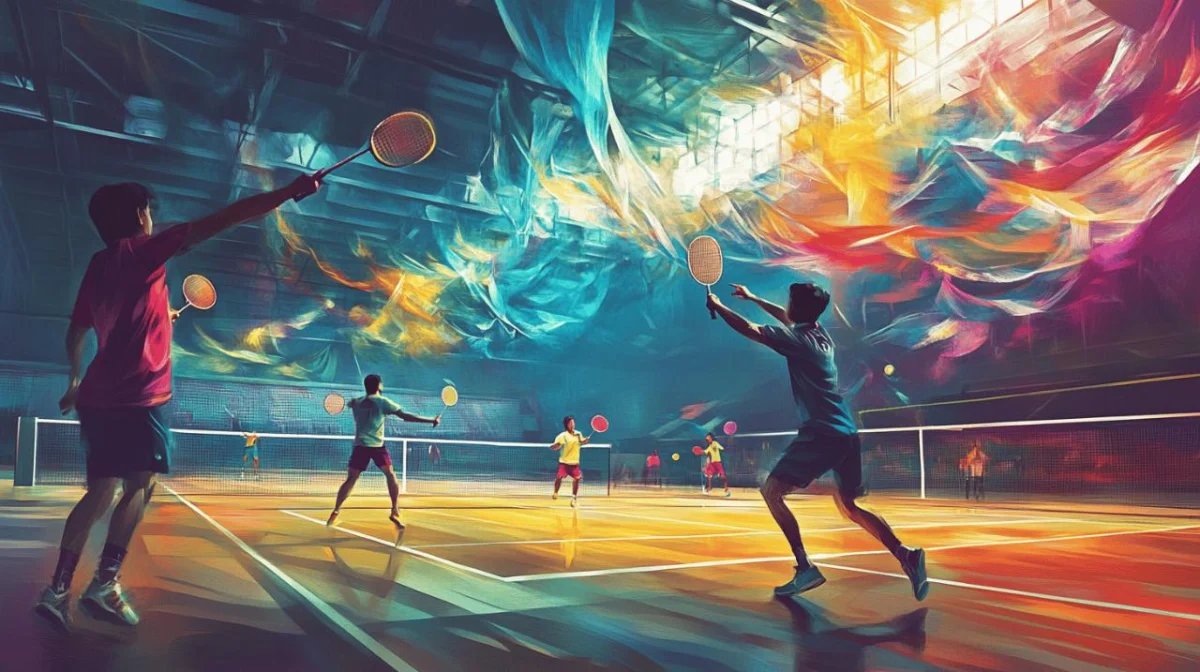
In the intersection of high-octane athletics and the intricate world of Japanese manga, a fascinating cultural phenomenon has emerged. The sport of badminton, characterized by its blistering pace, tactical depth, and moments of sublime grace, has transcended the physical court to become a cornerstone of narrative art. From the hallowed halls of the Yonex All England to the global stage of the Olympic Games, badminton’s most storied rivalries are being immortalized through the ink-stained pages of graphic novels, creating a unique synergy between sporting reality and artistic fiction.
The Evolution of a Sporting Muse: Main Facts
At its core, the fusion of badminton and manga is an exploration of "kinetic storytelling." Unlike traditional sports dramas that may rely on static poses, badminton provides a unique challenge for illustrators: capturing the blur of a shuttlecock traveling at over 400 kilometers per hour.
Mangakas—the architects of these graphic worlds—have identified badminton as the perfect vehicle for character development. The sport’s reliance on individual focus, paired with the strategic complexity of doubles play, allows for deep psychological exploration. By integrating real-world tournament structures like the Thomas Cup and the Japan Open, artists ground their fictional narratives in a recognizable reality, ensuring that the stakes feel as tangible to the reader as they do to the professional athlete on the court.
Chronology of Influence: From Courts to Panels
The transformation of badminton into a visual medium has followed a distinct trajectory, mirroring the sport’s rise in global popularity.
- The Early Era (Pre-2000s): Badminton was initially treated as a niche pursuit in manga, often relegated to club activities in high school "slice-of-life" series. The technical accuracy was lower, focusing more on the social dynamics of the characters than the intricacies of the game.
- The Rise of Professionalism (2000–2015): As the Yonex All England and World Championships gained mainstream media coverage, mangakas began to study actual footage. The "sports-realism" trend took hold, with artists meticulously detailing grip changes, footwork patterns, and the specific mechanics of a smash.
- The Modern Digital Age (2016–Present): With the Tokyo 2020 Olympic Games acting as a catalyst, a new wave of "webtoon-style" sports manga emerged. These works utilize digital painting techniques to emphasize motion blur, lighting, and the intense physical exertion of the players, creating a cinematic experience for mobile readers.
Supporting Data: The Anatomy of a Smash in Ink
The technical rigor required to translate a match into a storyboard is immense. According to creative analysis, contemporary sports mangakas dedicate nearly 40% of their production time to "action choreography."
- Velocity Illustration: To convey the speed of the shuttlecock, artists use speed lines that deviate from traditional Western comic techniques, often bending the lines to match the trajectory of a "flick" or "drop shot."
- Psychological Mapping: Through the use of internal monologues during rallies, the manga format allows the reader to understand the tactical chess match unfolding. The decision-making process—where a player chooses between a cross-court clear or a straight smash—is treated with the same weight as a battle sequence in an epic fantasy.
- Anatomical Accuracy: By studying the training regimens of Olympic athletes, artists have shifted from idealized, muscular superheroes to more realistic representations of badminton players—emphasizing agility, core strength, and the specific physiological toll of the game.
Official Perspectives: The Synergy of Sport and Art
The badminton community has largely embraced this artistic adaptation. Officials from major federations have noted that the manga industry serves as a crucial recruitment tool. By romanticizing the struggle of training and the glory of international victory, these series have inspired a younger generation of athletes to take up the racket.
"When we see a smash described in a manga as a ‘thundering bolt of lightning,’ it resonates with the actual sensation of a perfectly timed kill shot," says one industry analyst. "The artists aren’t just drawing a sport; they are capturing the soul of the game. They turn a two-set match into a life-defining journey."
Implications: The Future of the Genre
The integration of badminton into manga has profound implications for both the sports and publishing industries.
Expanding the Demographic
Traditionally, sports manga was dominated by baseball and soccer. The rise of badminton-focused series has diversified the genre, appealing to a global audience where badminton is a primary sport, particularly across Asia, Scandinavia, and parts of the Americas. This creates a feedback loop: as the manga gains international popularity, the sport itself sees increased investment and viewership.
Technological Advancements in Storytelling
The advent of digital platforms (webtoons) has allowed for "scrolling" action sequences. Instead of being confined to a static page, a match can now be depicted as a continuous, vertical descent, mimicking the downward trajectory of an aggressive smash. This digital evolution is likely to influence how traditional print manga is composed, leading to more fluid, motion-oriented panels.
Bridging Cultures through Rivalry
One of the most compelling aspects of these manga series is their treatment of international rivalry. By depicting the clashes between nations—such as the fierce competition between Japanese, Indonesian, and Chinese players—the medium fosters a sense of global camaraderie. It presents the "Other" not just as an obstacle, but as a respected partner in the dance of the game.
Conclusion: A Lasting Legacy
The legacy of the Yonex All England, the Thomas Cup, and the Olympic Games is no longer confined to trophy cases and historical records. Through the persistent, creative efforts of mangakas, these events are etched into the cultural consciousness of millions.
Whether it is the quiet tension of a service toss or the chaotic energy of a net scramble, the manga industry has proven that badminton is more than a game—it is a visual language. As new series continue to emerge, capturing the evolving techniques and the human drama behind the sport, the "kinetic canvas" of badminton manga will undoubtedly continue to expand, offering a vibrant, pulse-pounding perspective on the world’s fastest racket sport.
As we look toward the future, the boundary between the player on the court and the character on the page continues to blur. It is a testament to the universal appeal of human effort, and as long as there is a shuttlecock in flight, there will be an artist waiting to capture its arc, its speed, and its story.


 Siti Muinah
 Azzam Bilal Chamdy