What began as a routine afternoon of landscaping at a private San Francisco residence has transformed into a compelling archaeological mystery, captivating both the local community and art historians alike. When Greg Gatwood struck a hard, unyielding object while digging in his backyard, he expected to encounter a discarded piece of concrete or perhaps a forgotten utility pipe. Instead, he pulled from the earth a 150-pound limestone sculpture—a silent, stony face that appears to be a relic of the Great Depression-era American art scene.
The discovery has since triggered a sophisticated investigation into the provenance of the artifact, leading to theories that link the object to the Works Progress Administration (WPA) and the illustrious history of the San Francisco Art Institute.
The Discovery: A Cinematic Unearthing
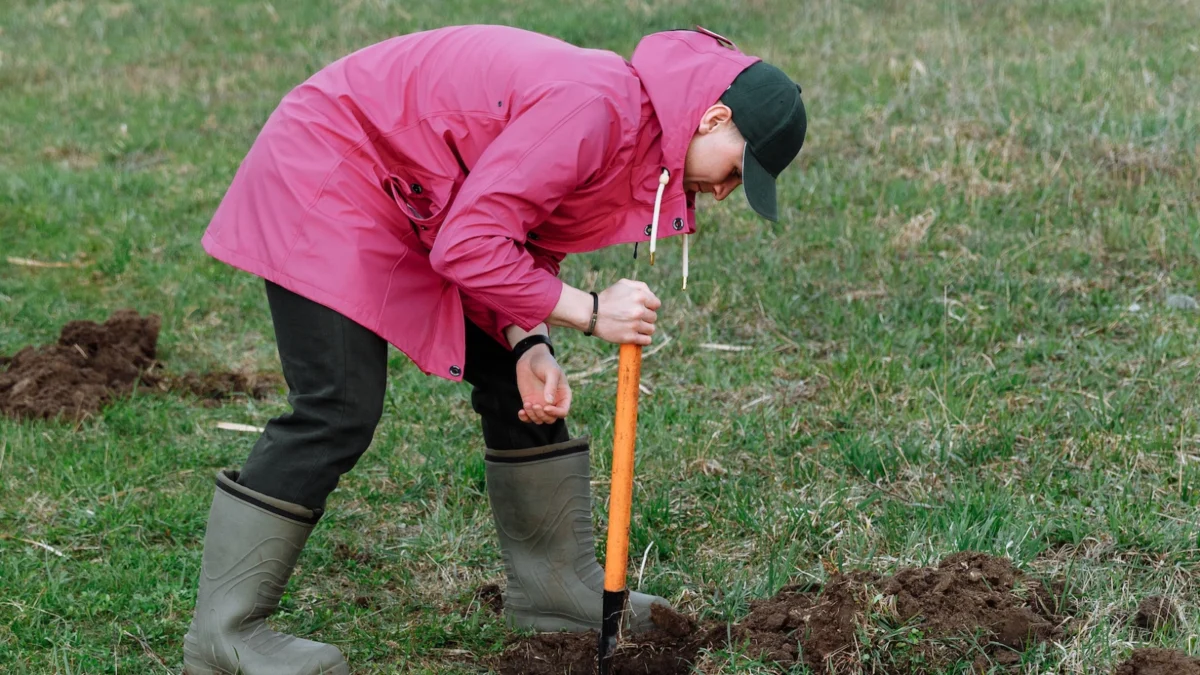
The encounter occurred when Greg Gatwood, who shares the home with his partner Judy Gittelsohn, was engaged in standard backyard maintenance. The ground, typically accommodating, proved resistant, forcing Gatwood to move from a standard shovel to a pickaxe to clear what he initially assumed was construction debris.
"It was like something you see in a movie, almost cinematic," Gatwood later told Fox News. As the dirt fell away, the mechanical task of excavation shifted into a moment of surreal discovery. The first features to emerge from the sediment were a nose and a set of lips—the unmistakable, humanizing details of a sculpture. Upon clearing the debris, the couple stood before a two-foot-wide limestone bust, a heavy, weathered, yet hauntingly detailed piece of craftsmanship that had been interred beneath their property for decades, if not longer.
For Gittelsohn, a professional artist with a keen eye for aesthetic history, the discovery was nothing short of "gobsmacked." The weight of the object—a staggering 150 pounds—suggests it was never intended to be portable, pointing toward a deliberate burial rather than a haphazard disposal.
A Chronological Reconstruction: From the Studio to the Soil
To understand how such a substantial piece of art came to rest beneath a private lawn, one must look at the historical context of the neighborhood. The property is situated in close proximity to the former San Francisco Art Institute, a bastion of creative production during the early 20th century.
The 1930s and the WPA Connection
Gittelsohn’s preliminary research points to the 1930s, a decade defined by economic hardship and government-sponsored cultural enrichment. During the Great Depression, President Franklin D. Roosevelt’s New Deal established the Works Progress Administration (WPA). Among its many initiatives, the Federal Art Project employed thousands of artists to create murals, sculptures, and public works to boost morale and provide economic relief.
The sculpture’s material—limestone—is a significant clue. It was a common, cost-effective medium for students and WPA-commissioned artists alike. Gittelsohn hypothesizes that the bust may be the work of a student under the tutelage of Ralph Stackpole, a renowned sculptor and a central figure at the San Francisco Art Institute for several decades.
The Mystery of the Burial
The question remains: why was it buried? One prevailing theory among local historians is that the sculpture may have been a discarded student project. In the mid-20th century, art schools often lacked the space to archive the sheer volume of work produced by their cohorts. Burying a heavy, unfinished, or "failed" piece of limestone in a nearby backyard—perhaps an empty lot at the time—was a practical solution to disposal that would have been largely forgotten as the city developed around it.
Supporting Data: The Artistic Provenance
The sculpture’s aesthetic characteristics align with the modernist and social realist movements that dominated the California art scene during the 1930s. Stackpole, who famously worked on the Coit Tower murals and the Golden Gate International Exposition, favored a robust, grounded style that emphasized the materiality of the stone.
The couple’s research has been bolstered by public interest. The story has garnered significant traction online, leading to a surreal moment when a woman appeared at their door, claiming to have previously curated an exhibition featuring Ralph Stackpole’s work. This unsolicited expert testimony has added weight to the theory that the piece belongs to the Stackpole school of influence, if not his direct workshop.
The limestone itself is dense and porous, typical of the regional stone sourced for WPA projects in the Western United States. The weathering patterns on the bust suggest it was buried for a considerable length of time, likely at least 50 to 70 years, protecting it from the erosive elements of the San Francisco fog and wind.
Official and Community Responses
While the discovery has not yet reached the level of a formal municipal archaeological project, the art community has taken notice. The couple has been proactive in documenting the piece, taking care to preserve the surface of the stone while attempting to track its origins.
The most significant development in their investigation is the planned public exhibition. In September, the bust will be displayed at the American Messenger Gallery. This is a strategic move: by putting the "silent sentinel" on public display, the couple hopes to jog the memory of a local historian, a former art student, or a family member of a long-deceased artist who might recognize the craftsmanship.
"We want to know its story," Gittelsohn noted. "A piece of art like this carries the energy of the person who carved it. It deserves to be more than just a mystery in our backyard."
Implications: The Archaeology of the Everyday
The discovery of the limestone bust serves as a reminder of the "hidden history" buried beneath urban landscapes. Often, the history of a city is recorded in books, but the tangible history of its daily life is physically embedded in the ground.
Cultural Preservation
This incident highlights the importance of private homeowners as amateur custodians of history. In many cases, artifacts of significant cultural value are lost to construction or landscaping because the finder does not recognize the importance of the object. Gatwood and Gittelsohn’s decision to research rather than discard the statue has potentially saved a valuable link to the WPA era.
Academic Interest
The potential link to Ralph Stackpole and the San Francisco Art Institute could offer new insights into the training methods of 1930s sculptors. If the piece is confirmed to be a student work from that era, it provides a rare, tangible example of the academic exercises that shaped the public art landscape of California. Historians of the WPA era are particularly interested in "ephemeral" works—those that were never cataloged in government archives but were essential to the artistic culture of the time.
Looking Forward: A Call for Recognition
As the September exhibition approaches, the couple continues to reach out to local museums and art historians. The "backyard sculpture" has become a touchstone for the neighborhood, a symbol of the unexpected intersections between our private lives and public history.
Whether the statue is eventually identified as a masterpiece by a forgotten prodigy or a modest practice piece by a student of Stackpole, its value remains undiminished. It has sparked a dialogue about the legacy of the New Deal, the preservation of local art, and the enduring nature of human creativity.
For now, the 150-pound limestone face sits in the home of the couple who found it, waiting for the sunlight of the gallery to finally reveal the story that has been trapped in the dark earth for nearly a century. As Gatwood and Gittelsohn continue their search for the truth, they remain the caretakers of a silent, heavy, and profound piece of San Francisco’s artistic soul.
For those interested in historical artifacts, the couple encourages anyone with information regarding local 1930s sculpture projects to contact the American Messenger Gallery ahead of the September exhibition.