By Industry Correspondent
Published: June 20, 2026
In a move that has sent shockwaves through the corridors of Silicon Valley, John Jumper—a luminary in the field of artificial intelligence and a 2024 Nobel Laureate in Chemistry—has announced his departure from Google DeepMind. After a transformative nine-year tenure, Jumper is moving to Anthropic, one of the primary competitors in the race for artificial general intelligence (AGI).
The resignation marks the end of an era for DeepMind, an organization that has defined the frontier of AI research for over a decade. As the architect behind the revolutionary AlphaFold project, Jumper’s decision represents a significant realignment of power among the “big three” of the AI sector: Google, OpenAI, and Anthropic.
The Core Facts: A Departure of Significant Magnitude
On Friday, June 20, 2026, John Jumper took to the social media platform X to formally announce his transition. His post was one of gratitude and reflection, acknowledging the profound impact that Google DeepMind (GDM) had on his professional trajectory.
"Demis Hassabis took a real chance letting me lead the AlphaFold team just six months after finishing my PhD," Jumper wrote. "The entire GDM team taught me so much about how to do great science."
Jumper’s departure is not merely a change of employer; it is a migration of intellectual capital. At DeepMind, Jumper was not only a figurehead for biological modeling but also a key contributor to Google’s broader strategy for generative AI, particularly in the development of sophisticated coding tools. According to reports from Bloomberg, Jumper had been instrumental in the technical architecture of tools that Google has attempted—with varying degrees of success—to integrate into its enterprise-grade business offerings.
Chronology: A Trajectory of Excellence
To understand the weight of this departure, one must look at the meteoric rise of Jumper’s career within the Google ecosystem.
- 2017: John Jumper joins Google DeepMind, quickly establishing himself as a formidable talent in the intersection of physics, biology, and machine learning.
- 2020: The AlphaFold project achieves a breakthrough at the Critical Assessment of Structure Prediction (CASP) competition, effectively solving a 50-year-old challenge in biology by predicting the 3D structure of proteins from amino acid sequences.
- 2021: AlphaFold 2 is released, democratizing access to protein structure data for researchers worldwide, accelerating drug discovery and disease research.
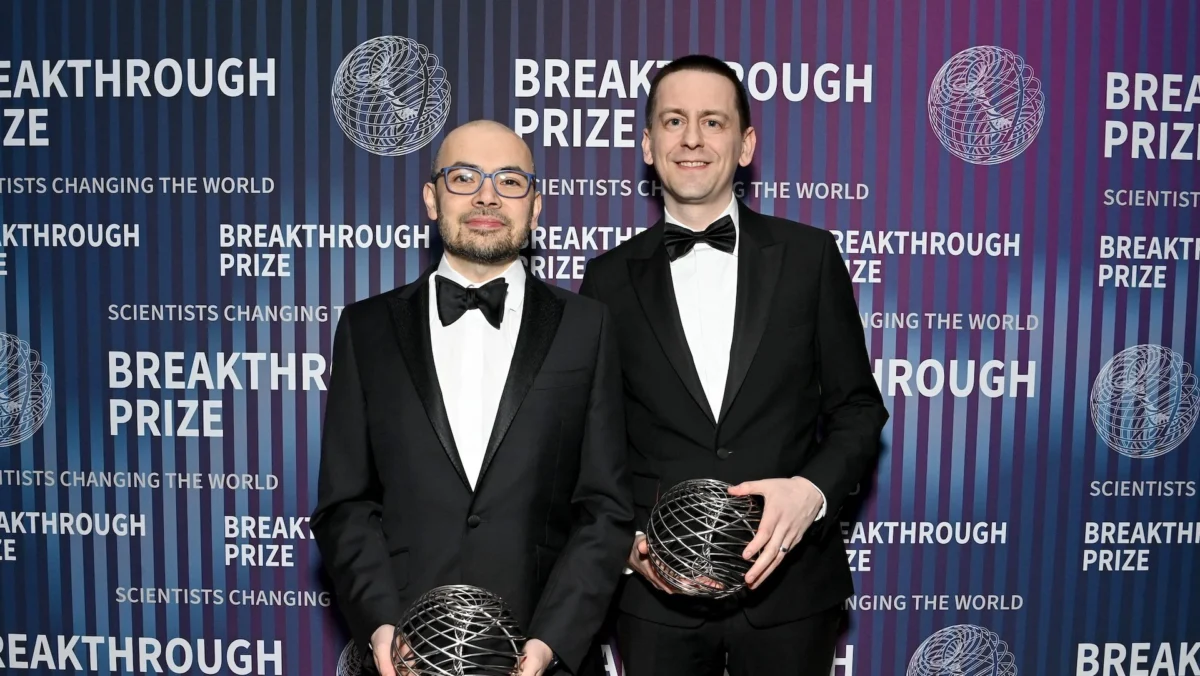
- October 2024: Demis Hassabis and John Jumper are awarded the Nobel Prize in Chemistry, a rare and prestigious recognition of AI’s contribution to fundamental science.
- June 2026: Following a nine-year tenure, Jumper announces his exit to join Anthropic, signaling a major strategic pivot in his career path.
Supporting Data: The Talent War and Strategic Realignment
Jumper’s exit is not an isolated event. It occurs within a broader context of intense "talent poaching" as AI labs prepare for the next phase of industrialization, including upcoming IPOs and the push for sovereign AI capabilities.
The industry is currently witnessing a massive shuffling of leadership. Just this week, Noam Shazeer, the co-founder of Character AI and a veteran of the Google transformer architecture team, announced he is joining OpenAI. This "Great Migration" of talent suggests that the industry has moved past the era of pure academic research and into a phase of intense product-market competition.
Google has struggled to convert its research dominance into market-leading commercial software. While AlphaFold remains a triumph of science, the company’s broader coding assistants have faced stiff competition from rivals like GitHub Copilot and Anthropic’s Claude. By securing Jumper, Anthropic—a company founded on the principle of "constitutional AI" and safety—is clearly signaling its intent to dominate the enterprise developer space.

Official Responses and Internal Sentiment
While Google has not released a formal statement regarding the specific strategic implications of Jumper’s departure, insiders describe a culture of "respectful transition." Jumper’s own words underscore a lack of animosity: "GDM is a special place, and I’ll still be excited to hear about what amazing things they discover next."
However, the departure creates a vacuum at the leadership level. Demis Hassabis, the CEO of DeepMind, now faces the dual challenge of maintaining morale among the research staff while managing the intense pressure from Alphabet leadership to generate tangible revenue from AI breakthroughs. The loss of a Nobel-level scientist, especially one who bridged the gap between fundamental research and applied product development, is a significant blow to Google’s internal morale.
Implications: What This Means for the Future of AI
The move of a figure like Jumper to Anthropic carries three major implications for the sector:
1. The Commercialization Pivot
Jumper’s involvement in coding tools suggests that Anthropic is not just interested in large language models for creative writing or summarization; they are aiming for the "engine room" of the software industry. If Anthropic can leverage Jumper’s expertise to build coding assistants that are fundamentally more reliable and accurate than Google’s, they could capture a significant portion of the enterprise cloud market.
2. The Talent "Arms Race"
The fact that top-tier talent is moving between these labs at such a high frequency suggests that the "moats" created by proprietary research are thinning. When the world’s best minds can move freely between labs, the competitive advantage rests less on who has the researchers and more on who has the compute infrastructure and the best go-to-market strategy.
3. Safety vs. Performance
Anthropic has marketed itself as a "safety-first" organization. By bringing in a Nobel Laureate who has dealt with the real-world implications of AI in biology—a field where errors have life-or-death consequences—Anthropic is reinforcing its brand identity. They are signaling that their growth is not just about raw power, but about the "responsible" scaling of complex systems.
Conclusion: A New Chapter
The departure of John Jumper from Google DeepMind is a definitive marker of the maturity of the AI industry. The "pioneer" phase, characterized by academic-style research breakthroughs, is giving way to a "production" phase.
For Google, the task is to prove that its research pipeline is deep enough to withstand the loss of its brightest stars. For Anthropic, the challenge will be to integrate Jumper’s high-level research capabilities into their commercial product suite effectively.
As we look toward the latter half of 2026, one thing is clear: the race for AI dominance is no longer just about the models themselves; it is about the architects who design them, and the companies that can convince them to stay. Jumper’s move to Anthropic is a massive vote of confidence in the future of the company and a stark reminder that in the world of AI, the only constant is change.
Industry analysts will be watching closely to see what Jumper’s first major project at Anthropic will be. If history is any indicator—having moved from protein folding to coding tools—whatever he touches next is likely to redefine the boundaries of what we believe artificial intelligence can achieve.