

In a move that promises to redraw the boundaries of the artificial intelligence industry, NVIDIA Corporation, the world’s leading manufacturer of AI-focused hardware, has officially announced its acquisition of Hugging Face. The deal, valued at $12.93 billion, represents one of the most significant consolidations in the history of the tech sector, effectively bridging the gap between the physical silicon that powers modern computing and the democratic, open-source software ecosystem that fuels innovation.
The acquisition, confirmed by NVIDIA CEO Jensen Huang, signals a strategic pivot for the chipmaker. By folding Hugging Face—the primary repository for open-source AI models—into its corporate architecture, NVIDIA is no longer just the "arms dealer" of the AI gold rush; it has become the governor of the town square where that gold is refined and distributed.
Main Facts: A Strategic Integration
The financial terms of the deal value Hugging Face at $12.93 billion, a massive premium for a company that serves as the collaborative hub for the global AI developer community. NVIDIA’s stated intent is to leverage its immense capital reserves to scale the platform’s infrastructure, bolster its security, and broaden global access to AI development tools.
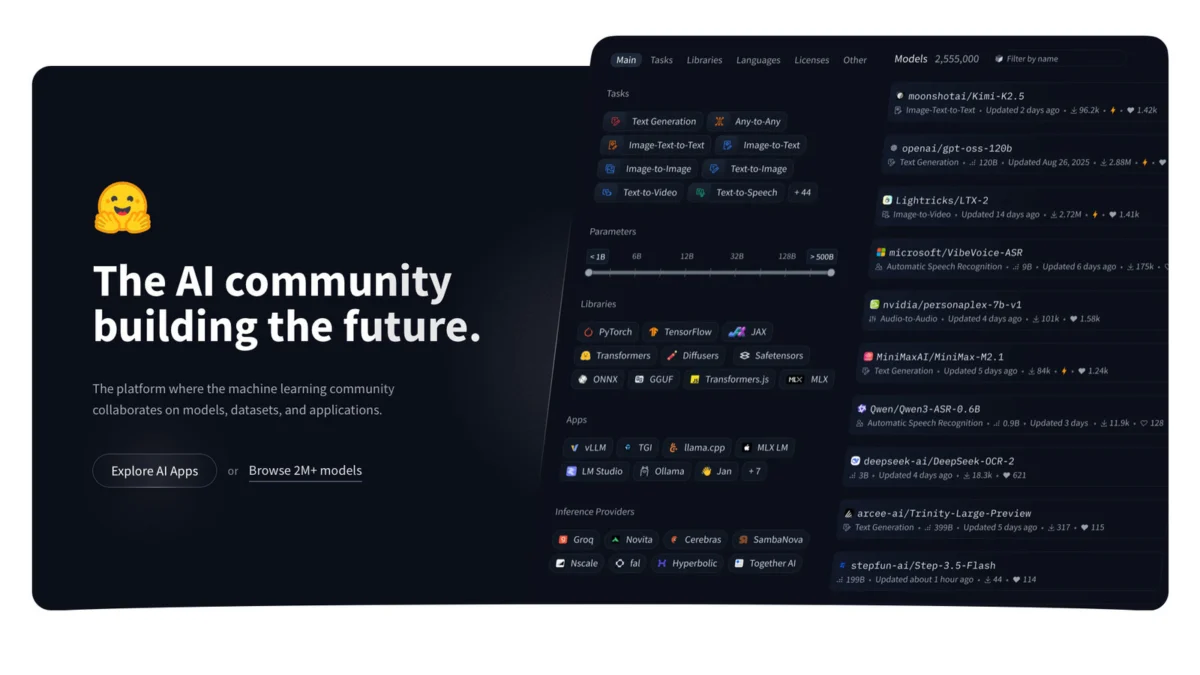
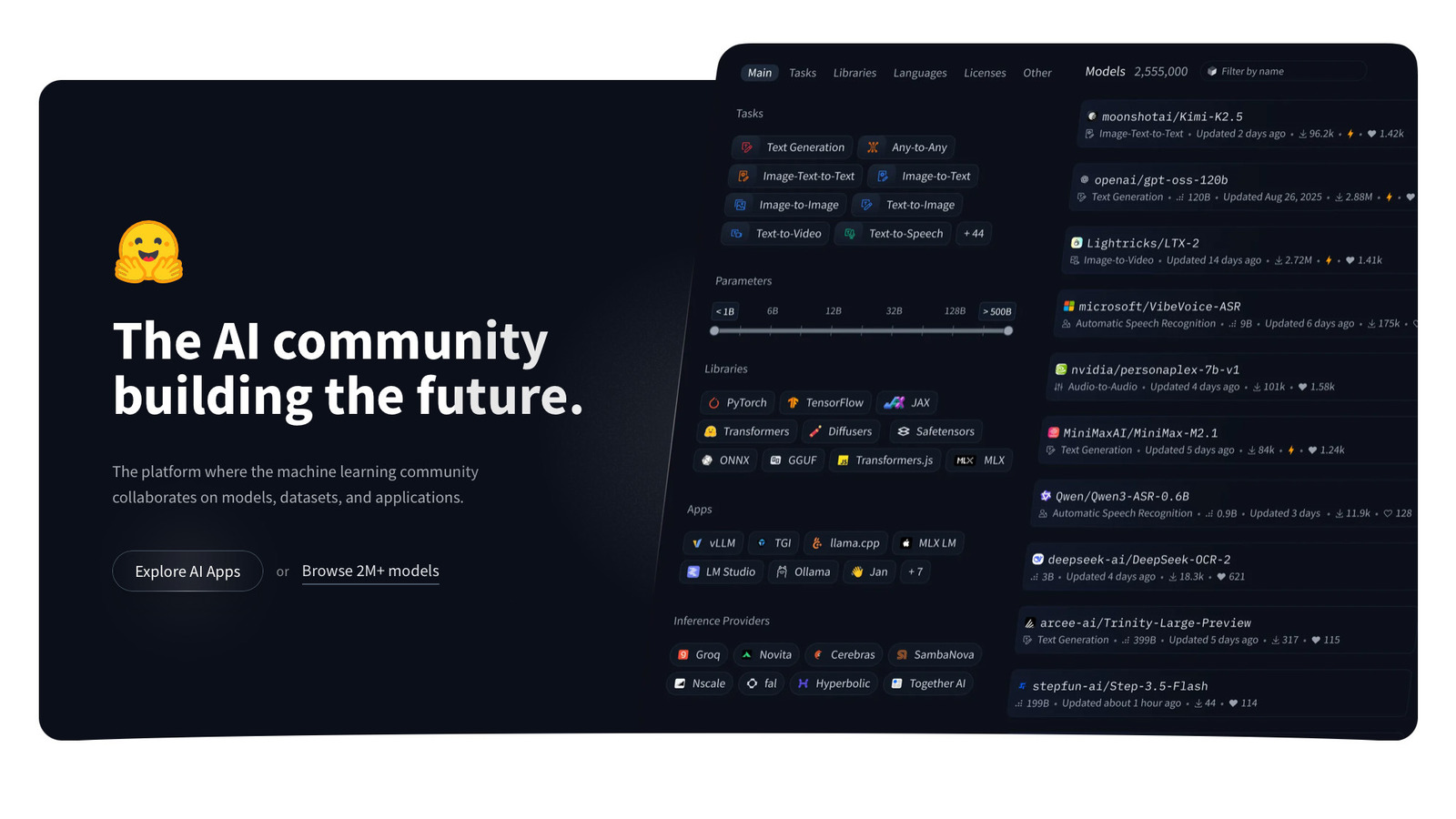
For the casual observer, Hugging Face is often described as "GitHub for AI." It is a centralized repository where developers share machine learning models, datasets, and demo applications. With over 18 million registered users and a library hosting more than three million distinct models, it is the bedrock upon which much of the modern open-source AI movement is built. Over 200,000 companies currently utilize these models to power internal processes, ranging from simple automation to sophisticated generative intelligence.
A Chronological Evolution: From Startup to Corporate Titan
The relationship between NVIDIA and Hugging Face has been one of gradual alignment. To understand the gravity of this acquisition, one must look at the timeline of their deepening partnership:
- 2016: Hugging Face is founded as a company focused on chatbots, eventually pivoting to become the open-source hub for Natural Language Processing (NLP) and, later, the broader AI ecosystem.
- 2023: NVIDIA, alongside tech titans including Google, Amazon, Salesforce, AMD, Intel, and Qualcomm, participates in a massive funding round for Hugging Face. This round signaled that the industry’s biggest players viewed the platform not as a competitor, but as critical infrastructure.
- 2024–2025: As the generative AI boom accelerated, Hugging Face became the focal point for open-weight models—alternatives to the "walled garden" proprietary models offered by OpenAI or Anthropic.
- August 2026: NVIDIA officially announces its intention to acquire the entirety of Hugging Face, subject to regulatory approval, effectively moving from an investor to an owner.
Supporting Data: The Scale of the Ecosystem
The numbers behind this acquisition highlight why regulators and industry analysts are watching closely. Hugging Face currently hosts more than 3 million models. These range from image generators and Large Language Models (LLMs) to specialized audio processing tools.
The user base is not merely hobbyists; it is a global collective of researchers, startup founders, and enterprise engineers. By incorporating the platform, NVIDIA gains a direct pipeline into the development habits, model preferences, and computational requirements of nearly every significant AI project being built outside of the major private laboratories.
Furthermore, NVIDIA’s contribution to the platform is already substantial. The company currently contributes over 500 models and 250 open datasets to the repository. This acquisition essentially formalizes the relationship between the hardware that runs the code and the code itself.
Official Responses and Strategic Promises
In a public statement accompanying the acquisition announcement, Jensen Huang was quick to address the fears of the open-source community, which is notoriously wary of corporate capture.
"Hugging Face will remain an open platform for the entire AI ecosystem," Huang stated. He emphasized that users would not be forced to migrate to proprietary NVIDIA software stacks or restricted to NVIDIA hardware. Huang further pointed to a recent white paper he authored, which explicitly advocates for the importance of "Open Weights" in ensuring global AI leadership and safety.
Clément Delangue, CEO of Hugging Face, has similarly voiced optimism. Delangue has been a vocal proponent of the idea that open-source models are essential for preventing the monopolization of AI by a few select tech giants. Earlier this month, he noted that nations like China are gaining a competitive advantage specifically because they have embraced the rapid iteration cycles made possible by open-source models. By joining forces with NVIDIA, Delangue implies that the platform will have the necessary resources to compete with the massive compute budgets of organizations like Google and OpenAI.
Implications: The Future of Open-Source AI
The acquisition carries profound implications for the future of technological development. Critics argue that NVIDIA’s move is a strategic "encirclement." By owning the platform that developers use to discover and share AI, NVIDIA can subtly influence the direction of future research, perhaps prioritizing optimizations that favor its own H100 and Blackwell architecture.
1. The Hardware-Software Synergy
NVIDIA has long been a software company disguised as a hardware company, thanks to its CUDA platform. By acquiring Hugging Face, it extends its reach into the application layer. If NVIDIA can ensure that the most popular models on Hugging Face run 20% faster on its chips than on competitors’ hardware, it creates a powerful incentive for developers to remain within the NVIDIA ecosystem, effectively locking in future generations of AI development.
2. The Battle for Open vs. Closed Models
The AI industry is currently split between "Proprietary" models (like GPT-4 or Claude 3.5), which are guarded as trade secrets, and "Open-Weight" models (like Meta’s Llama or Mistral), which can be downloaded and run locally. Many analysts argue that the "Efficiency Era" of AI will be won by open-weight models because they are more adaptable to specific enterprise needs. By acquiring the headquarters of the open-weight movement, NVIDIA is positioning itself to benefit regardless of which model-type wins the market.
3. Regulatory Scrutiny
The deal is expected to face intense antitrust review, particularly in the European Union and the United States. Regulators have recently become more aggressive toward "vertical integration"—the practice of a company owning the supply chain, the tools, and the distribution platform. Because NVIDIA already commands an estimated 80% of the AI chip market, regulators may question whether this acquisition effectively creates a "chokepoint" for AI innovation.
4. The Developer Sentiment
The primary risk for NVIDIA is the potential alienation of the open-source community. If developers perceive that Hugging Face is becoming a marketing funnel for NVIDIA products, they may migrate to decentralized alternatives or create a fork of the platform. The success of this acquisition depends entirely on the company’s ability to maintain the "neutrality" of the platform while providing the superior infrastructure it has promised.
Conclusion: A New Chapter for Artificial Intelligence
The $12.93 billion acquisition of Hugging Face is not just a financial transaction; it is a declaration of intent. NVIDIA is betting that the future of AI will not be determined solely by who builds the most powerful proprietary model, but by who controls the infrastructure that allows the world to build, share, and deploy models at scale.
As the industry moves into this next phase, the focus will shift from the sheer excitement of generative AI to the pragmatism of infrastructure and accessibility. For now, the developer community remains in a state of cautious anticipation. Whether this deal acts as a catalyst for greater AI accessibility or as the beginning of a monolithic, hardware-driven era of computing remains to be seen. One thing is certain: in the world of AI, all roads—and all code—now lead to NVIDIA.











