

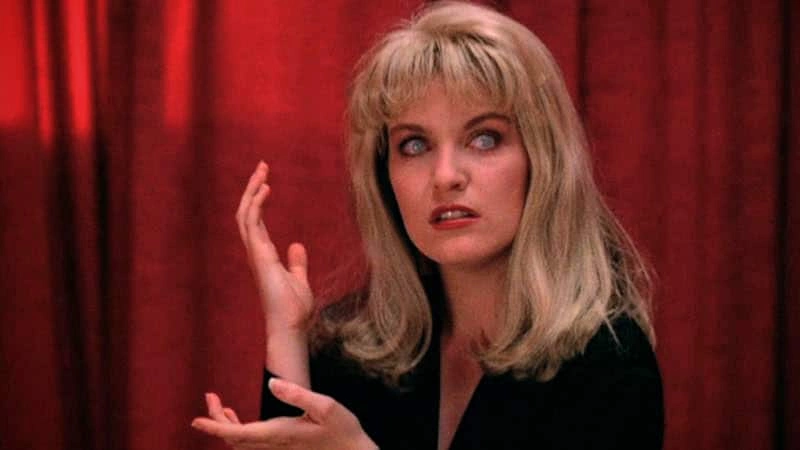
To those who have never wandered into the mist-shrouded forests of Washington state, the promise remains the same: the music will haunt your days and nights. Twin Peaks is a rare, singular entity in television history—a supernatural, soap-operatic, slapstick-tinged, surrealist, pulpy police procedural. While its visual language is legendary, it is the haunting, unforgettable sound design and musical score that provide the structural foundation for its uncanny atmosphere.

Main Facts: A Collaboration of Shadows
Twin Peaks, created by David Lynch and Mark Frost, premiered on ABC in 1990. It was an immediate cultural phenomenon, widely credited with ushering in the age of "auteur television." After two tumultuous seasons, the show returned in 2017 with The Return on Showtime, a series that redefined the boundaries of narrative television.

At the heart of the show’s sonic identity is the collaboration between David Lynch, composer Angelo Badalamenti, and vocalist Julee Cruise. Their partnership, which began with Lynch’s 1986 film Blue Velvet, created a soundscape that mirrors the show’s genre-defying nature. It is an invitingly peculiar melange of jazz, 1950s teen pop, 1980s synthesizers, dream pop, and modernist composition. As Lynch told the New York Times, "To me, the director is supposed to guide what people see from beginning to end and what people hear from beginning to end, to fulfill the ideas. When all the elements come together, you can get this thing where the whole is greater than the sum of the parts."

Chronology: From the Pilot to The Return
The evolution of the Twin Peaks sound is marked by three distinct phases:

- The Original Run (1990–1991): The music relied heavily on the "finger-popping" jazz quirk and nostalgic 50s pop motifs that anchored the show in its small-town aesthetic while simultaneously signaling that something was deeply wrong beneath the surface.
- The Hiatus: During the long gap between the original cancellation and the revival, the music took on a cult status, with the soundtrack becoming a touchstone for dream pop and dark ambient music.
- The Return (2017): In the third season, Lynch moved away from the nostalgic comfort of the original soundtrack. Music supervisor Dean Hurley noted that the "finger-popping jazz quirk" was not the tone of the new era. Instead, The Return embraced more serious, challenging compositions and atmospheric soundscapes, reflecting a darker, more abstract vision of the Pacific Northwest.
Supporting Data: Iconic Musical Interventions
The brilliance of Twin Peaks lies not just in the composition, but in the application. Music is used to puncture the boundary between the "real" and the "fantastic."

The "I Am the F.B.I." Moment
In Episode 16 of The Return, Agent Dale Cooper finally sheds the persona of Dougie Jones. The scene is quiet, defined only by dialogue, until the opening notes of "Falling"—the series’ original theme—begin to play. The music builds in a stately, hopeful ascent as Cooper declares his identity. The oscillation of the synthesizers provides a release of tension that serves as a massive emotional payoff for an audience that endured eighteen hours of slow-burn mystery.

The Birth of BOB
Episode 8 of The Return stands as one of the most abstract hours of television ever produced. To depict the origin of the entity known as BOB, Lynch utilized Krzysztof Penderecki’s Threnody for the Victims of Hiroshima. The piercing, dissonant strings provide a harrowing, metaphysical counterpoint to the Trinity nuclear test. By choosing a work of high-modernist classical music rather than a traditional score, Lynch transformed a science-fiction origin story into a cosmic horror event.

Leland’s "Get Happy"
The scene in the Hayward household where Leland Palmer sings "Get Happy" is a masterclass in psychological discomfort. The music functions as a duet of conflicting tonalities: the persistent, brooding synthesizer background clashes with the active, roving piano playing of Gersten Hayward. The juxtaposition of a joyous, upbeat musical performance with the visual horror of a crumbling, possessed father remains one of the show’s most terrifying displays of irony.

Official Responses and Creative Philosophy
The creative team behind Twin Peaks has always been vocal about the necessity of sound as a primary narrative tool. David Lynch’s philosophy, often referred to as "sound and picture flowing together in time," rejects the idea of music as a background accessory.

For the production of The Return, the inclusion of real-world musical acts at the Roadhouse—from Nine Inch Nails to Chromatics—was a deliberate departure from the diegetic jukebox songs of the 1990s. These performances were not merely atmosphere; they were treated as portals or shifts in reality, allowing the music to dictate the pace of the narrative. Musicologist Brooke McCorkle has noted that the blurring of diegetic and non-diegetic sound is a "Lynchian aesthetic" that forces the audience to question the reliability of the environment on screen.

Implications: The Legacy of Auditory Surrealism
The implications of the Twin Peaks musical legacy are felt across contemporary media. The show proved that television audiences were capable of handling—and indeed craving—experimental sound design. It validated the use of silence, the use of industrial dissonance, and the use of classic pop as a way to create a sense of the "uncanny."

The show’s music serves as a linguistic system. When we hear the wind, we think of the Black Lodge; when we hear the slinky clarinet, we think of the danger lurking behind the domesticity of the Double R Diner. It is a language that bypasses the rational mind and speaks directly to the viewer’s subconscious.

Whether it is the rhythmic snapping of fingers in a hotel room or the horrific skipping of a record during a murder, the music of Twin Peaks does not merely support the story; it is the story. It is the bridge between the small-town charm of the Pacific Northwest and the dark, infinite void of the Lodge. As we continue to wait for rumors of a potential Season 4 to materialize, the existing catalog remains a haunting reminder of what happens when a director treats sound with the same reverence as light, color, and performance.

Twin Peaks remains a testament to the idea that the most effective way to tell a story is to make the audience feel the music in their bones before they understand the plot in their minds. It is a work that, decades later, continues to haunt our days and nights, forever circling back to the same, unsettling, beautiful melody.










No comments yet. Be the first to join the conversation!