

The landscape of culture, literature, and government oversight is currently undergoing a period of intense scrutiny and transformation. From the corridors of the Library of Congress to the chambers of the federal judiciary, the past week has seen significant developments that challenge our understanding of creative autonomy, intellectual property, and the role of the state in cultural funding.
This report synthesizes the most pressing developments across the creative industries, examining the backlash against the National Ambassador for Young People’s Literature, a landmark ruling regarding the National Endowment for the Humanities (NEH), and the evolving technological standards within Hollywood and beyond.
I. The "Crud" Controversy: Mac Barnett and the Kid-Lit Crisis
The children’s literature community is currently reeling from comments made by the newly appointed National Ambassador for Young People’s Literature, Mac Barnett. In his latest essay collection, Make Believe: On Telling Stories to Children, Barnett invoked "Sturgeon’s Law"—a classic science fiction adage suggesting that 90% of all work is, effectively, "crud"—and applied it to the children’s publishing sector with a hyperbolic twist.

The Spark of Outrage
Barnett posited that "94.7 percent of kids’ books are crud," arguing that much of the genre serves as a tool for "adult control" rather than a genuine exploration of a child’s imagination. While Barnett’s intent was likely a critique of the industry’s trend toward didacticism, the delivery—coming from the official spokesperson for young people’s literature—was met with immediate and fierce pushback.
Authors and educators across the country have labeled the comments elitist and dismissive of the hard work required to produce quality literature for young readers. A petition addressed to the Library of Congress and the organization Every Child a Reader has gained significant momentum, reflecting a deep-seated frustration within the community. The incident highlights the precarious balance of a public-facing ambassadorial role, where personal literary criticism can easily be misinterpreted as a disparagement of an entire professional field.
II. Judicial Intervention: The Unconstitutional Termination of NEH Grants
In a profound victory for the arts and humanities, District Court Judge Colleen McMahon issued a 143-page opinion this week declaring the mass termination of over 1,400 National Endowment for the Humanities (NEH) grants by the "DOGE" (Department of Government Efficiency) initiative to be unconstitutional.

A Legal Slam Dunk
Judge McMahon’s ruling was unequivocal. She determined that the terminations violated the First Amendment, the equal protection component of the Fifth Amendment, and were executed without statutory authority.
The court found that the executive branch had fundamentally overstepped its bounds. By attempting to rescind grants based on ideological criteria not outlined by Congress, the DOGE initiative acted ultra vires—beyond its legal power. The ruling serves as a stark reminder of the limits of executive authority, affirming that the NEH’s grant-making process is a congressionally mandated function that cannot be dismantled through administrative fiat.
The Road Ahead
While the permanent injunction prevents the government from moving forward with the cancellations, the ruling does not automatically trigger the release of funds. As legal experts note, this is merely the first step in a long process of restorative justice for the affected scholars, artists, and institutions. It does, however, establish a powerful precedent against the politicization of cultural funding.

III. The Library of Congress: Making Research Accessible
Amidst the legal and literary storms, the Library of Congress has unveiled an ambitious project aimed at fostering the next generation of researchers. "The Source: Where Curiosity Sparks Discovery" is a 4,000-square-foot interactive space designed to demystify the research process for children and teenagers.
Bridging the Generation Gap
For years, the Library of Congress has been viewed by the public as an impenetrable fortress of "dank stacks." This new, seven-year-in-the-making exhibit seeks to dismantle that image. By utilizing motion-activated sensors and interactive kiosks, the exhibit encourages visitors to engage with primary source materials—from drafts of the Gettysburg Address to early comics and phonograph recordings.
This initiative is a critical counter-narrative to the current cultural anxiety regarding literacy and information retention. By grounding history in tactile, experiential learning, the Library is actively working to ensure that the "curiosity gap" among youth is addressed with the same rigor as its archival preservation efforts.

IV. Hollywood’s AI Reckoning: New Rules for the Oscars
The Academy of Motion Picture Arts and Sciences has officially moved to address the rapid rise of Generative Artificial Intelligence. In a series of sweeping rule changes, the Academy has reinforced the necessity of human authorship and performance.
Human-Centric Mandates
Under the new regulations, only roles "demonstrably performed by humans with their consent" will be eligible for acting nominations. Furthermore, the writing branch has mandated that all screenplays must be "human-authored." This represents a definitive line in the sand for the film industry, asserting that the creative spark remains a human province.
In a separate, surprising shift, the Academy has also dissolved the rule preventing actors from receiving multiple nominations in the same category within a single year. This change is intended to align the Oscars with other high-level award achievements, potentially allowing for a more nuanced recognition of an actor’s versatility over a single calendar year.

V. Chronology of Events (May 2026)
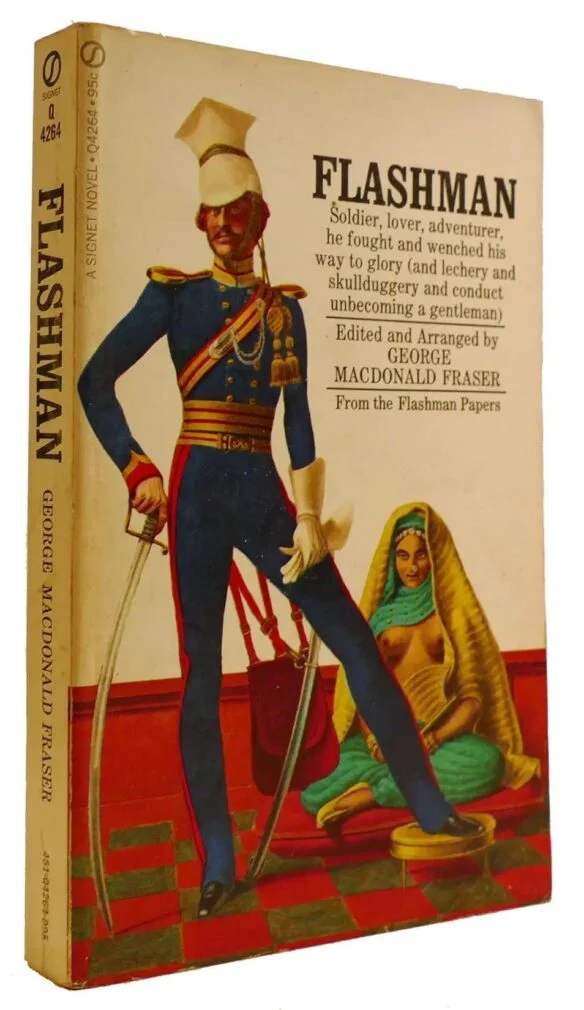
- May 5: Fictional date of birth for Sir Harry Flashman; commemorations held across literary circles.
- May 6–7: A petition circulates in response to Mac Barnett’s comments regarding the quality of children’s literature.
- May 8: Scott Edelman releases episode 281 of Eating the Fantastic, featuring Paul McAuley.
- May 8: The Guardian publishes a first-person account of the burgeoning sport of competitive lightsaber dueling in France.
- May 15–17: Heritage Auction hosts the "Art of Anime" Vol. VIII, featuring rare production cels from Rankin-Bass’s The Hobbit.
- May 15 (Expected): Filming for 3 Body Problem Season 3 commences in Hungary.
VI. Supporting Data: The Cultural Ecosystem
The interconnectedness of these events reveals a broader trend: the digitization and democratization of culture are facing friction from traditional institutions and legal frameworks.
- Historical Preservation: The sale of the 1977 The Hobbit production cels underscores the rising market value of traditional animation techniques in an era of digital dominance.
- Sport and Culture: The rise of lightsaber dueling as an officially registered sport in France (sanctioned by the French Fencing Federation) exemplifies how pop culture narratives are being codified into formal, physical disciplines.
- Academic Influence: The naming of 50+ species after Sir David Attenborough, including the "zombie fungus" Gibellula attenboroughii, illustrates the profound impact of science communication on the global research community.
VII. Implications for the Future
The current state of our cultural institutions suggests a transition point.
- On Artistic Value: The backlash against Mac Barnett reveals that the community is sensitive to how its contributions are characterized. It demands a more nuanced discourse that acknowledges the difficulties of creative work without resorting to broad, dismissive generalizations.
- On Governance: The NEH ruling serves as a cornerstone for the protection of independent intellectual and artistic inquiry. It reinforces that the state’s role is to support, not dictate, the direction of cultural output.
- On Technology: The Academy’s decision to limit AI in film is likely just the beginning of a broader legislative and industry-wide struggle to define the boundaries of human creative labor.
As we look toward the remainder of 2026, these developments demonstrate that culture is not a passive artifact but an active, contested, and highly guarded space. Whether it is a judge protecting grants, an academy defending human performance, or a library inviting children into the stacks, the central theme remains consistent: the preservation and defense of human endeavor in a rapidly changing world.

This report was compiled with contributions from Steven French, Mike Kennedy, Andrew Porter, John King Tarpinian, Cat Eldridge, Jonathan Cowie, Chris Barkley, Mark Roth-Whitworth, and Kathy Sullivan.










No comments yet. Be the first to join the conversation!