

For any motorcycle enthusiast, few auditory experiences rival the visceral, spine-tingling wail of a high-revving inline-four engine. Unlike the rhythmic, mechanical thumping of a Harley-Davidson cruiser or the frantic, insectoid buzz of a two-stroke engine, the inline-four produces a seamless, melodic shriek that climbs in pitch as the tachometer needles sweep toward the redline. Often compared to the legendary naturally aspirated V10 engines of Formula 1’s golden era, the "screamer" configuration has cemented its place in motorcycling history as the gold standard for performance acoustics.
But the term "screamer" is more than just a nod to its iconic sound. It is a technical descriptor for an engine architecture that fundamentally changed how motorcycles interact with the asphalt. To understand why these engines dominate the upper echelons of sportbike performance, one must look past the exhaust note and into the mechanical heart of the machine.
Main Facts: The Anatomy of a Screamer
At its most basic, an inline-four engine consists of four cylinders arranged in a straight line, all connected to a single crankshaft. The "screamer" moniker is derived from the firing order and internal dynamics of this layout. In a traditional screamer, the pistons move in pairs, firing at perfectly even intervals.
Because of this precise synchronization, the crankshaft is never allowed to "rest." In a single-cylinder or V-twin engine, there are significant gaps between power strokes where the engine relies on the momentum of the flywheel to keep the rotation going. In an inline-four screamer, there is almost always a piston in the midst of a power stroke. This creates a continuous, unbroken stream of power delivery. This constant combustion cycle is what produces the high-frequency acoustic output—a continuous scream rather than a series of distinct pulses.
Chronology: The Evolution of the Inline-Four
The rise of the inline-four can be traced back to the push for high-performance, mass-produced Japanese motorcycles in the late 1960s and 70s. When Honda introduced the CB750 in 1969, it signaled a paradigm shift. The inline-four became the benchmark for reliability, power-to-weight ratios, and smooth operation.
Throughout the 1980s and 90s, as manufacturers vied for dominance in the World Superbike and Grand Prix (GP) circuits, the inline-four became the weapon of choice for companies like Yamaha, Kawasaki, and Suzuki. Engineers pushed the limits of metallurgy and combustion efficiency, allowing these engines to reach astronomical RPMs—some exceeding 18,000 RPM in top-tier racing environments.
However, as the 2000s approached, the "screamer" hit a wall. As engines became more powerful, the very nature of their smooth, constant power delivery began to work against the riders. The late 2000s saw the industry pivot toward "Big Bang" firing orders—a move that fundamentally altered the sound and behavior of these machines to make them more manageable on the track, effectively ending the pure "screamer" era in professional racing while cementing its status as a legend on the street.
Supporting Data: Efficiency vs. Complexity
The technical superiority of the inline-four is rooted in physics. By splitting the displacement into four smaller cylinders, engineers can achieve higher piston speeds and better combustion efficiency.
Power Delivery and Traction
The primary advantage is linear power delivery. Because the firing happens in such quick succession, the torque curve is incredibly smooth. However, this is a double-edged sword. Data from MotoGP telemetry during the early 2000s suggested that the "constant" nature of a screamer’s power delivery made it difficult for riders to "read" the tire. When the engine is constantly pushing the rear wheel, it becomes harder to detect the exact moment a tire begins to lose grip.
The Balancing Act
One of the most praised aspects of the inline-four is its inherent balance. By having the pistons move in opposing pairs, the engine effectively cancels out primary vibrations that would otherwise rattle a frame to pieces. However, this is not a perfect solution. Engineers must account for "secondary imbalance." Because of the geometry of the connecting rods, the pistons do not move at a perfectly uniform velocity throughout the stroke. This creates a high-frequency vibration—a "buzz"—that requires a counterbalancer to mitigate.
Official Perspectives: The "Big Bang" Revolution
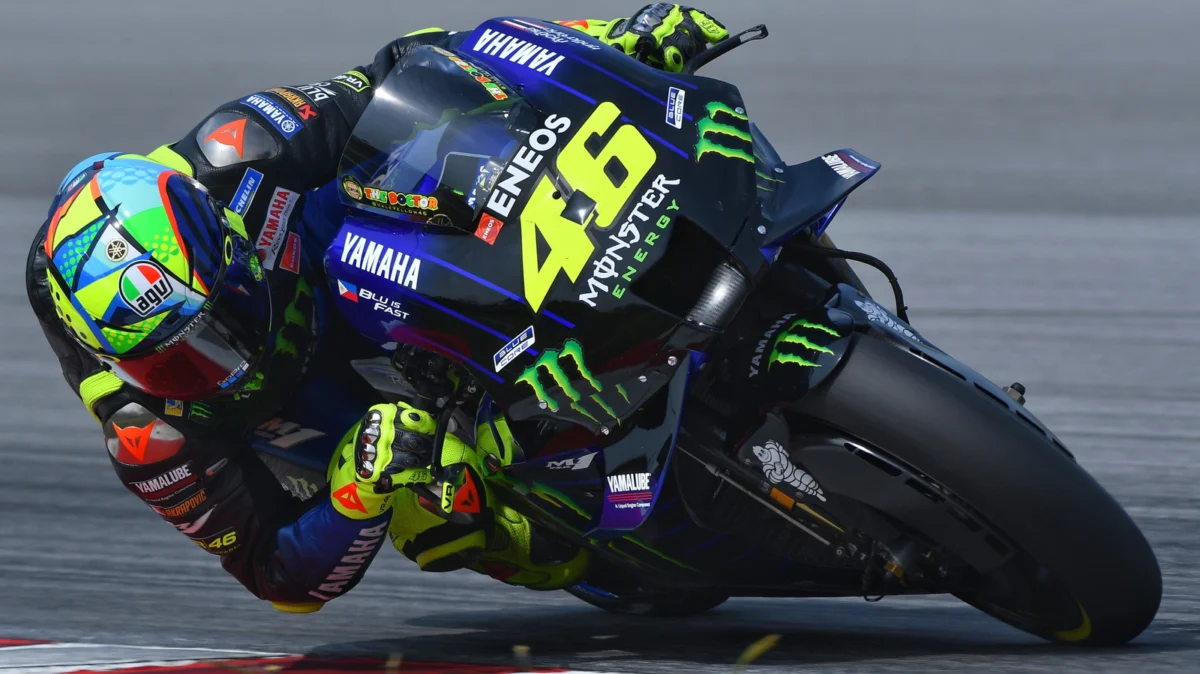
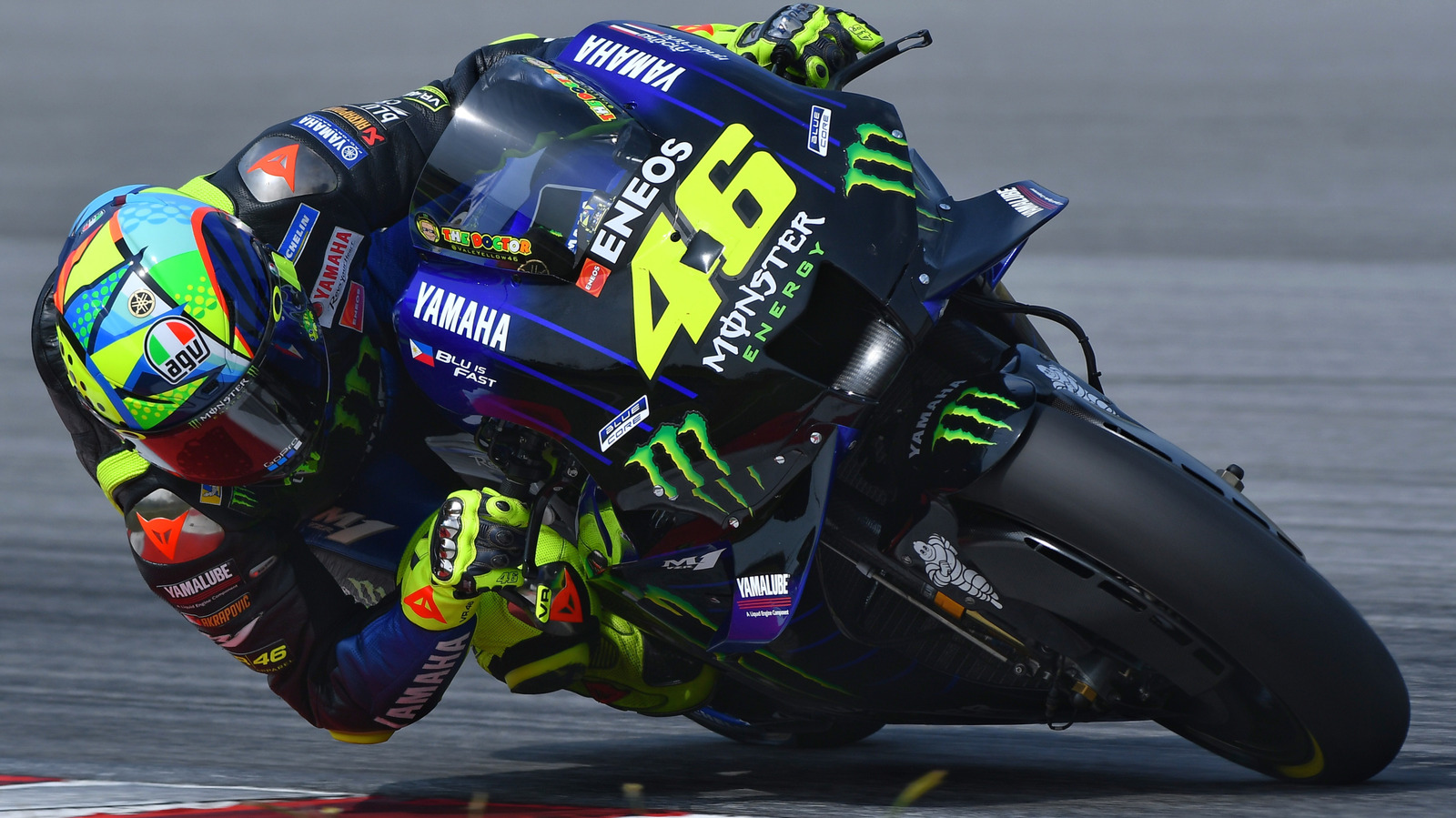
The transition away from the pure screamer in the professional racing world is best exemplified by the work of legendary Yamaha engineer Masao Furusawa. During the development of the Yamaha M1 MotoGP bike—the machine that propelled Valentino Rossi to multiple world championships—Furusawa-san recognized that the "screamer" was hindering rider confidence.
In an interview with Crash.net, Furusawa explained that the constant firing pulse of a traditional screamer created "torque noise." This acoustic and mechanical chaos masked the subtle signals the rear tire sent to the rider. If a rider couldn’t feel the tire, they couldn’t find the limit of grip.
The solution was the "Big Bang" engine. By re-timing the crankshaft to change the firing interval, engineers forced the engine to fire cylinders in a staggered, clustered sequence. This introduced small, millisecond-long gaps in the power delivery. These gaps allowed the tire a brief moment to "rest" and regain grip between pulses. While this made the engine sound rougher and less like a "scream," it made the bikes significantly faster in the corners. It was a trade-off: sacrifice the pure, melodic sound for the raw, competitive edge of increased traction.
Implications: Why the Screamer Remains a Legend
Despite the shift toward "Big Bang" configurations in racing, the pure screamer remains the heart of the modern street-legal sportbike. Models like the Kawasaki Ninja ZX-6R continue to carry the torch. Why, then, do manufacturers continue to build these complex, high-maintenance machines if they aren’t the absolute peak of racing technology?
The Emotional Connection
The primary reason is the human element. Motorcycling is as much about passion as it is about performance. The sound of an inline-four climbing through the rev range provides a visceral, addictive experience that a flat-plane or cross-plane crank simply cannot replicate in the same way. The "scream" is a hallmark of mechanical perfection, a sound that signals a machine operating at its physical limits.
Cost and Complexity
The implication of choosing an inline-four is a commitment to complexity. The need for counterbalancers, precise valve train timing, and sophisticated cooling systems makes these engines more expensive to manufacture and maintain. For the consumer, this means that the "screamer" is a premium product. It is a machine that demands respect, both in terms of riding skill—due to its linear, high-RPM power delivery—and in terms of ownership costs.
The Future of the Screamer
As the industry shifts toward electrification, the "screamer" faces an existential threat. Electric motors provide instant torque and are infinitely smoother than any internal combustion engine, yet they lack the acoustic soul that defines the motorcycle experience. This has created a modern resurgence in the appreciation for the inline-four. Riders are holding onto these machines not just for their performance, but as artifacts of a golden age of mechanical engineering.
Conclusion
The "screamer" is more than just a catchy name; it is the physical embodiment of a specific philosophy in engineering—the pursuit of seamless, high-frequency power. From its origins as a revolutionary layout that challenged the dominance of the V-twin to its role as the acoustic soundtrack of the MotoGP era, the inline-four has earned its reputation. While it may have been surpassed in the hyper-competitive world of Grand Prix racing by the "Big Bang" configurations, it remains the definitive engine for the street rider who demands a combination of raw power, mechanical balance, and an exhaust note that, quite literally, screams for attention. As long as there are riders who value the connection between the machine and the road, the wail of the inline-four will continue to be heard.











