

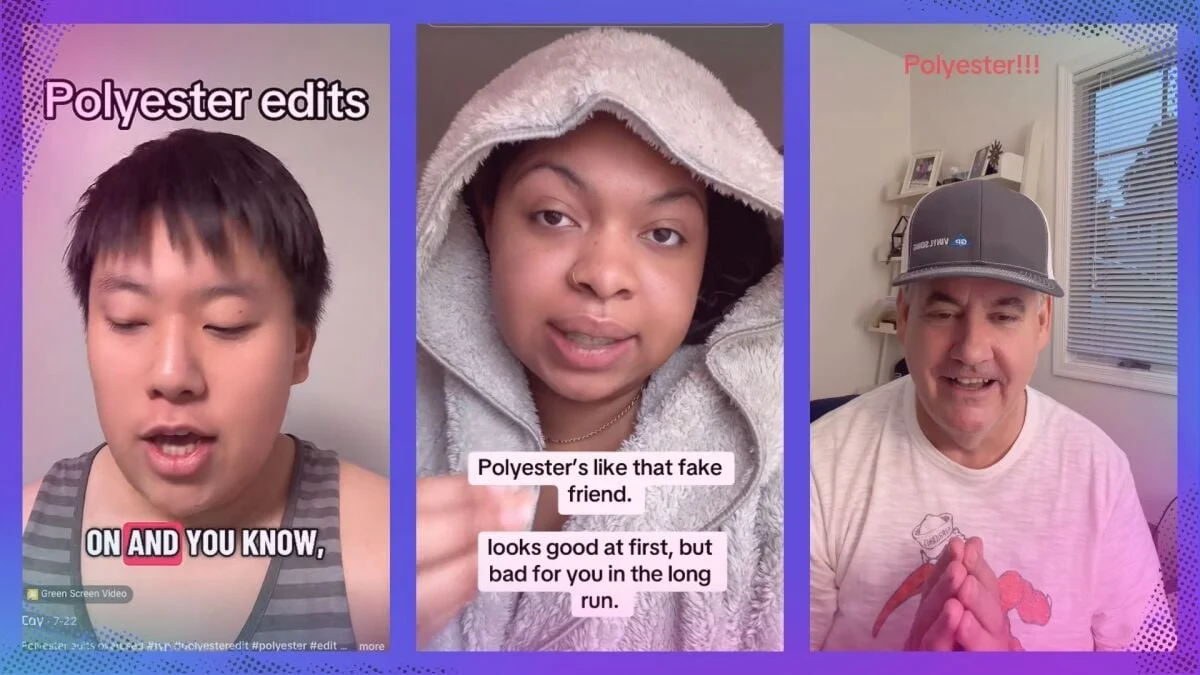
In the fast-moving lexicon of Gen-Z digital discourse, to be called "polyester" is not a critique of one’s wardrobe choices—it is a stinging indictment of one’s entire character. While the term originated in the tactile world of textiles, it has been rapidly repurposed as a sophisticated, multifaceted insult for anything that feels mass-produced, low-effort, or fundamentally inauthentic.
To describe a person, a relationship, or a piece of content as "polyester" is to suggest that while it may appear polished and shiny at a distance, it lacks the soul, texture, and inherent value of the "natural." It is the aesthetic equivalent of plastic: synthetic, disposable, and ultimately, hollow.
The Semantic Shift: From Fabric to Philosophical Failure
For decades, polyester has occupied a precarious position in the fashion hierarchy. Once hailed as a miracle fiber of the mid-20th century, it eventually became synonymous with the cheap, shiny, and sweat-inducing garments associated with fast fashion. Younger generations, increasingly conscious of sustainability and material quality, have spent years attempting to purge it from their closets, favoring natural fibers like cotton, wool, and linen.
However, the modern usage of "polyester" transcends the physical. It has evolved into a metaphorical tool used to identify the "artificial." When a TikTok creator calls an influencer’s brand "polyester," they are not talking about the thread count; they are suggesting the brand is a hollow cash grab, designed by algorithms rather than passion. When a relationship is labeled "polyester," it implies the romance is performative—a series of curated Instagram photoshoots rather than a genuine human connection.
This linguistic evolution mirrors a broader cultural fatigue with the "polished" aesthetic of the 2010s. As the internet becomes increasingly saturated with AI-generated content, hyper-curated feeds, and drop-shipped commerce, "polyester" serves as a defensive mechanism—a way for users to label and dismiss the artificiality that now dominates their digital experience.
A Chronology of the ‘Polyester’ Meme
The transition of "polyester" from a noun to an adjective of derision did not happen overnight. Its trajectory can be traced back to the peculiar subculture of "polyester edits" that began circulating on TikTok in late 2025.
The Rise of the ‘Polyester Edit’
The term initially emerged to describe a specific, high-intensity style of fan editing. These videos, frequently featuring pop-culture icons like Spider-Man or Iron Man, relied on aggressive, rapid-fire cuts, metallic audio tracks, and excessive visual effects layered over static poses. These edits were "flashy" in the literal sense, but they were also viewed as low-effort—a "slop" of visual stimuli designed to chase algorithm favor rather than display artistic craft.
By the summer of 2026, the term had caught fire. A particularly chaotic Spider-Man edit, which had been circulating since late 2025, resurfaced and went viral, serving as the definitive archetype of the "polyester" style. Users began commenting "polyester" on similar videos, signaling that the content was visually abrasive and intellectually bankrupt.
The Expansion of the Insult
As is the nature of internet slang, the term quickly escaped its niche. It moved from the editing community to the broader social media landscape. It began to be applied to streamers, influencers, and even the "aesthetic" of the early 2010s. The moniker "The Polyester Prince," bestowed upon streamer LowTierGod, exemplified this transition. The insult was no longer just about editing software or textile science; it was about the spirit of the person in question.
The Sociology of the "Polyester" Lifestyle
To understand why "polyester" has gained such traction, one must look at the specific targets of the insult. Creators have begun mocking the "polyester wearer"—a caricature characterized by loud, all-over-print clothing, galaxy-patterned leggings, and wolf-themed shirts. This look is framed as a relic of a "synthetic era," representing a lack of taste and a reliance on trends that were mass-produced for the lowest common denominator.
This parody highlights a core tenet of the insult: the idea that the "polyester" person is someone who has lost their agency to mass-market trends. They are, in the eyes of their critics, the physical embodiment of a culture that values quantity over quality and appearance over substance.
Mapping the Ecosystem of Digital Derision
"Polyester" does not exist in a vacuum. It sits atop a growing pile of internet insults designed to police behavior and define authenticity. To understand its power, we must compare it to its peers in the digital dictionary:
- The Larpers: Someone accused of "larping" is essentially playing a character. It is an accusation of bad-faith performance, suggesting that a person is adopting an identity or a struggle that isn’t their own for social clout.
- The Performative: Often used to describe political or social activism that feels scripted. It is the antithesis of the organic.
- The Industry Plant: A classic trope for musicians or influencers whose fame feels unearned or suspiciously manufactured by corporate entities.
- The NPC (Non-Player Character): A term for those who lack original thought or personality, behaving instead according to a pre-programmed script of societal expectations.
- Slop: Perhaps the closest cousin to "polyester." "Slop" is the term for low-quality content churned out in bulk—often AI-generated—that fills the digital void without providing value.
"Polyester" distinguishes itself by adding a layer of judgment regarding "tackiness." Where "slop" describes the production method, "polyester" describes the vibe. A piece of content can be professionally produced, high-budget, and "authentic" in its creation, yet still be "polyester" if it feels like it was designed in a boardroom to appeal to a focus group.
Implications for the Digital Economy
The emergence of "polyester" as a pejorative term has profound implications for digital marketing and personal branding. As audiences become more adept at sniffing out the "synthetic," the pressure on creators to maintain an air of "natural" authenticity becomes higher.
The Death of the "Polish"
For years, the gold standard of the influencer economy was high-production value: perfect lighting, professional editing, and scripted transitions. Today, that very polish is becoming a liability. Audiences are increasingly pivoting toward "lo-fi" content—vlogs that are shaky, raw, and unedited. The "polyester" label is effectively punishing those who are still playing by the old rules of corporate-style perfection.
The Algorithm’s Paradox
The irony of the "polyester" insult is that it is often used by people who are themselves deeply entrenched in the same algorithms they criticize. To be "anti-polyester" is, in itself, a performative identity. Many creators have built entire brands around the rejection of "polyester" trends, creating a feedback loop where the rejection of the artificial becomes a new, marketable aesthetic.
Furthermore, as the market becomes flooded with AI-generated avatars and deepfake influencers, the line between "natural" and "synthetic" will only continue to blur. The term "polyester" will likely continue to evolve, eventually becoming a catch-all for any content that an audience deems "too online."
Conclusion: The Ultimate Irony
There is a final, poetic irony inherent in the rise of the "polyester" insult: the term itself is becoming a victim of its own success. As it is used more frequently to describe everything from a bad movie to a tacky outfit, the term is losing its specificity. It is becoming a buzzword, a generic descriptor that is rapidly being co-opted by the very brands and influencers it was originally meant to mock.
When a word becomes the go-to insult for everything an online subculture dislikes, it loses its sting. It becomes a shorthand, a "slop" version of criticism that requires no actual thought to deploy. In other words, as "polyester" becomes the ubiquitous way to describe the inauthentic, the word itself is beginning to feel distinctly… polyester.
For now, however, it remains the most effective way for the digital generation to express their skepticism of a world that feels increasingly manufactured. Whether it is a passing trend or a lasting part of the vernacular, "polyester" serves as a reminder that in an age of infinite digital creation, the most valuable commodity is still the one thing that cannot be mass-produced: the genuine.











