

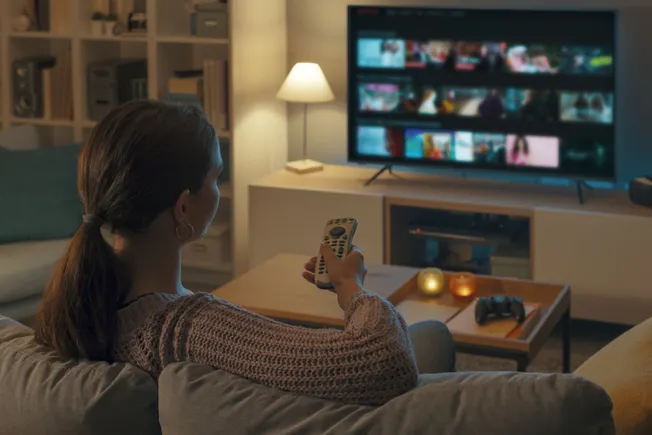
In an era defined by the rapid migration of marketing dollars toward social media platforms and creator-led campaigns, a quiet battle for the soul of the advertising industry is brewing. As major brands increasingly prioritize the perceived agility of digital-first, lower-funnel tactics, legacy broadcasters—led by heavyweights like NBCUniversal—are mounting a rigorous, data-driven defense of premium video.
The central argument? In the pursuit of granular, short-term performance metrics, marketers may be inadvertently dismantling the very foundation of brand growth. By collaborating with WPP’s marketing effectiveness consultancy, Gain Theory, NBCUniversal is attempting to shift the conversation from "what is cheapest" to "what is most effective," leveraging sophisticated marketing mix models (MMM) to prove that the "balanced media diet" is not just a legacy preference, but a business necessity.
The Chronology of a Shift: From Linear Dominance to Performance Obsession
For decades, the television upfronts served as the cornerstone of the advertising year. Brands committed significant portions of their annual budgets to premium, brand-safe video environments, banking on the massive, captive audiences afforded by live sports, scripted dramas, and tentpole events.
However, the advent of the digital age—and specifically the rise of social media advertising—fundamentally altered this dynamic. As platforms like TikTok, Instagram, and YouTube offered marketers the ability to track clicks, conversions, and direct-response metrics in real-time, the allure of the "performance" funnel became irresistible. When macroeconomic volatility hit and CMOs faced increased pressure from CFOs to prove the ROI of every spent dollar, the shift accelerated. Marketing departments began migrating budgets away from the "expensive" world of premium video and into the "measurable" world of lower-funnel social and digital ads.
It was against this backdrop that NBCUniversal and Gain Theory began their multi-year partnership. Recognizing that their clients were increasingly questioning the value of traditional video investments, the two organizations began pressure-testing media plans. By utilizing syndicated data across diverse categories—including automotive, consumer packaged goods (CPG), retail, and pharmaceuticals—they sought to simulate what happens when a brand drastically alters its media mix.
Supporting Data: The Cost of Erosion
The findings of the NBCUniversal-Gain Theory simulations, recently presented at an Association of National Advertisers (ANA) event in Manhattan, paint a sobering picture for those who have abandoned premium video in favor of pure digital efficiency.
The 29% Revenue Drop
In one of the most striking scenarios simulated by the partnership, researchers modeled the impact of removing premium video spend from a campaign and reallocating those resources to non-premium social and digital platforms. The result was not an increase in efficiency, but a 29% decline in incremental revenue. This suggests that while digital tactics are excellent at capturing existing demand, they are poor at generating the kind of broad-scale brand equity that drives long-term sales.
The ROI Regression
Furthermore, the tactics that received the influx of reallocated budget—the social and digital channels—saw a 20% decline in return on investment compared to the original, more balanced media plan. This suggests a law of diminishing returns: by oversaturating social platforms and starving the top-of-funnel premium video environments, brands are not only losing the "halo effect" of premium content, but they are also making their lower-funnel tactics work harder and less effectively.
Attentiveness and Intent
The study also delved into the qualitative differences between platforms. NBCUniversal found that its premium ad experiences drive 79% higher attentiveness compared to digital and social platforms. The rationale is behavioral: social media platforms are designed for "scrolling," a state of high-distraction, low-engagement consumption. In contrast, premium video, particularly when consumed on a connected TV (CTV) or via high-quality production, commands a deeper level of viewer focus. Consequently, campaigns that successfully combined premium video with social tactics generated 84% higher consideration intent than those relying solely on social media.
Official Perspectives: Translating Complexity for the Boardroom
The challenge for modern marketing leaders is not just understanding these data points, but effectively communicating them to the C-suite. During the ANA presentation, Vignesh Kumar, a senior director of measurement and insights at NBCUniversal, and Laura Laird, a senior director at Gain Theory, emphasized that the "uphill battle" of justifying premium spend is largely a failure of framework.
"By eroding that foundation or removing those [premium video] dollars to the other tactics in search of maybe short-term efficiency… that will not only impact the performance of that premium video buy, but also the overall performance of your media plan," Kumar stated.
Laird echoed this, noting that the modern media landscape is inherently complex, and attempting to simplify it for stakeholders often leads to poor decision-making. "You have to have somewhat of a complex marketing framework. That’s the reality of how we do business," Laird said. "Having the framework reflect that complexity, but then being able to translate it in a really simple and concise way, particularly to the rest of the organization, it’s by no means easy."
The Middle-Funnel Renaissance and the Power of Fandom
A common misconception in the industry is that premium video is solely for "brand awareness," while digital is for "purchase decisions." Kumar challenged this binary, noting that with the proliferation of connected TV, premium video is increasingly capable of influencing the middle of the funnel—where the actual decision to purchase is made.
The Tentpole Strategy
The rise of "tentpole" events—like the Winter Olympics or the FIFA World Cup—provides a unique opportunity for brands. However, the data suggests that many brands treat these as one-off activations, missing the opportunity to build sustained momentum. According to Kumar, advertisers who use these massive events as a baseline and then layer on consistent audience targeting drive 54% higher middle-funnel engagement than those who treat the event as a standalone splash.
Fandom as a Catalyst
The concept of "fandom" is also being re-evaluated. While social media is the place where fans congregate to discuss shows, the "content" itself—the high-drama, high-production reality TV and scripted series—lives on premium platforms. NBCUniversal’s research suggests that when brands align themselves with these engaged, avid fan bases, they tap into a level of consumer loyalty that is nearly impossible to replicate through programmatic, feed-based advertising.
Implications: The Future of Media Planning
The implications of this research are profound. As the industry faces ongoing macroeconomic uncertainty, the temptation to slash budgets in favor of short-term, "safe" performance metrics will persist. However, the data provided by NBCUniversal and Gain Theory serves as a warning: the erosion of premium video is, in effect, an erosion of long-term business viability.
For CMOs, the path forward requires a shift in how they report success. Moving away from a singular obsession with immediate ROI and toward a more nuanced, holistic "marketing effectiveness" model is essential. This requires:
- Investment in Advanced Modeling: Brands must move beyond basic attribution and toward sophisticated MMM that accounts for the synergistic effects of different media types.
- Maintaining the "Balanced Diet": Recognizing that premium video and social media are not substitutes, but complements.
- Educational Advocacy: Marketing leaders must act as translators, helping CFOs understand that a 20% drop in ROI on a tactical level is a small price to pay for a 29% increase in total revenue at the brand level.
As the industry continues to evolve, the distinction between "legacy" and "digital" is becoming increasingly irrelevant. The future of advertising lies in the ability to deliver high-quality, attention-grabbing content that respects the consumer’s time, while using data to ensure that this content is served in the right context, to the right person, at the right moment. The broadcasters are not just fighting for their share of the wallet; they are fighting to preserve the effectiveness of the entire advertising ecosystem.












No comments yet. Be the first to join the conversation!