Dwi Wanna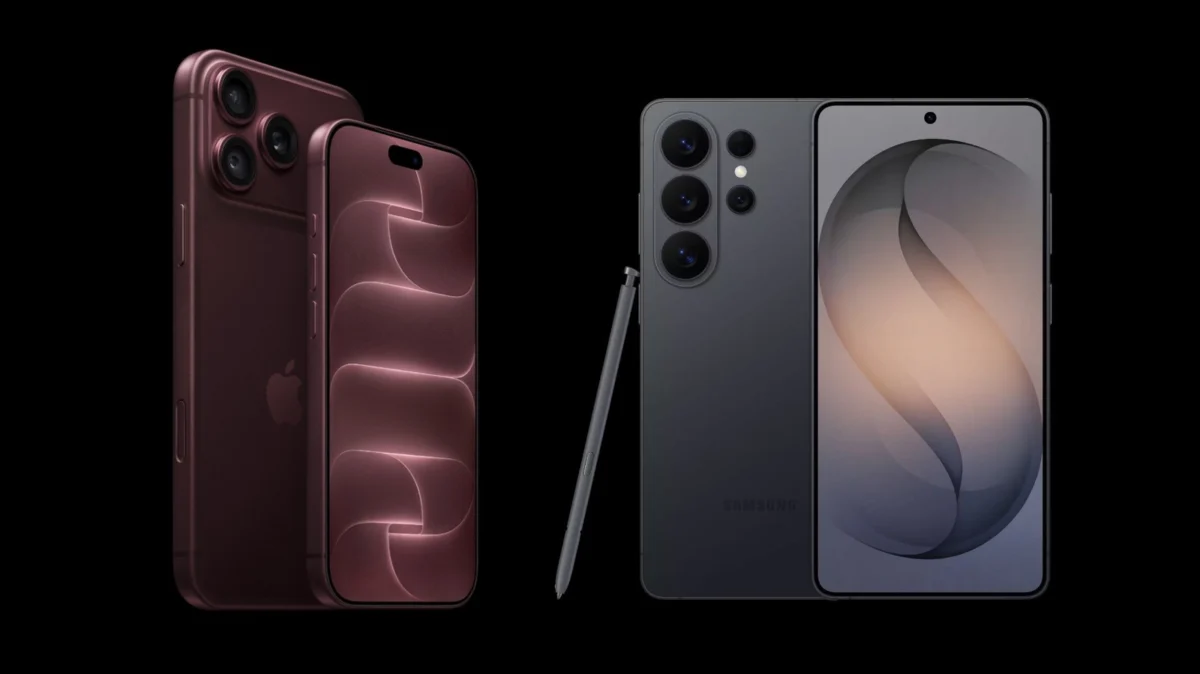
The smartphone landscape has reached a point of refinement where generational leaps are no longer defined by radical departures in form, but by the relentless pursuit of perfection in detail. The arrival of the iPhone 18 Pro Max and the Samsung Galaxy S26 Ultra marks the latest skirmish in a decade-long battle for dominance in the "ultra-premium" segment. While both devices occupy similar physical footprints and cater to power users, they represent fundamentally different philosophies regarding hardware utility, software fluidity, and the integration of artificial intelligence.
Main Facts: The Battle for the Flagship Crown
At their core, both the iPhone 18 Pro Max and the Samsung Galaxy S26 Ultra are designed to be the definitive "do-it-all" devices for their respective ecosystems. Starting at $1,299 for the 256GB base model, these phones are not merely communication tools; they are pocket-sized creative studios, mobile gaming rigs, and productivity hubs.
The iPhone 18 Pro Max continues Apple’s trend of iterative refinement. It maintains the familiar, robust industrial design of its predecessor, anchored by a 6.9-inch OLED display. However, beneath the hood lies the A20 Pro—Apple’s first 2-nanometer silicon—promising unprecedented thermal efficiency and raw computational power.
Conversely, the Samsung Galaxy S26 Ultra leans into the strengths of the Android platform, utilizing the Snapdragon 8 Elite Gen 5 processor. With 12GB to 16GB of RAM and a display that pushes the boundaries of resolution, Samsung is positioning its flagship as the ultimate device for multitasking and artistic expression, bolstered by the ever-present S Pen.
Chronology: The Evolution of the XL Flagship
To understand the current state of these devices, one must look at the trajectory of the flagship market over the last five years.

- 2021–2022: The industry trend moved toward "bigger is better." Both companies solidified the "Ultra/Pro Max" tiers as the go-to devices for users who prioritized camera performance and battery longevity above portability.
- 2023–2024: Focus shifted toward computational photography and the infancy of on-device AI. Apple introduced the Dynamic Island, while Samsung refined its periscope zoom architecture.
- 2025–2026 (The Current Generation): We are currently witnessing a "stabilization phase." The hardware has largely plateaued in terms of raw speed, shifting the focus to hardware-level integration of AI, variable aperture technology (in Apple’s case), and extreme battery optimization.
Supporting Data: Hardware and Display Specifications
A side-by-side comparison reveals that while the devices share similar dimensions, the internal priorities differ significantly.
The Display Wars
The iPhone 18 Pro Max features a 6.9-inch OLED display with a peak brightness of 3,000 nits. Apple’s color accuracy remains the industry benchmark, particularly for creators working within the DCI-P3 color space. Samsung’s AMOLED panel, however, offers a higher resolution at 3,120 by 1,440 pixels. While the 2,600-nit peak brightness of the S26 Ultra is technically lower than the iPhone’s, the crispness of the pixel density provides a slight, albeit subjective, advantage for text clarity and media consumption.
Battery and Thermal Performance
Both devices have settled on a 5,000 mAh capacity threshold. The efficiency gains of the 2nm A20 Pro in the iPhone are designed to extract more "screen-on time" from the same physical footprint. Samsung, however, utilizes a highly aggressive cooling system to manage the heat output of the Snapdragon 8 Elite, which is crucial for sustained 8K video recording—a feature that continues to set the S26 Ultra apart from its California-based rival.
Charging Dynamics
The parity in fast charging is a welcome development. Both flagships hit the 50% capacity mark in roughly 15 minutes using a 60W power delivery system. This represents a significant shift for Apple, which had historically lagged behind the rapid-charging capabilities long championed by Android manufacturers.
The Camera: Variable Aperture vs. Multi-Lens Versatility
The most significant divergence between these two devices lies in their imaging philosophy.

Apple’s Mechanical Innovation
The iPhone 18 Pro Max introduces a mechanically adjustable aperture. This is a game-changer for mobile photography, as it allows users to physically control the depth of field and light intake without relying solely on software-based "Portrait Mode" bokeh. By moving away from a fixed aperture, Apple is effectively bridging the gap between a high-end smartphone and a dedicated mirrorless camera.
Samsung’s Zoom Dominance
Samsung remains the king of versatility. The S26 Ultra’s 200-megapixel main sensor provides massive detail for cropping, but the real star is the dual-telephoto array. By offering dedicated lenses for 3x and 5x optical zoom, Samsung provides a seamless transition between focal lengths that the iPhone’s singular 4x telephoto lens cannot fully replicate. For travelers and concert-goers, the S26 Ultra’s zoom remains the superior tool.
Official Responses and Strategic Positioning
Industry analysts note that Apple and Samsung are no longer competing for "new" customers; they are competing for retention.
Apple’s official marketing focus for the iPhone 18 Pro Max centers on the "A20 Ecosystem." They argue that the power of the chip is not just for speed, but for the fluidity of the OS and the seamless connectivity between the iPhone, the Apple Watch, and the ecosystem of accessories.
Samsung, in contrast, has pivoted toward "Productivity and Freedom." By emphasizing the S Pen and the open nature of Android, they are targeting professionals and power users who find iOS too restrictive. Samsung’s integration of Galaxy AI has also been a central pillar of their marketing, claiming that their software suite offers more "useful" intelligence than what is currently found on iOS.

Implications: The Choice for the Consumer
Choosing between these two behemoths is no longer a matter of which phone is "better" in a vacuum; it is a question of lifestyle.
The Case for the iPhone 18 Pro Max
The iPhone 18 Pro Max is the clear winner for the "set it and forget it" user. It offers the most stable software experience, the best integration with third-party peripherals, and a level of hardware-software synergy that is arguably impossible to replicate on Android. If you are deeply invested in iCloud, iMessage, or Apple’s proprietary services, the Pro Max is the logical conclusion of your tech journey.
The Case for the Samsung Galaxy S26 Ultra
The S26 Ultra is the preferred choice for the "power user" who demands control. If you value multitasking—such as running two apps in split-screen, utilizing the S Pen for professional note-taking, or requiring the granular control of 8K video and manual camera settings—the S26 Ultra provides tools that the iPhone simply lacks. The ability to sideload apps, customize the UI, and utilize the phone as a desktop replacement via DeX keeps it at the forefront of mobile utility.
Conclusion: A New Era of Maturity
The iPhone 18 Pro Max and the Samsung Galaxy S26 Ultra represent the pinnacle of current mobile technology. They are both incredibly powerful, beautifully built, and capable of handling any task a modern user could reasonably throw at them.
The divide between them is no longer about which device can take a better photo or load an app faster; it is about which ecosystem empowers the user more effectively. As we look toward the future, the competition will likely move away from raw hardware specs and toward the integration of generative AI and augmented reality. For now, however, both Apple and Samsung have delivered products that satisfy the highest demands of the market, ensuring that whichever side of the fence you land on, you are holding the best technology that human engineering currently has to offer.

 Ali Ikhwan
 Asro
Asro