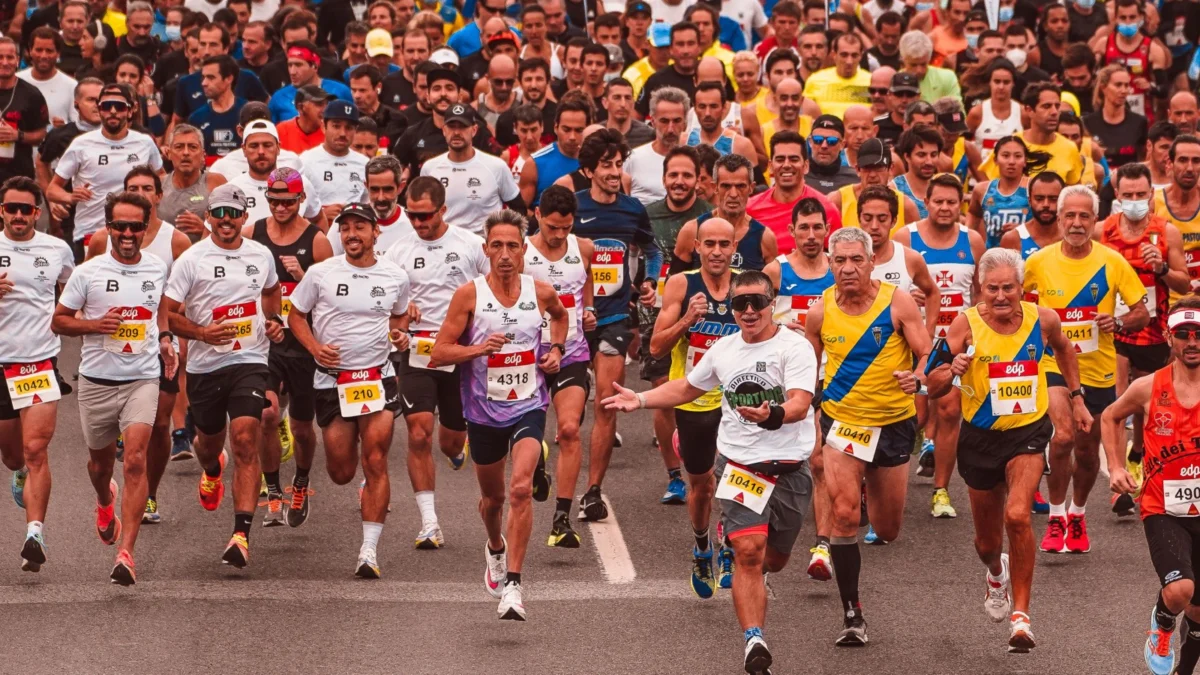
In the world of professional marathon running, the finisher’s medal is more than just a piece of hardware; it is a tangible symbol of months of grueling training, personal sacrifice, and the ultimate triumph of crossing the finish line. For the thousands of runners preparing for the 2026 Sydney Marathon, this year’s medal was meant to be a crowning achievement—a beautiful, intricately designed memento of the course. However, what was intended to be a celebration of Sydney’s iconic urban geography has instead become the subject of international ridicule after organizers admitted to a glaring, "bizarre" design error.
The medal, which features a stylized skyline of the city, was meant to guide runners through the landmarks they encounter on the 26.2-mile trek. But eagle-eyed observers on social media were quick to point out a significant geographical blunder: the inclusion of a stadium located over 16,000 kilometers away. Instead of the local Allianz Stadium, the medal features the distinctive, inflated facade of the Allianz Arena in Munich, Germany.
The Anatomy of an Error: A Chronology of the Mix-Up
The controversy began shortly after the Sydney Marathon organizers unveiled the official medal design in anticipation of the August 30 race. In their initial promotional materials, organizers encouraged runners to "look closely" at the design, promising that the medal contained "the story of the course in the details." The marketing narrative emphasized that the skyline was a curated collection of landmarks, starting with the world-famous Sydney Harbour Bridge and culminating at the Sydney Opera House.
For several days, the design received praise for its artistic merit, particularly the inclusion of artwork by renowned First Nations artist Ambrose Killian. However, the tone shifted abruptly when social media users—many of whom are well-traveled marathon enthusiasts—began to circulate side-by-side comparisons of the medal and the two stadiums.
The error appears to have stemmed from a simple, yet costly, confusion of branding. Both Sydney’s Allianz Stadium and Munich’s Allianz Arena share the same corporate naming rights partner. While the venues are separated by a vast ocean and two completely different architectural philosophies, the shared name likely triggered a "copy-paste" style error during the digital rendering phase of the design process.
By the time the discrepancy reached the desk of race officials, the commemorative medals were already in the process of being manufactured. The realization that thousands of medals would feature a German football stadium in the middle of the Australian harbor skyline prompted an immediate internal review.
The Architecture of Confusion: Sydney vs. Munich
To understand why the error went unnoticed for so long, one must look at the digital design workflow. Modern commemorative medals are often produced using 3D modeling software that draws from vast databases of architectural assets.
Munich’s Allianz Arena is world-renowned for its unique, translucent, diamond-patterned exterior that glows in team colors. It is an architectural marvel designed by Herzog & de Meuron. In contrast, Sydney’s Allianz Stadium (formerly the Sydney Football Stadium) is a state-of-the-art, rectangular sporting facility characterized by its distinct roofline and grandstands, designed to suit the specific needs of rugby and football in the Australian climate.
While the two venues share the "Allianz" brand, their silhouettes are entirely distinct. The error on the medal shows a clear, unmistakable representation of the Munich structure. The fact that this went through multiple levels of approval—from the graphic design team to the event’s marketing department and finally the manufacturing sign-off—highlights a breakdown in the quality control process for one of Australia’s premier sporting events.
Official Responses: "Not Going to Run From It"
When the story broke, the Sydney Marathon organizers could have retreated into silence. Instead, they opted for a strategy of radical transparency and, perhaps, a touch of humor.
In a statement provided to the BBC, a spokesperson for the Sydney Marathon addressed the "unfortunate error," admitting that "a little too much international flavour" had inadvertently made its way onto the medal. The organization confirmed that despite the public mockery, they would not be recalling or replacing the medals.
"We’re not going to run from it," the spokesperson stated, acknowledging the irony of a marathon organization being forced to face their own mistake head-on. "It is a beautiful medal, and now it is a little more unique."
The organizers are clearly hoping that the "unique" nature of the mistake will turn a potential PR disaster into a quirky collector’s item. By leaning into the absurdity, the marathon committee is attempting to reframe the error as a "limited edition" oddity rather than a sign of incompetence. Whether the 40,000 runners expected at the starting line share this sentiment remains to be seen.
The Role of First Nations Artistry
One of the more sensitive aspects of the controversy involves the contribution of First Nations artist Ambrose Killian. Killian was commissioned to create specific elements of the medal to honor the land on which the race takes place.
As the story gained traction, it was important for the organization to clarify the scope of the error. Killian issued a statement clarifying that his involvement was strictly limited to the front of the medal and the commemorative lanyard. He had no hand in the design or production of the reverse side where the stadium error occurred. This clarification was crucial, as it shielded the artist from the blowback and ensured that the integrity of the cultural contribution to the medal remained intact, despite the technical blunder occurring on the other side.
Implications for the 2026 Sydney Marathon
The implications of this incident reach beyond a simple design flaw. For a marathon that is part of the prestigious Abbott World Marathon Majors—a global series of the world’s most prestigious races—brand image is everything.
1. The "Collector’s Item" Effect
Historically, manufacturing errors in collectibles, coins, and stamps often increase their value. If the organizers maintain their stance that the medals will not be replaced, the 2026 Sydney Marathon medal may become a sought-after item on secondary markets. For the runners, the medal now carries a story that no other race can claim—the time the Sydney Marathon accidentally moved a German stadium to the harbor.
2. Quality Control Scrutiny
This incident has cast a spotlight on the logistical chain of event management. As cities compete to host global sporting events, the pressure to produce high-quality merchandise is immense. This error serves as a cautionary tale for event planners regarding the risks of outsourcing design and the importance of localized oversight.
3. Community Reaction
The running community is known for its discipline and attention to detail. While many have taken the news with humor, some participants have expressed frustration, noting that the registration fees for such major events are substantial. They argue that the quality of the memento should reflect the prestige of the race. However, the general consensus on social media has trended toward amusement, with runners joking that they should be given a free trip to Munich as compensation.
Conclusion: A Marathon of Memories
The Sydney Marathon’s stadium mix-up is, in the grand scheme of global events, a relatively harmless blunder. It does not threaten the safety of the runners, nor does it impact the integrity of the race timing or the course itself. Instead, it serves as a humanizing moment for a major global organization.
By refusing to hide the mistake and instead framing it as a "unique" aspect of the 2026 finisher package, the Sydney Marathon has managed to control the narrative. The medal will now serve a dual purpose: it will commemorate the physical endurance required to finish 26 miles, and it will serve as a constant reminder of the day the world laughed at a very human mistake.
As 40,000 runners toe the line on August 30, they will do so with a bit more anticipation. They will cross the finish line not only to receive a symbol of their achievement but to verify for themselves the stadium that shouldn’t be there. In an age of sterile, perfectly curated corporate events, perhaps a bit of human imperfection is exactly what makes the 2026 Sydney Marathon one for the history books.