Asep Darmawan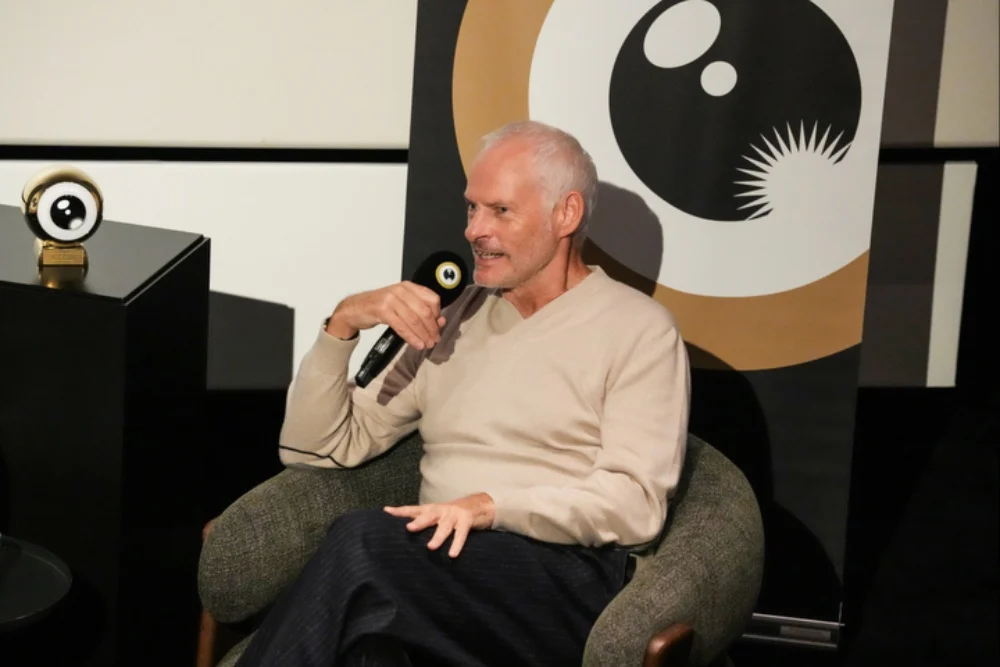
At the Zurich Film Festival, where he was honored with a prestigious Tribute Award, playwright and filmmaker Martin McDonagh offered a candid, sprawling masterclass that served as both a retrospective of his storied career and a manifesto for his latest project, Wild Horse Nine. With his trademark blend of biting wit and unvarnished honesty, the Oscar-winning auteur signaled a shift in his creative trajectory—moving toward a more overtly political cinema, even as he remains fiercely protective of his independence from the machinations of Hollywood.
The Political Pivot: "Wild Horse Nine"
McDonagh’s latest project, Wild Horse Nine, represents what he describes as his most overtly political work to date. Starring John Malkovich and Sam Rockwell as two CIA operatives navigating the volatile landscape of 1973 Chile just before the infamous military coup, the film is a dark comedy that McDonagh insists resonates far beyond its historical setting.
"This is probably my most political film. That’s why I find it very exciting to be releasing this monster into the world," McDonagh told the audience in Zurich. For the director, the project is a reaction to what he perceives as a contemporary culture of "artistic neutrality." He argues that too many creators today are retreating into safe, opinion-less territory, and he is determined to move in the opposite direction.
The film’s historical setting, while specific, functions as a mirror for contemporary geopolitical strife. McDonagh noted that the dialogue, though written with 1973 in mind, has been interpreted by early test audiences as commentary on recent events in Venezuela or the ongoing war in Ukraine. "The Russia jokes in the film are about their interventions in Finland 100 years ago, but we connect them to Ukraine now," he observed. "I love that it has a resonance I wasn’t necessarily aware of in the writing of it."
A Chronology of Artistic Defiance
To understand the man behind Wild Horse Nine, one must look at the unconventional path that led him from a restless youth in London to the heights of international cinema. Leaving school at 16, a young McDonagh found himself unemployed for a significant period—a time he spent cultivating a disdain for authority and the concept of a "real job."
"I left school very young… with the hopes of being a writer. Part of that was not wanting to have a real job or a boss. That has remained with me until now," he reflected. His initial foray into writing involved radio plays, most of which were summarily rejected by the BBC. Rather than discouraging him, these early failures became the fuel for his later success. "It was the bad rejections that really inspired me. Maybe I thrive not on encouragement, but anger."
His transition from the page to the stage, and eventually to the screen, was defined by a refusal to adhere to traditional structures. His plays, such as The Lieutenant of Inishmore, were noted for their jarring energy and extreme content—elements he admits were influenced by his lifelong passion for cinema. A pivotal moment in his development came from watching Al Pacino in David Mamet’s American Buffalo. The raw energy, the profanity-laced dialogue, and the sheer magnetism of the performance showed him what "acting really was," setting a standard for the intensity he would later demand from his own casts.
From Short Films to Global Acclaim
McDonagh’s jump to film was not without its hurdles, but his 2004 short, Six Shooter, which earned an Academy Award, proved his transition was more than a fluke. He credits his early success largely to the mentorship and protection of actor Brendan Gleeson. "It was the scariest situation I’ve been in artistically," he said of the short. "But the wonderful thing was having Brendan Gleeson be part of it. He protected me from any interference."
This partnership continued with the cult classic In Bruges. The film, which features two hitmen in hiding, was born from an unexpected bout of boredom in the titular Belgian city. McDonagh, who joked that his career path was actually "plays, killing, and then films," found in the town a perfect, cinematic backdrop for his characters to dwell on their regrets.
The "Hollywood" Conflict and Creative Autonomy
A recurring theme in McDonagh’s masterclass was his adversarial relationship with the traditional "Hollywood machine." He views many industry executives not as partners, but as "children with a lot of money." Throughout his career, he has relied on his lead actors—from Gleeson and Colin Farrell to Frances McDormand—to act as a buffer against studio interference.
"I’m going to get in so much trouble," he quipped when discussing the nature of studio heads. "It’s good that it’s not being filmed, right?"
His philosophy on filmmaking is clear: he has no interest in "bigger movies." For McDonagh, the current scale of his projects is ideal. He maintains that he does not want a bigger budget or more mainstream success; he wants the freedom to create without compromise. He notes that when actors of the caliber of John Malkovich or Frances McDormand step away from larger, more "hollow" studio projects to work on his films, they are liberated to showcase a depth of performance that is often stifled in typical, feel-good cinema.
The Evolution of Tone: Moving Beyond "Cool"
While McDonagh is known for his dark humor, he acknowledged a deliberate evolution in his work. He is moving away from the "cool" factor that characterized some of his early, punchy dialogue, aiming instead for something more profound and tragic.
"I’ve tried to make sure that the films aren’t just about being cool. They’re about something deeper," he explained. His recent films, including Three Billboards Outside Ebbing, Missouri, feature long, contemplative silences—moments where characters are forced to sit with their regrets. In Wild Horse Nine, he is applying this approach to John Malkovich, aiming to give the actor a "full palette of emotions" that spans from rage and comedy to quiet, heartbreaking introspection.
Implications for the Future of Independent Film
McDonagh’s career trajectory serves as a rare model in modern cinema: a creator who has successfully scaled the peaks of the industry while maintaining the rebellious spirit of an independent writer. By intentionally avoiding the "Hollywood movie" template, he has created a niche where intellectual rigor and emotional stakes can coexist.
The implications for the industry are significant. McDonagh proves that there is an enduring, eager audience for films that challenge the status quo, refuse to offer easy answers, and are unafraid of political controversy. As he continues to prioritize his "theater brain" and maintains a writing process that ignores the camera in favor of character depth, he remains one of the most vital voices in contemporary film.
His message to aspiring filmmakers is simple yet challenging: do not wait for validation, do not fear rejection, and above all, guard your creative vision against the "grown-ups" who would seek to dilute it. For Martin McDonagh, the goal is not to be a success in the eyes of the establishment; it is to remain free enough to release "monsters" into the world that actually have something to say.

 Layla Zulfa
 Sagoh
Sagoh