

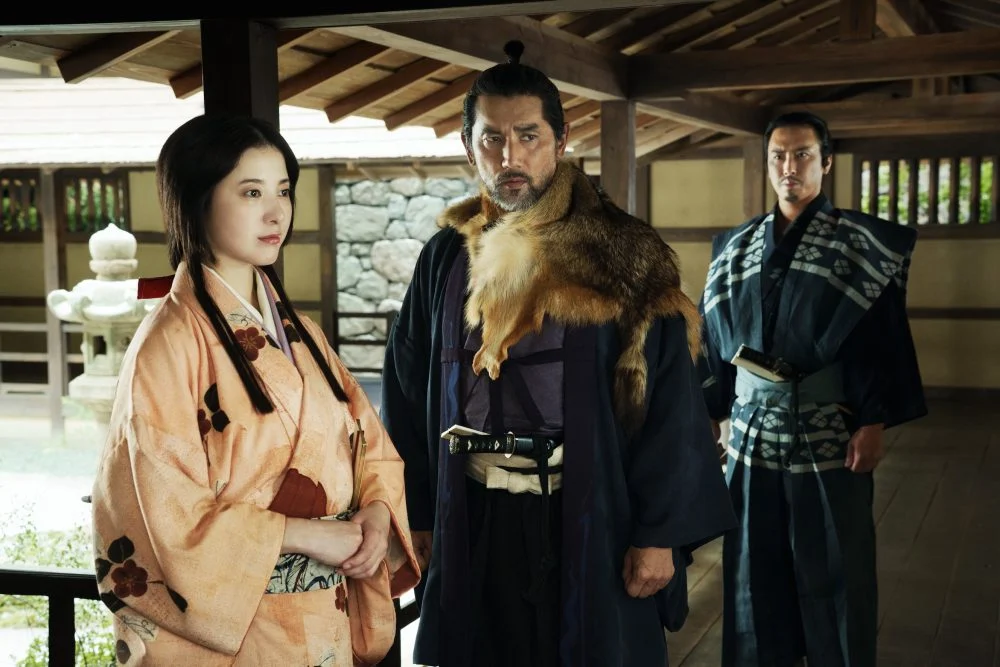
In the landscape of contemporary Japanese cinema, few names carry the weight of authority quite like Kiyoshi Kurosawa. Known for his eerie, genre-defying experiments with narrative form—from the existential dread of Cure to the haunting melancholy of Tokyo Sonata—Kurosawa has long been a master of the unseen. However, with his latest cinematic endeavor, Samurai, the veteran filmmaker pivots toward a more classical, albeit ruthlessly pared-back, aesthetic.
Adapting a storied period of Japanese history, Kurosawa eschews the typical tropes of the samurai epic. Instead, he delivers an absorbing, clean-lined exploration of leadership, solitude, and the high cost of moral defiance. The film serves as both a gripping series of whodunnits and a trenchant psychological examination of a man caught between the rigid expectations of the past and a nascent, modern conscience.
The Crucible of Arioka Castle: Setting the Stage
The narrative is firmly anchored in the Azuchi era, the late 16th century—a time of fractured alliances and constant, brutal transition. At the heart of this turmoil is Araki Murashige, the lord of Arioka Castle, portrayed with a magnetic, conflicted charisma by Masahiro Motoki.
As the story unfolds, we find Murashige in a state of open rebellion against the formidable Oda Nobunaga. Murashige’s grievances are ideological as much as they are tactical; he cites Nobunaga’s unchecked cruelty, his ruthless ambition, and his thirst for absolute power as the catalyst for his dissent. In response, Nobunaga has mobilized his forces to lay siege to Arioka, transforming the castle from a seat of local governance into a desperate, claustrophobic fortress.
Within these geometric courtyards and spartan, tatami-matted interiors, the tension is palpable. Murashige paces like a caged tiger, perpetually consulting with clan leaders while seeking solace in his wife, Chiyoho (Yuriko Yoshitaka). Chiyoho is a figure of profound devoutness whose disdain for Nobunaga is, if anything, more resolute than her husband’s. Their internal dynamics provide the emotional grounding for a film that otherwise operates as a high-stakes chess match of politics and survival.
A Diplomatic Gambit and the Prisoner of Strategy
The conflict takes a sharp turn when Oda Nobunaga dispatches an envoy to Arioka in a final, fragile attempt at a diplomatic resolution. The envoy is Kuroda Kanbei (Masaki Suda), a samurai renowned for his piercing intellect and political acumen. Their reunion—Suda having recently starred in Kurosawa’s 2024 thriller Cloud—is electric.
Kanbei arrives with arguments designed to bring the wayward Murashige back into the fold, but he finds his host entirely unmoved. In a typical feudal setting, the failure of such a mission would result in an immediate execution—a swift dispensing of justice at the tip of a blade. Murashige, however, chooses a different path.
He orders Kanbei imprisoned in the castle’s dungeon. This decision is layered with complexity: it is partially an act of uncharacteristic clemency, reflecting Murashige’s evolving, progressive view of human life. Yet, it is equally a calculated, Machiavellian strategy. Murashige understands that by keeping the prominent Kanbei alive, he can sow seeds of doubt in Nobunaga’s camp, leading the rival lord to believe that Kanbei has defected. Every decision Murashige makes during this siege is, like the blade he tucks into his kimono, a double-edged instrument.
The Anatomy of Mystery: A Seasonal Progression
The narrative structure of Samurai is built upon four distinct chapters, each corresponding to a season, providing a rhythmic, almost ritualistic pace to the mounting tension.
The first crisis emerges in winter, following the mysterious death of a young boy—the son of a defecting lord—who was living in Arioka as a political hostage. Despite Murashige’s decision to protect the child against the brutal dictates of the era, the boy is killed by an impossible arrow that finds a narrow crack in a door and then vanishes. This prompts the first of several supernatural-adjacent inquiries. Is this divine retribution for Murashige’s rejection of tradition, or is there a rational, human culprit?
As spring arrives, the stakes shift. A decapitated head, intended as proof of a military victory, vanishes from a secure location. In summer, the theft of Murashige’s prized ceramic tea-kettle—a diplomatic token intended to cement an alliance—signals a deeper, internal rot. Finally, in autumn, a bolt of lightning strikes a retainer at the exact moment he is set to reveal a critical secret.
For the non-devout and skeptical Murashige, these events represent a challenge to his logic. Unable to solve the puzzles himself, he turns to his captive, Kanbei. The dungeon becomes an unlikely office for the two men, where the intellectual stimulation of solving these enigmas provides a shared lifeline amidst the crushing weight of their respective fates.
Production Design: The Art of the Uncluttered Stage
Visually, Samurai is a triumph of minimalist precision. Cinematographer Yasuyuki Sasaki utilizes the architecture of the castle as a character in itself. The dungeon scenes are particularly striking; light is not merely illumination but a narrative element, slicing through the cracks in the masonry like laser beams, emphasizing the isolation of the characters.
The film’s aesthetic feels almost like an abstract, theatrical space. The lack of excessive ornamentation is intentional, a hallmark of Kurosawa’s desire to show the audience the mechanics of his narrative "magic trick." He lays his cards on the table, challenging the viewer to find the hidden trapdoors, only to remind us that in this story, the dangers are entirely human and entirely transparent.
The editing by Koichi Takahashi deserves equal praise. It allows the narrative to ebb and flow, ensuring that each seasonal mystery builds upon the last, expanding the scope of the film’s central inquiry. Despite the large, well-differentiated cast of retainers and advisors, the film never feels cluttered. This is partially because, as the seasons pass, the ranks are systematically thinned—by betrayal, by war, and by the cold efficiency of the castle’s internal politics.
Implications: The Prisoner and the Lord
At its core, Samurai is a meditation on the nature of freedom. As the narrative progresses, the lines between the captor and the captive blur. Murashige, with his wealth, his power, and his position of command, finds himself increasingly trapped by the expectations of his station and the weight of a code he no longer fully embraces.
Conversely, Kanbei, despite his chains, begins to exhibit a psychological freedom that the lord lacks. He is a man unbound by the immediate responsibilities of leadership, able to engage with the mysteries of the castle with a clarity that the stressed, burdened Murashige cannot possess.
The film posits that true imprisonment is not a matter of physical constraints, but of the roles we are forced to play. In an era of grand historical epics—such as the recent, highly sophisticated Shogun—Kurosawa’s film stands out for its restraint. It does not seek to dazzle with grand spectacles of war; instead, it invites the audience into the quiet, lethal spaces where men decide the course of their own moral character.
Conclusion: A Modern Classic
Samurai is a rare achievement: a period piece that feels entirely immediate. By stripping away the performative excess often associated with the genre, Kurosawa forces the audience to confront the core of the samurai mythos. It is a story about the fragility of power and the strength required to change one’s mind in the face of inevitable destruction.
As the castle walls close in and the seasons cycle toward their final, inevitable conclusion, the audience is left with a haunting realization: in the world of Kiyoshi Kurosawa, the heaviest burden isn’t the crown or the topknot—it is the necessity of making the right choice when all paths lead to the same dark end. For fans of cerebral cinema and historical intrigue, Samurai is not just a film to watch; it is a film to inhabit.









No comments yet. Be the first to join the conversation!