

For over a decade, the "smart glasses" category has been the industry’s white whale—a product category defined by massive potential, significant technical hurdles, and, in Google’s case, one of the most high-profile consumer tech flameouts in history. However, as the industry gathers in the wake of I/O 2026, the narrative is shifting. With a new collaborative framework involving Samsung and luxury eyewear designers, Google is attempting to rewrite its own history.
The company is no longer trying to force technology onto the face of the public; instead, it is attempting to embed technology into the fabric of fashion. Early market projections suggest this pivot might be exactly what the doctor ordered, potentially positioning Google as a dominant force in the wearable AI landscape by the end of 2026.
Main Facts: A Paradigm Shift in Wearable Tech
The core of Google’s new strategy is a strategic division of labor. Recognizing that its original "Google Glass" failed largely due to its alienating design and privacy concerns, the company has opted for a "fashion-first" approach. In this new ecosystem, design houses like Warby Parker and Gentle Monster take the lead on aesthetics, ensuring the devices look like legitimate eyewear rather than experimental prototypes.
Simultaneously, Samsung—a titan of consumer hardware manufacturing—is handling the complex internal components. Google, for its part, is focusing on the "brain" of the operation: the Android XR software platform and deep integration with its multimodal AI model, Gemini. By offloading the industrial design to experts and the hardware assembly to a partner with massive supply chain scale, Google is minimizing the friction that previously hindered the adoption of smart glasses.
The Chronology: From "Glasshole" to Modern XR
To understand the magnitude of this shift, one must look at the timeline of Google’s wearable journey:
- 2013–2015: The Google Glass Era. Launched with immense hype, Google Glass became a cultural lightning rod. Due to its obtrusive design, questionable battery life, and the privacy fears surrounding its camera, it was relegated to enterprise use, leaving a bitter taste in the mouths of early adopters.
- 2023–2025: The Meta Awakening. While Google retreated, Meta partnered with Ray-Ban to prove that people actually do want smart glasses if they look like normal sunglasses and serve a utility (like taking photos or listening to music). Meta’s momentum in 2025—moving 7 million units—validated the market.
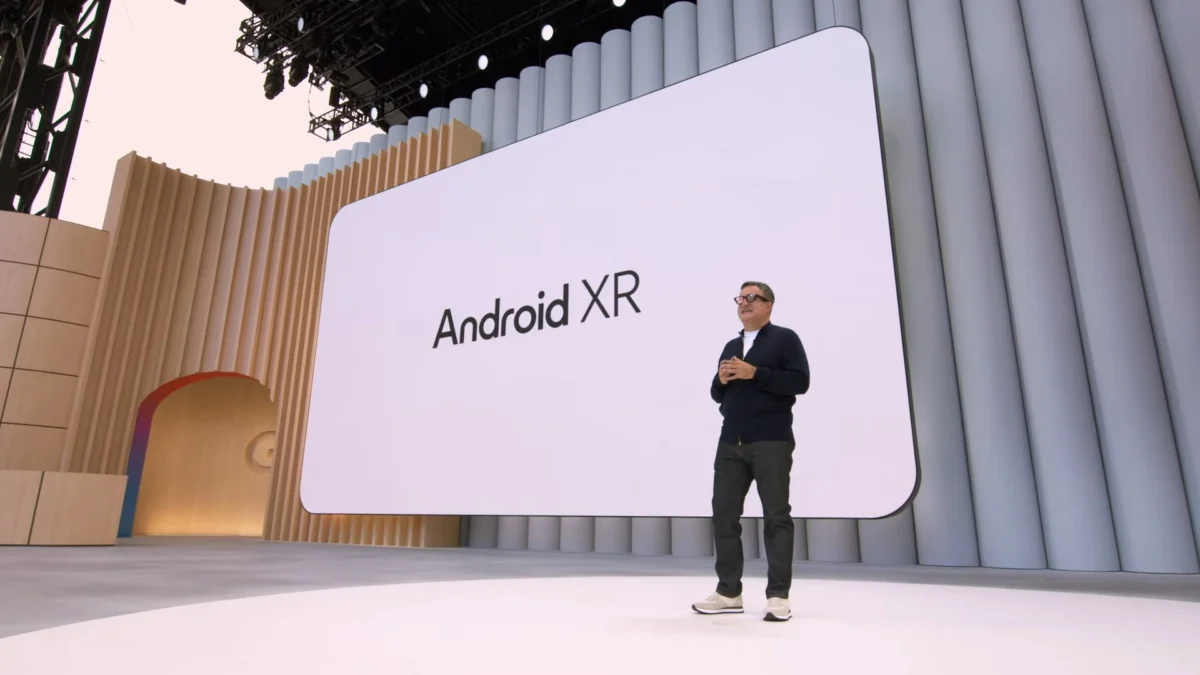
- May 2026: The I/O 2026 Reset. At its annual developer conference, Google unveiled its new vision for Android XR. By showcasing hardware prototypes alongside fashion partners, Google signaled that it had finally learned the lessons of the past decade.
- 2026 and Beyond: The Scaled Launch. The current roadmap focuses on a tiered approach, offering both high-end display-integrated XR glasses and more accessible, audio-only smart eyewear.
Supporting Data: Market Forecasts and Competitive Positioning
According to the latest data from Smart Analytics Global (SAG), the market for AI-powered smart glasses is on the verge of an explosion. Forecasts indicate that total shipments for the industry could reach 15 million units in 2026.
Within this, Google is projected to carve out a significant share. The firm estimates that Google’s new Android XR-powered models could move as many as 2 million units in their inaugural year. To put that in perspective, it took Meta—the current market leader—nearly two years to hit that same 2-million-unit milestone.
However, the industry remains segmented. While Google is expected to vault over competitors like Xiaomi, Huawei, and Rokid to secure the number two spot behind Meta, the composition of these sales is revealing. The data suggests that 91% of total smart glasses sales in 2026 will be audio-only devices.
This is a critical distinction. Audio-only glasses—which allow for voice interaction with Gemini, music streaming, and notifications—are lighter, cheaper to manufacture, and less prone to the "uncanny valley" of augmented reality displays. While Google’s true XR glasses (which feature visual overlays on the lenses) represent the company’s technological pinnacle, they are expected to be a lower-volume product compared to their audio-first counterparts.
Official Responses and Strategic Vision
Google has remained characteristically measured in its public statements, focusing on the "ecosystem" approach. In briefings surrounding the I/O 2026 announcements, company representatives emphasized that "the goal is not to replace the phone, but to make the phone invisible."

By embedding Gemini into the operating system, Google is banking on the fact that users want an assistant that can see what they see. Whether it is identifying a landmark, translating a street sign in real-time, or offering advice on a technical repair, the value proposition rests entirely on the speed and accuracy of the AI.
Samsung’s involvement is equally critical. By bringing its expertise in high-density batteries and micro-OLED displays, Samsung is effectively solving the power-efficiency bottleneck that has historically plagued glasses with heads-up displays. The partnership is a tacit admission that the "do-it-all" tech giant approach is no longer sustainable; instead, specialized expertise is required to make a wearable device that doesn’t feel like a compromise.
Implications: The Future of the "Face Computer"
The implications of this strategy are far-reaching for both the consumer and the broader tech industry.
1. The Death of the "Gadget" Aesthetic
By ceding design control to Warby Parker and Gentle Monster, Google is signaling that the era of "nerdy" wearables is over. If a pair of smart glasses cannot pass as a fashion accessory, it will not succeed in the mainstream market. This pivot forces other manufacturers to reconsider their design languages, potentially moving the entire industry toward more discreet, lightweight, and stylish hardware.
2. Audio as the Gateway
The fact that 91% of the market is trending toward audio-only devices is a sobering reality for proponents of high-end AR/VR. It suggests that while the industry is chasing the "Iron Man" heads-up display experience, the average consumer currently values simplicity and comfort over complex visual overlays. Google’s ability to dominate this audio space—leveraging its dominance in Search and AI—could make it the default assistant for the human voice.
3. The Battle for the Second Screen
If Google can capture the second-place position in 2026, it secures a foothold in the most intimate piece of hardware a human can own: the one sitting on their face. This gives Google access to real-time visual data, which, if handled with extreme transparency and privacy-first engineering, could redefine how we interact with the physical world. However, if they fail to address the lingering privacy concerns that doomed the original Google Glass, the adoption curve could flatten rapidly.
4. Revenue Drivers vs. Volume Drivers
While audio-only glasses will drive the bulk of the volume, the display-integrated XR glasses are likely to become the revenue drivers. As display technology matures and prices drop, Google will likely attempt to migrate users from the audio-only experience to the full visual XR experience. This "upsell" strategy is a classic tech maneuver, but in the world of fashion-tech, it remains to be seen if consumers will be willing to swap their favorite designer frames for a more expensive, feature-rich alternative.
Conclusion
The resurgence of Google in the smart glasses market is not a return to the reckless experimentation of 2013; it is a calculated, multi-pronged assault on a market that has finally matured enough to be ready. By playing to its strengths—AI, software integration, and partner collaboration—Google is attempting to transform from a company that sells hardware to a company that provides the intelligence that powers our daily interactions with the world.
Whether these 2 million predicted units will materialize depends on the execution. But for the first time in a decade, the conversation around "Google Glasses" has shifted from "Why would anyone wear that?" to "When can I get a pair that looks like that?" That shift in the narrative is, in itself, a significant victory.












No comments yet. Be the first to join the conversation!