By Olivia Tauber
August 25, 2026
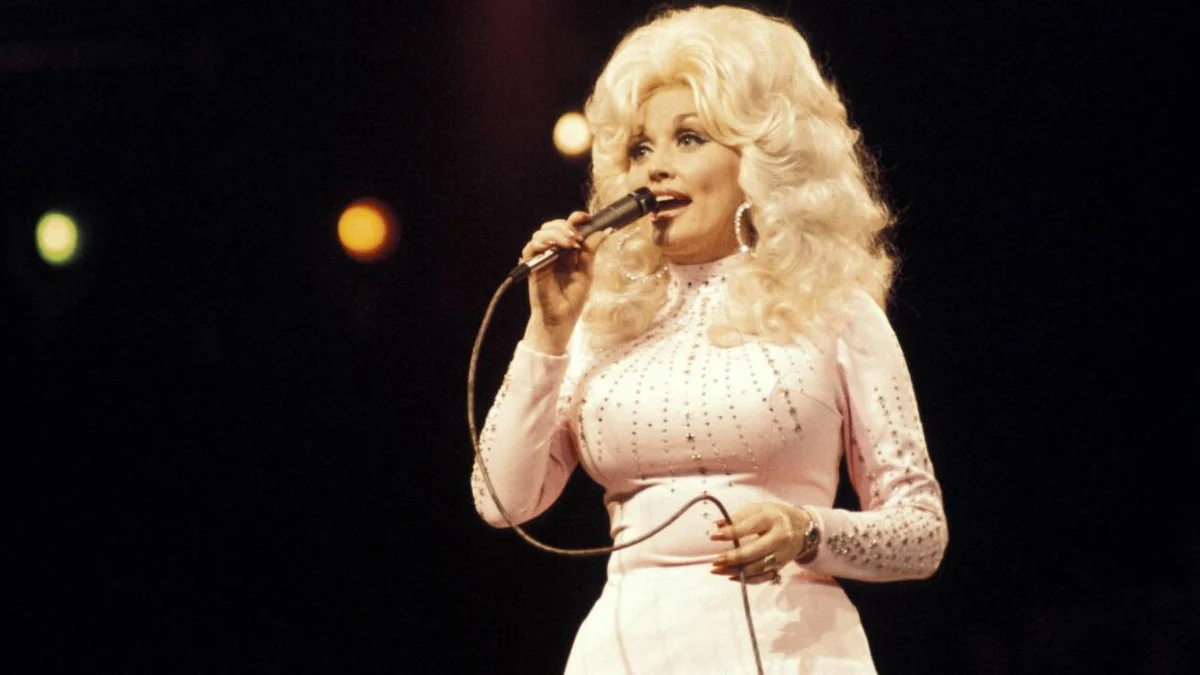
The world lost its brightest light today. Dolly Parton, the singular force of nature who transcended the boundaries of country music to become a global symbol of kindness, wit, and artistic integrity, has died. She was 80 years old.
The news was confirmed by her nephew, Bryan Seaver, in a poignant video message released across Parton’s official social media channels on the morning of August 25. Seaver stated that the icon passed away peacefully in her home in Nashville, surrounded by the quiet grace that defined her final years. "Dolly has lived in the light and is in the arms of Jesus," Seaver shared, noting that the family will hold a small, private service to honor her memory. While no specific cause of death was cited, the announcement marks the end of a life defined by an almost superhuman work ethic and a bottomless capacity for empathy.
Across the globe, the internet has become a digital wake. From the highest echelons of Hollywood to the quiet corners of rural Appalachia, fans are sharing clips of her legendary performances, favorite one-liners, and personal anecdotes about how her music—or her charitable work—changed their lives.
A Life in the Spotlight: From the Smoky Mountains to Global Stardom
Born in 1946 in a one-room cabin in Locust Ridge, Tennessee, Parton was the fourth of twelve children. Her upbringing was defined by poverty, but she often spoke of it with a sense of reverence rather than shame. It was this humble foundation that kept her grounded throughout a career that saw her reach the zenith of fame.
Her trajectory was nothing short of historic. After moving to Nashville the day after her high school graduation, she quickly made a name for herself as a songwriter, penning hits for others before establishing herself as a solo powerhouse. By the 1970s, she had crossed over from country radio to the pop mainstream, a transition few artists of her era could navigate with such ease.
She was not just a singer; she was a cultural architect. She starred in landmark films like 9 to 5—for which she wrote the iconic, Oscar-nominated title track—The Best Little Whorehouse in Texas, and Steel Magnolias. Beyond the screen, she was a business mogul, turning her brand into an empire that included the sprawling Dollywood theme park in Pigeon Forge, Tennessee, an endeavor that revitalized her home region.

The Architect of an American Icon: A Chronology of Brilliance
Parton’s career is a testament to the idea that one can be both high-brow and populist, both deeply traditional and radically modern.
- 1960s: The rise of a songwriter. Parton arrived in Nashville, quickly gaining traction for her storytelling ability. She became a fixture on The Porter Wagoner Show, gaining national exposure.
- 1970s: The crossover years. With hits like "Jolene" and "I Will Always Love You," Parton solidified her place in the pantheon of songwriting greats. She famously rejected Elvis Presley’s request to cover "I Will Always Love You" because his manager demanded half the publishing rights—a decision that preserved her autonomy and proved her business acumen.
- 1980s: Hollywood beckoned. The massive success of 9 to 5 cemented her status as an American cultural treasure.
- 1990s: The launch of the Imagination Library. Recognizing that early childhood literacy was the key to breaking the cycle of poverty, she founded the program that would eventually send hundreds of millions of books to children globally.
- 2000s–2020s: The Elder Stateswoman. Parton’s reputation only grew as she championed younger artists, from Miley Cyrus and Kesha to Sabrina Carpenter and Beyoncé. Her 2022 induction into the Rock & Roll Hall of Fame—which she initially tried to decline, feeling she hadn’t "earned" it in a rock context—was a final, public acknowledgment of her status as an all-genre titan.
Supporting Data: By the Numbers
Parton’s legacy is as quantifiable as it is immeasurable. Her career statistics remain staggering for any era:
- Record Sales: Over 100 million records sold worldwide.
- Chart Dominance: 25 songs hit No. 1 on the Billboard country charts.
- Album Success: 47 albums placed in the country Top 10.
- Awards: 10 competitive Grammy Awards, a Lifetime Achievement Award, and numerous CMA and ACM accolades.
- Philanthropy: Beyond the Imagination Library, her $1 million donation to Vanderbilt University was instrumental in the development of the Moderna COVID-19 vaccine, a fact she deflected with characteristic humility, stating she was just happy to help.
The "Dumb Blonde" Persona: A Masterclass in Subversion
Perhaps the most enduring aspect of Parton’s public life was her carefully curated image. She leaned into the "dumb blonde" trope—the big hair, the rhinestones, the excessive makeup—only to dismantle it with a sharp, brilliant wit.
"I’m not offended by all the dumb blonde jokes because I know I’m not dumb," she once said. "And I also know that I’m not blonde."
This self-awareness was the secret sauce of her longevity. She wasn’t a victim of the male-dominated music industry; she was the person in charge of it. By owning the caricature, she prevented others from defining her. This empowered generations of women to embrace their own femininity without sacrificing their intelligence or professional ambition.
A "Guiding Light" for Future Generations
Parton’s influence on younger artists was perhaps her most nurturing contribution. As the godmother to Miley Cyrus, she provided a roadmap for navigating the intensity of fame. Cyrus, who often spoke of Parton as a mother figure, is among the many mourning the loss of their mentor.
But it wasn’t just pop stars; she collaborated with artists across the spectrum, from the White Stripes to Reba McEntire. She treated every song—whether it was hers or someone else’s—with a sacred respect. Her delight in seeing Beyoncé record a version of "Jolene" proved that her ego was secondary to her love of the craft. She saw herself, first and foremost, as a songwriter. "The songs are my legacy," she famously wrote.

The Final Days: A Spirit Unquenched
Even in her final months, as she navigated the grief of losing her husband of nearly 60 years, Carl Dean, in 2025, and faced her own health struggles, Parton remained forward-looking.
In her final interview with People magazine on August 21, she spoke with a characteristic spark about the projects she still had in the queue. "I’ve dreamed myself into a corner, and I still have so many things I want to achieve," she remarked. It was a poignant reminder that even at 80, Dolly Parton was not done living. She was not a woman who looked back; she was a woman who was constantly, relentlessly, building.
Implications: A World Without the Smoky Mountain Songbird
The outpouring of grief from figures like Reba McEntire, Paris Hilton, and even political leaders like Bernie Sanders underscores how deeply Parton had penetrated the American consciousness. She was a rare point of unity in a polarized age.
Her passing leaves a void that cannot be filled by any single artist. She taught us that one could rise from the most humble circumstances to the heights of global influence without losing one’s soul. She proved that kindness is not a weakness, that ambition is not a sin, and that a "good songwriter" can, in fact, change the world.
As the family has requested, those wishing to honor her memory are encouraged to share their messages via her official social media channels or to donate to the Dolly Parton’s Imagination Library.
In her own words, she warned us: "Don’t get so busy making a living that you forget to make a life." Today, the world remembers that Dolly Parton did both—and in doing so, she gave us all a soundtrack for our own.
The light of the clear blue morning may feel a little dimmer today, but the songs remain, and the legacy of the woman who wrote them is etched into the heart of the world.