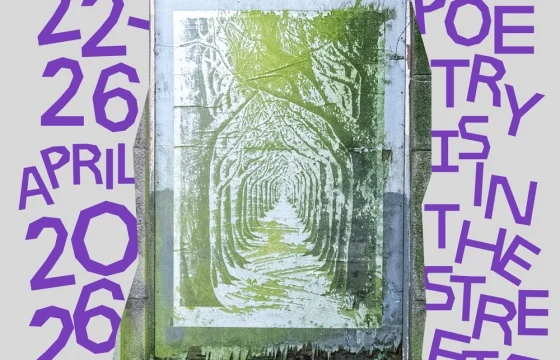
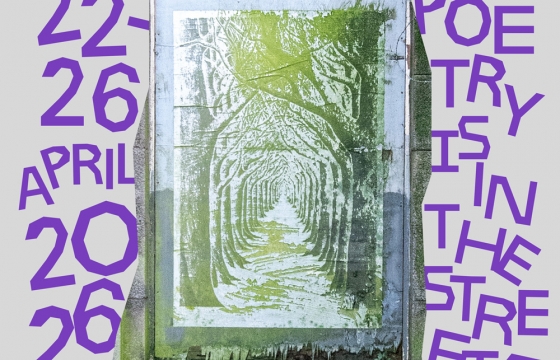
Aberdeen, Scotland — April 22–26, 2026
The streets of Aberdeen are undergoing a quiet, profound transformation. As the 2026 edition of Nuart Aberdeen kicks off, the city is shedding the skin of traditional, large-scale muralism to embrace a more intimate, provocative, and democratic form of expression. For the next five days, the Granite City will host the world’s first major street art festival dedicated primarily to poetry and text-based interventions.
Curated by Nuart founder Martyn Reed, this year’s festival represents a philosophical pivot. While the "big wall" mural—with its saturated colors and figurative grandeur—has long been the industry standard for street art festivals globally, Nuart 2026 argues that these massive undertakings have become, in some ways, an obstacle to the very thing they claim to support: public participation.
The Genesis of a New Aesthetic
For over a decade, the "mural festival" model has dominated urban regeneration projects worldwide. However, Reed and his team have identified a paradox at the heart of this trend. Large-scale murals require significant capital, heavy machinery (cherry pickers and lifts), and professional-grade skill, effectively placing them out of reach for the average citizen.
"They’re perhaps the least democratic form of art on the streets," Reed noted in his curatorial statement. "No one stands in front of a tower block mural and thinks, ‘I’ll pop home and have a go myself on the gable end of Gran’s house.’"
By shifting the focus to text, poetry, and small-scale interventions, Nuart 2026 aims to dismantle the barrier between the "artist" and the "citizen." The festival draws its inspiration from two pivotal historical moments: the 1968 Paris student uprisings—characterized by the slogan "La poésie est dans la rue" (Poetry is in the Streets)—and the rise of UK graffiti culture in the 1980s.
As UK graffiti pioneer Mode2 once famously remarked, graffiti flourished because it democratized art: if you knew your ABCs, you possessed the fundamental toolkit required to participate. Nuart 2026 is an invitation to the public to reclaim that agency.
Chronology of the 2026 Festival
The festival schedule is designed to facilitate a city-wide dialogue rather than a series of static unveilings.
- April 22: The official launch event sees the unveiling of "Textual Landscapes," a city-wide series of wheat-pasted poems and short-form interventions by artists including Robert Montgomery and The Rebel Bear.
- April 23: Focus shifts to workshops and public discussions. The curation team emphasizes "low-barrier" art, teaching locals how to create stencils and text-based paste-ups using simple, accessible materials like cardboard and craft knives.
- April 24: The mid-festival symposium addresses the intersection of linguistics and urban planning. Scholars and street artists debate the power of the written word in a digital age, contrasting the fleeting nature of street poetry with the permanence of social media discourse.
- April 25: Artists conduct guided "interventions" across Aberdeen, demonstrating how text can alter the perception of mundane urban architecture.
- April 26: Closing ceremonies. The festival leaves behind a "literary map" of the city, where residents are encouraged to continue adding their own thoughts, poems, and messages to authorized spaces.
Supporting Data: Why Text?
The shift to text-based works is backed by years of observational research conducted by the Nuart team. Data collected during previous festivals suggests that "human-scale" works—stencils, stickers, and paste-ups—trigger significantly higher rates of independent, grassroots replication than large murals.
While a mural might draw tourists, a stencil inspires a neighbor. The "ease of copying" acts as a catalyst for creative growth. Notably, several artists and producers involved in the 2026 festival began their careers as Nuart volunteers or assistants, proving that the festival’s primary output is not just art, but artists.
The Featured Lineup
This year’s cohort is a curated blend of Scottish talent and international voices, chosen for their ability to weave language into the urban fabric:
- Robert Montgomery (SCT): Known for his luminous, poetic billboards.
- The Rebel Bear (SCT): A master of using simple, ironic text to critique modern politics.
- Alisa Oleva (UK): Focuses on urban interventions and the hidden narratives of city life.
- Ciarán Glöbel (SCT): Brings a sharp, typography-focused approach to the streets.
- dr.d AKA Subvertiser (UK): A long-time critic of corporate advertising, using text to reclaim public space.
- Additional contributors: HICKS, James Klinge, KMG, Molly Hankinson, Remi Rough, The Writing Is On The Wall, Trackie McLeod, and V2k.
Official Responses and Curatorial Vision
The support for such a radical shift in curation is not a given. Managing the expectations of tourism boards and municipal partners—who often prefer the "Instagram-ready" aesthetic of traditional murals—required a delicate balancing act.
Martyn Reed explains the friction: "There is a tension between the needs of sponsors and the responsibility of the curator. A sponsor wants a photo-op. A curator wants a legacy. By framing this year’s festival around the written word, we are arguing that poetry is more ‘durable’ than paint. It sticks in the mind long after the mural fades or is painted over."
Aberdeen City Council has remained a stalwart partner, acknowledging that the festival’s contribution to the city’s identity is more than just aesthetic; it is an intellectual exercise that encourages civic engagement. By turning the whole city into a "canvas for thought," the festival promotes a level of literacy and reflection rarely seen in contemporary urban festivals.
Implications: The Future of Public Art
The implications of Nuart 2026 extend far beyond the borders of Scotland. If this model proves successful, it could signal a turning point for the international street art circuit.
1. Democratization of Participation
By removing the reliance on expensive equipment and specialized muralist training, Nuart is lowering the entry threshold. The focus on poetry and text suggests that the future of street art is not just visual, but intellectual. It transforms the city from a gallery into a collaborative journal.
2. The Critique of "Festivalization"
Nuart 2026 serves as a meta-critique of the street art industry. By acknowledging that large murals can sometimes serve as "gentrification markers" rather than tools for community building, the festival is attempting to recalibrate the relationship between urban art and local residents.
3. Sustainability of Expression
Text is inherently ephemeral and portable. In an era where many public art pieces are being removed or scrubbed due to shifting property values, a text-based movement is harder to "sanitize." As Reed noted, the goal is to inspire a generation to look at a blank gable end and see not just a wall, but a page waiting for a sentence.
Conclusion
As the final day of the festival approaches, the streets of Aberdeen reflect a new, urgent energy. The walls are no longer just displays of aesthetic technicality; they are vessels for the city’s subconscious.
"Poetry is in the streets," Reed concluded. Whether through a scrawled message on a brick wall or a professionally crafted typographic installation, Nuart 2026 is proving that the most powerful tool for urban transformation is not the spray can, but the idea. By inviting the public to engage with their city through the written word, Nuart Aberdeen has ensured that the festival’s legacy will not just be a series of images, but a series of conversations that will continue long after the final stencil is removed.
In a world increasingly dominated by the visual noise of advertising, Nuart 2026 reminds us that the simplest, most profound human act is to speak—and to be heard.