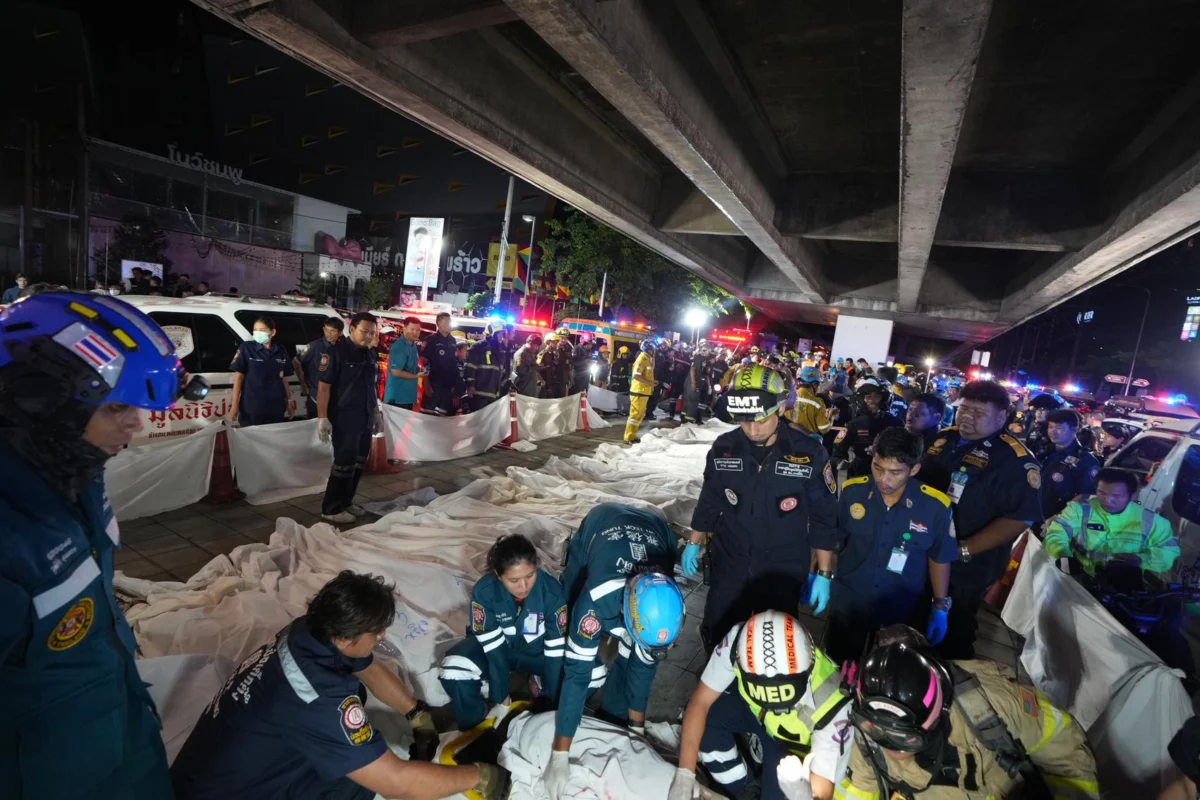
BANGKOK — A night of music and social gathering turned into a scene of unimaginable horror in the early hours of Monday morning, as a massive, fast-moving inferno tore through the Na Ladprao pub in northern Bangkok. The blaze, which claimed at least 27 lives and left scores of others fighting for their lives in intensive care units, has sent shockwaves through the Thai capital, once again raising harrowing questions about fire safety protocols in the nation’s bustling nightlife sector.
As of Monday evening, local authorities and forensic teams were engaged in the grim task of identifying victims, many of whom were found in the pub’s rear restrooms, suggesting a desperate, failed attempt to escape the suffocating black smoke that engulfed the venue within minutes of the initial spark.
The Chronology of the Disaster
The fire was first reported to emergency services at approximately midnight. According to witnesses and survivors, the transition from a vibrant entertainment venue to a death trap occurred with terrifying speed.
A musician who had been performing on stage at the Na Ladprao pub provided a chilling account to officials. He described noticing a malfunction in a circuit breaker located near the stage area. Almost immediately after the smoke began to curl from the unit, the venue was plunged into total darkness as the power failed. Moments later, a loud explosion rocked the building, and thick, toxic smoke began to pour through the establishment, effectively cutting off the primary exits.
By the time firefighters arrived, the interior of the pub was already consumed by flames. It took emergency crews roughly 30 minutes to bring the blaze under control, but by then, the damage had been done. Videos shared on social media by first responders and bystanders captured the horrifying sight of flames licking out of the front entrance, while thick, pitch-black plumes billowed into the night sky, obstructing the vision of those inside trying to navigate the chaotic environment.
Supporting Data and Medical Toll
The human cost of the disaster is staggering. Bangkok Governor Chadchart Sittipunt confirmed that 63 individuals were transported to local hospitals in the immediate aftermath. Of those hospitalized, 22 remain in critical condition, with medical professionals working around the clock to treat severe smoke inhalation and complex burn injuries.
The identification process is proving to be a significant logistical challenge. Many victims were found without identification, and others were so severely incapacitated by the fire that they remain unconscious, complicating the efforts of authorities to notify next of kin.
At the site of the tragedy, a registration center has been established, serving as a desperate hub for families arriving in search of loved ones. The atmosphere is one of profound grief and confusion, as families wait for news of those who went to the pub for a night of music and never returned.
Singer Sukanya Wongwongwai, who was performing at a nearby venue when the news broke, rushed to the scene to check on her bandmates who were playing at Na Ladprao. Her account paints a harrowing picture of the final moments inside. "From what I heard from people who were inside, when the fire started, everything went dark," she said. "The power was out and there was smoke everywhere, so they couldn’t locate other people." Her personal tally reflects the wider tragedy: one bandmate dead, three hospitalized, and one still unaccounted for.
Official Responses and Investigative Efforts
Prime Minister Anutin Charnvirakul arrived at the scene shortly after the fire was contained to oversee the coordination of the emergency response. Speaking to reporters, the Prime Minister expressed his condolences to the families of the deceased and vowed a thorough investigation into the cause of the fire and the adherence of the venue to safety regulations.
"The cause of the fire is currently under investigation," Anutin stated, noting that preliminary accounts from survivors point toward an electrical fault near the stage. However, investigators are looking into a wider array of factors, including whether the venue’s fire exits were blocked, whether the building’s layout was compliant with modern safety codes, and whether the materials used in the pub’s interior construction may have exacerbated the speed at which the fire spread.
Governor Sittipunt emphasized that the focus remains on the victims. "Our priority is to identify the victims and ensure that those who are injured receive the highest quality of medical care," he said. He added that the city will be launching a comprehensive safety audit of similar nightlife venues across the capital in the coming weeks to prevent a recurrence of such a disaster.
Implications: A Pattern of Tragedy
The Na Ladprao fire is the latest in a series of deadly incidents that have forced Thailand to confront the vulnerability of its nightlife sector. The architectural history of many of Bangkok’s entertainment venues—often featuring labyrinthine layouts, limited exits, and combustible decorative materials—has long been a concern for safety advocates.
The 2026 tragedy draws immediate, painful parallels to the 2022 fire at a music pub in eastern Thailand, which resulted in 14 deaths. In that instance, investigations revealed that the venue had been modified without proper authorization and lacked adequate fire suppression systems.
Perhaps most hauntingly, the incident echoes the memories of the 2009 New Year’s Eve fire at the Santika nightclub in Bangkok. That disaster, which claimed 66 lives and left over 200 injured, remains one of the darkest chapters in the city’s modern history. In that case, an indoor fireworks display sparked an inferno that trapped hundreds of revelers in a building with insufficient emergency exits.
The Need for Structural Reform
The recurrence of these tragedies highlights a systemic failure in the enforcement of building codes. Experts argue that while Thailand has rigorous laws on paper, the practical application—especially in older buildings or venues that have undergone unauthorized renovations—is often lax.
"We cannot simply call these ‘accidents’ when they continue to happen under similar circumstances," said one safety consultant familiar with the situation. "The common denominator is almost always the same: rapid fire spread, failure of lighting and power systems, and inadequate egress. If the exits are blocked or if the building is a tinderbox, the number of casualties will always be high."
The public outcry following the Na Ladprao fire is already gaining momentum, with citizens demanding stricter oversight, more frequent inspections, and a greater level of transparency regarding the safety status of popular venues. For the families of the 27 victims, however, these policy discussions come too late. As the sun sets on another day in Bangkok, the city remains in mourning, grappling with the loss of life and the sobering realization that for many, a night of music became a fight for survival.
Conclusion
As the investigation into the Na Ladprao pub fire proceeds, the focus will shift from the immediate rescue efforts to the legal and administrative accountability of the venue’s operators. The Thai government faces immense pressure to not only provide closure for the families affected but to fundamentally alter the landscape of safety in the nation’s nightlife industry.
For now, the site of the pub stands as a charred monument to a night gone wrong. Investigators continue to sift through the debris, while hospital wards remain filled with survivors. The memory of the victims, and the lessons learned from this latest disaster, will undoubtedly serve as a grim reminder of the urgent need for reform in one of the world’s most vibrant, yet vulnerable, cities.
© Copyright 2026 The Associated Press. All rights reserved. This material may not be published, broadcast, rewritten or redistributed without permission.