

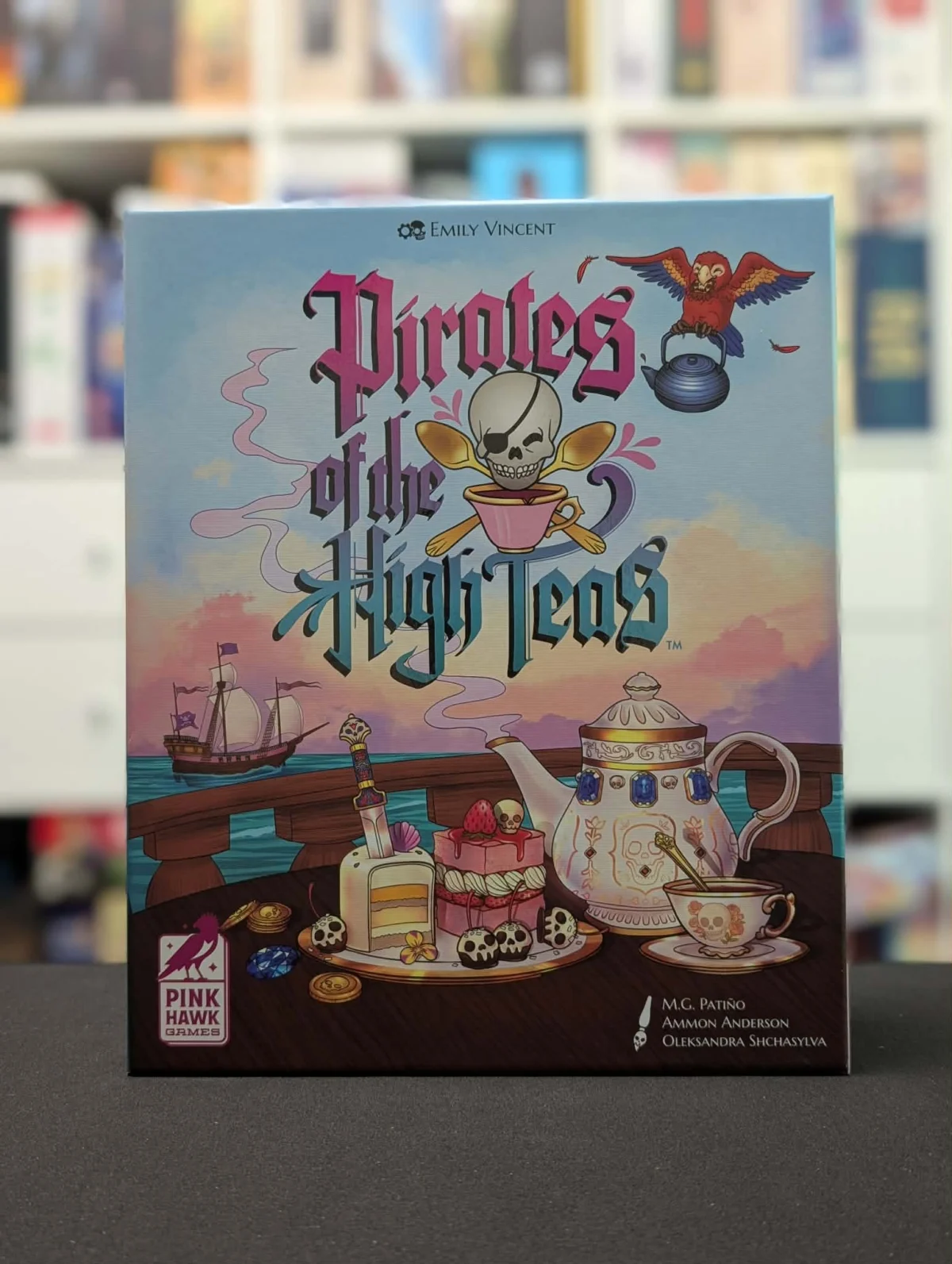
There is an undeniable, whimsical absurdity in the image of a battle-hardened pirate crew abandoning the pursuit of Spanish gold in favor of the perfect scone. This is the central conceit of Pirates of the High Teas, a refreshing new entry into the strategy board game market that argues, quite convincingly, that the ultimate prize is not a chest of doubloons, but a well-brewed Earl Grey. By blending the mechanics of worker placement with a charming, pastel-drenched aesthetic, the game has carved out a unique niche as a cozy, high-stakes culinary adventure.
The Anatomy of the Game: Core Mechanics and Play
At its heart, Pirates of the High Teas is a masterpiece of efficiency. Spanning exactly nine rounds, the game tasks players with managing a crew of scallywags whose primary directive is to serve elegant teas and curate the perfect assortment of pastries to satisfy their respective captains.
The gameplay loop is deceptively simple: each round, players deploy their pirate workers onto an action row. The placement strategy here is a classic "push-your-luck" balancing act. The action spaces located further to the right on the board yield superior, more lucrative rewards, such as rare tea leaves or high-value treat cards. However, the game employs a clever turn-order mechanic: by choosing spaces further to the left, players often secure a superior position in the following round’s initiative. This creates a constant tension between immediate gratification and long-term tactical positioning.
Once a worker is placed, the player gathers the necessary resources to complete "Tea Cards"—the game’s primary scoring objectives. These cards dictate specific ingredient requirements or color-coded dish combinations. As players fulfill these requests, they earn doubloons. The most successful captains are those who can synthesize multiple requirements into a single, high-scoring service, turning a simple snack break into a masterclass of resource management.
A Chronology of Play: From Start to Finish
The experience of Pirates of the High Teas is defined by its brisk tempo. Unlike many heavy Euro-style games that can drag into the three-hour mark, this title respects the player’s time.

- The Early Game (Rounds 1–3): The focus is on establishing an engine. Players are primarily concerned with securing a steady supply of basic ingredients and setting up their tableau.
- The Mid-Game (Rounds 4–6): The complexity ramps up as players must adapt to the randomized round bonuses. These modifiers shift the value of certain actions, forcing players to pivot their strategies. It is during these rounds that the competition for specific card slots becomes most apparent.
- The Endgame (Rounds 7–9): The final push is a sprint for efficiency. With the end in sight, players must decide whether to chase high-value, complex tea sets or "cycle" through smaller, lower-value objectives to maximize their total doubloon count.
Because the game structure is so streamlined—placing a worker, resolving the action, and resetting—the downtime is nearly nonexistent. Even with a full table of four, the rhythm remains snappy, ensuring that the game never overstays its welcome.
Supporting Data: Scalability and Player Interaction
One of the most frequent criticisms of modern worker placement games is their inability to scale effectively. Pirates of the High Teas manages this hurdle with grace, though its "sweet spot" is undoubtedly the three-player count.
In a two-player configuration, each participant controls two workers, which maintains the game’s brisk pace but alters the psychological landscape of the board. In a four-player game, the board feels tighter, and the competition for prime action spaces becomes more acute, though it never devolves into "analysis paralysis."
Crucially, the interaction is characterized by "parallel play." This is not a confrontational game where players are actively sabotaging their rivals. Instead, the conflict is indirect: you might snatch a vital treat card that your opponent desperately needed, or you might occupy a space to force them into a less favorable turn order. For those who prefer a "low-aggression" experience—similar to the design philosophy seen in Wingspan—this is a significant selling point. It allows players to focus on optimizing their own menus without the anxiety of constant direct interference.
Strategic Depth and Replayability
A common concern for lighter strategy games is the "shelf-life" of the experience. Does the game become stale after a dozen plays? In the case of Pirates of the High Teas, the developers have mitigated this through the inclusion of advanced variants and variable setups.

The most potent tool for replayability is the Pirate Captain system. Each captain card offers unique passive abilities or scoring incentives. One captain might reward players for focusing on high-tier teas, while another might provide bonuses for collecting a diverse array of pastries. These cards act as "soft constraints," gently nudging the player toward different tactical paths. When combined with the shuffled round bonuses—which change the utility of the action row every game—the experience remains fresh. While the core loop remains the same, the path to victory is rarely identical twice.
Visual Identity and Components
It is impossible to discuss this game without acknowledging its striking presentation. In a market dominated by dark, gritty, or hyper-realistic themes, the pastel palette of Pirates of the High Teas is a breath of fresh air. The soft blues, gentle purples, and warm pinks give the game an immediate "shelf appeal."
The illustrations of the pastries and tea sets are detailed and inviting, effectively bridging the gap between the game’s whimsical theme and its mechanical depth. The component quality is functional and well-executed. The pirate-themed meeples are a delightful touch, with each color featuring a unique silhouette that adds a layer of tactile satisfaction. The player boards are clean, readable, and prioritize utility over unnecessary "bling," which keeps the table footprint manageable and the setup time minimal.
Implications for Families and Hobbyists
For the family-gaming demographic, Pirates of the High Teas is a standout success. The barrier to entry is remarkably low; once the iconography is understood, the game flows intuitively. The theme is inherently accessible—everyone understands the concept of enjoying tea and cake—which helps keep younger players engaged.
In testing with younger audiences, the game proved to be an excellent introduction to the concepts of "opportunity cost" and "set collection." While a six-year-old might need assistance with the more complex, multi-layered scoring of the advanced captains, the core mechanics are simple enough that they can participate in the decision-making process with confidence.

For the veteran hobbyist, the game serves as an excellent "palate cleanser." It provides the satisfaction of a well-executed engine-building session without the heavy cognitive load or long setup times of games like Viticulture or Everdell. It is the perfect bridge game: sophisticated enough for a game night with friends, yet light enough to bring to a Sunday afternoon family gathering.
Conclusion: A Treasure Worth Seeking
Pirates of the High Teas succeeds because it understands exactly what it wants to be. It does not attempt to reinvent the wheel of worker placement; instead, it refines the genre into a tight, aesthetically pleasing, and highly replayable experience.
By prioritizing pacing, accessibility, and a cohesive, charming theme, the designers have crafted a title that invites players to relax, take a breath, and focus on the finer things in life. Whether you are a hardened strategist looking for a quick, low-stress session, or a family looking for your next go-to game night staple, Pirates of the High Teas offers a bounty of enjoyment. It is a rare gem that manages to be both "silly" and "serious" in all the right ways, proving that while gold may buy a ship, a perfectly served cup of tea can buy a win.












No comments yet. Be the first to join the conversation!