

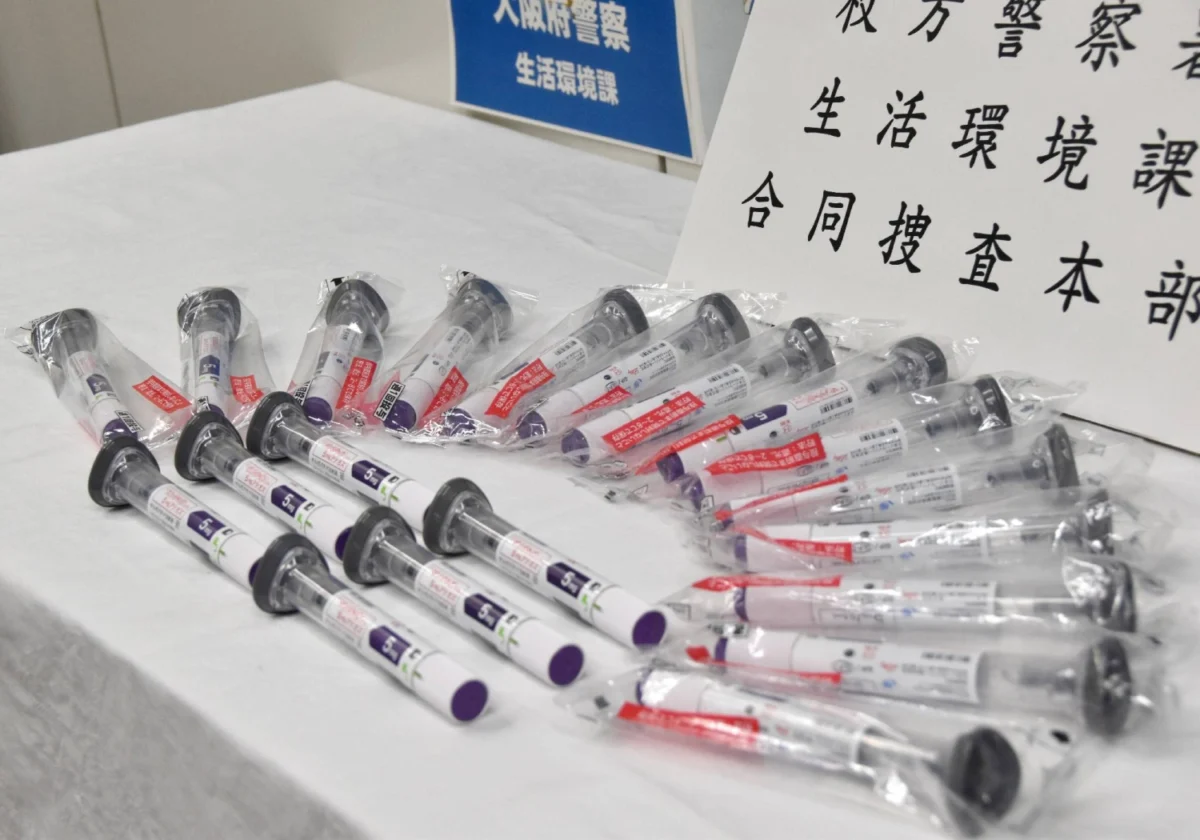
OSAKA – The surging global demand for weight-loss pharmaceuticals has birthed a dangerous shadow market in Japan. On Tuesday, the Osaka Prefectural Police took decisive action, forwarding the cases of three individuals to prosecutors on suspicion of violating the Pharmaceutical and Medical Devices Act. The suspects are accused of the unauthorized sale and illicit storage of Mounjaro—a potent diabetes medication that has gained widespread notoriety as a “miracle” dieting tool.
The crackdown underscores a growing public health crisis as social media platforms transform into unregulated marketplaces for prescription-only drugs. As the desire for rapid weight loss continues to outpace medical oversight, authorities are struggling to contain a trend that prioritizes vanity over patient safety.
The Core Facts: A Regulatory Breach
The investigation, spearheaded by the Osaka Prefectural Police, centers on the illegal distribution of tirzepatide, marketed under the brand name Mounjaro. Unlike over-the-counter supplements, Mounjaro is a powerful, subcutaneous injectable medication designed primarily for the management of type 2 diabetes.
According to investigative sources, all three suspects have admitted to the charges. The core of the violation lies in the unauthorized resale of prescription medication, an act strictly prohibited under Japanese law to prevent the distribution of counterfeit, expired, or improperly stored pharmaceuticals.
One primary suspect, a 35-year-old female company employee residing in Hirakata, Osaka, allegedly leveraged her own medical prescriptions to profit from social media connections. The other two suspects acted as intermediaries or storage hubs, hoarding batches of the drug acquired through various acquaintances—also met online—for the express purpose of resale.
Chronology of the Illicit Trade
The investigation into this specific ring began after police monitored suspicious activity on platforms like X (formerly Twitter) and Instagram, where hashtags related to "dieting" and "Mounjaro" frequently overlap with advertisements for illicit sales.
- Initial Procurement: The 35-year-old suspect began by receiving legitimate prescriptions for Mounjaro for personal use. However, she quickly identified a secondary market among women seeking the drug for cosmetic weight loss.
- The Social Media Pivot: Utilizing digital platforms, the suspect connected with individuals outside of traditional medical channels. She began selling her "leftover" doses, justifying the act as a means of earning "pocket money."
- Expansion of the Network: As demand grew, the operation expanded. The two additional suspects became involved, functioning as clandestine distributors who stored significant quantities of the injectable pens in residential settings—environments that lack the climate-controlled security required to maintain the drug’s chemical integrity.
- The Police Intercept: Through digital forensics and undercover monitoring, Osaka police tracked the flow of these transactions. Following a series of raids, the authorities seized the remaining stock and documentation of the financial exchanges, leading to the referral of the suspects to the public prosecutor’s office this week.
Supporting Data: The Mounjaro Phenomenon
To understand the gravity of this crime, one must understand the nature of the drug itself. Mounjaro is a glucagon-like peptide-1 (GLP-1) receptor agonist. While it is highly effective at stabilizing blood glucose levels, its side effects—and the mechanisms by which it induces weight loss—are significant.
The Medical Reality
Clinical data indicates that the drug works by mimicking hormones that signal satiety to the brain and slowing gastric emptying. While effective, the side effects are not trivial. Users frequently report:
- Severe nausea and vomiting.
- Gastrointestinal distress, including diarrhea and constipation.
- Risk of pancreatitis or gallbladder issues.
Despite these risks, the demand for the drug has exploded, particularly among young women in Japan. The 35-year-old suspect reportedly made approximately ¥25,000 in profit from her specific sales, a figure that, while modest, highlights the low barrier to entry for these black-market entrepreneurs. The ease with which these individuals turned a profit suggests that the "street price" for these injections is significantly higher than the co-pay cost for legitimate patients, creating a lucrative incentive for the theft or diversion of medical resources.
Official Responses and Public Safety
The Osaka Prefectural Police have issued a stern warning following the referral of these cases. A spokesperson for the department emphasized that the distribution of prescription medication by unlicensed individuals is not merely a legal infraction; it is a fundamental threat to public health.
The Regulatory Stance
"The pharmaceutical law is in place to protect the consumer from products that have not been vetted for their storage history, authenticity, or safety," said a legal expert following the announcement. "When you purchase a drug through a social media stranger, you have no way of knowing if the injection pen was kept at the correct temperature, if it has been tampered with, or if it is a counterfeit substance entirely."
The Ministry of Health, Labour and Welfare (MHLW) has also reiterated that GLP-1 medications must only be administered under the strict supervision of a licensed physician. Unauthorized distribution undermines the clinical oversight necessary to monitor for the aforementioned side effects, potentially leading to medical emergencies that the average person is ill-equipped to handle.
Implications: The Shadow Market and Future Risks
The implications of the Osaka case are far-reaching. As the popularity of weight-loss injections persists, the incident has highlighted three major challenges for modern Japanese society.
1. The Normalization of “Vanity Medicine”
The fact that a 35-year-old office worker viewed her prescription as a source of "pocket money" reveals a disturbing trend: the commodification of prescription drugs. When medications meant for chronic illness are treated as lifestyle accessories, the ethical boundaries of medical care erode. This poses a long-term risk to the accessibility of these drugs for patients who actually need them for diabetes management.
2. The Failure of Digital Policing
Social media platforms remain the "Wild West" of the pharmaceutical trade. Despite internal policies against the sale of illegal goods, the speed at which these accounts are created and the anonymity afforded by encrypted messaging apps make it nearly impossible for law enforcement to eradicate the trade entirely. This case serves as a warning that digital literacy must include an awareness of the dangers of buying health products from non-verified sources.
3. The Impact on Healthcare Costs
The illicit sale of Mounjaro often involves the exploitation of the national health insurance system. If individuals obtain prescriptions for personal use but sell the medication for profit, they are essentially defrauding the state. This increases the burden on the healthcare system and contributes to supply shortages, which have already begun to affect legitimate diabetic patients across Japan.
A Call for Heightened Vigilance
As the case moves through the court system, it is expected to serve as a deterrent. However, authorities are urging the public to be more cautious. The allure of a quick fix for weight loss is strong, but the risks—ranging from unknown chemical compositions to severe physiological reactions—far outweigh the temporary benefits.
Moving forward, the Osaka Prefectural Police plan to continue their investigation into the wider networks that facilitated these sales. They are also working with online platforms to improve the detection of prohibited medical advertisements. For now, the message from Osaka is clear: the law regarding the distribution of pharmaceuticals is absolute, and those who attempt to profit from the health of others will face the full weight of the justice system.
The case of the Osaka three is a stark reminder that in the age of viral trends, medical safety must remain the priority. As investigators continue to sift through the digital breadcrumbs left by these suspects, the broader hope is that this will trigger a wider conversation about the ethics of online medicine and the responsibility of patients to treat their prescriptions with the gravity they deserve.












No comments yet. Be the first to join the conversation!