

When a web browser hits a major version milestone—specifically an integer jump like 8.0—it serves as a symbolic marker for the software’s maturity. For Vivaldi, a browser that has spent nearly a decade carving out a niche for power users, developers, and those who demand granular control over their digital workspace, version 8.0 represents more than just a routine update. It marks a fundamental shift in design philosophy: the transition to a "Unified" interface.
Released on May 21, 2026, Vivaldi 8.0 attempts to resolve the tension between feature density and aesthetic coherence. While Vivaldi has long been celebrated for its deep customization, critics have occasionally noted that its interface could feel fragmented—a collection of disparate panels, bars, and tabs that, while powerful, lacked a cohesive visual language. With the launch of 8.0, the company aims to merge these components into a singular, fluid environment.
The Core Philosophy: What is "Unified"?
In the world of UI/UX, the term "unified" is often thrown around as a marketing buzzword. However, Vivaldi’s implementation in version 8.0 goes deeper than a simple coat of paint. In previous iterations, Vivaldi’s browser components—the tab bar, address bar, sidebar panels, and the webpage content itself—existed as distinct, layered objects. While this allowed for extreme modularity, it often resulted in a "boxy" look that felt dated compared to the streamlined, minimalist aesthetic of modern competitors.
The "Unified" design language in version 8.0 removes these hard boundaries. By treating the browser interface as a singular, layered system rather than a collection of separate components, the Vivaldi team has created a visual plane where the toolbar, tabs, and panels flow seamlessly into one another.
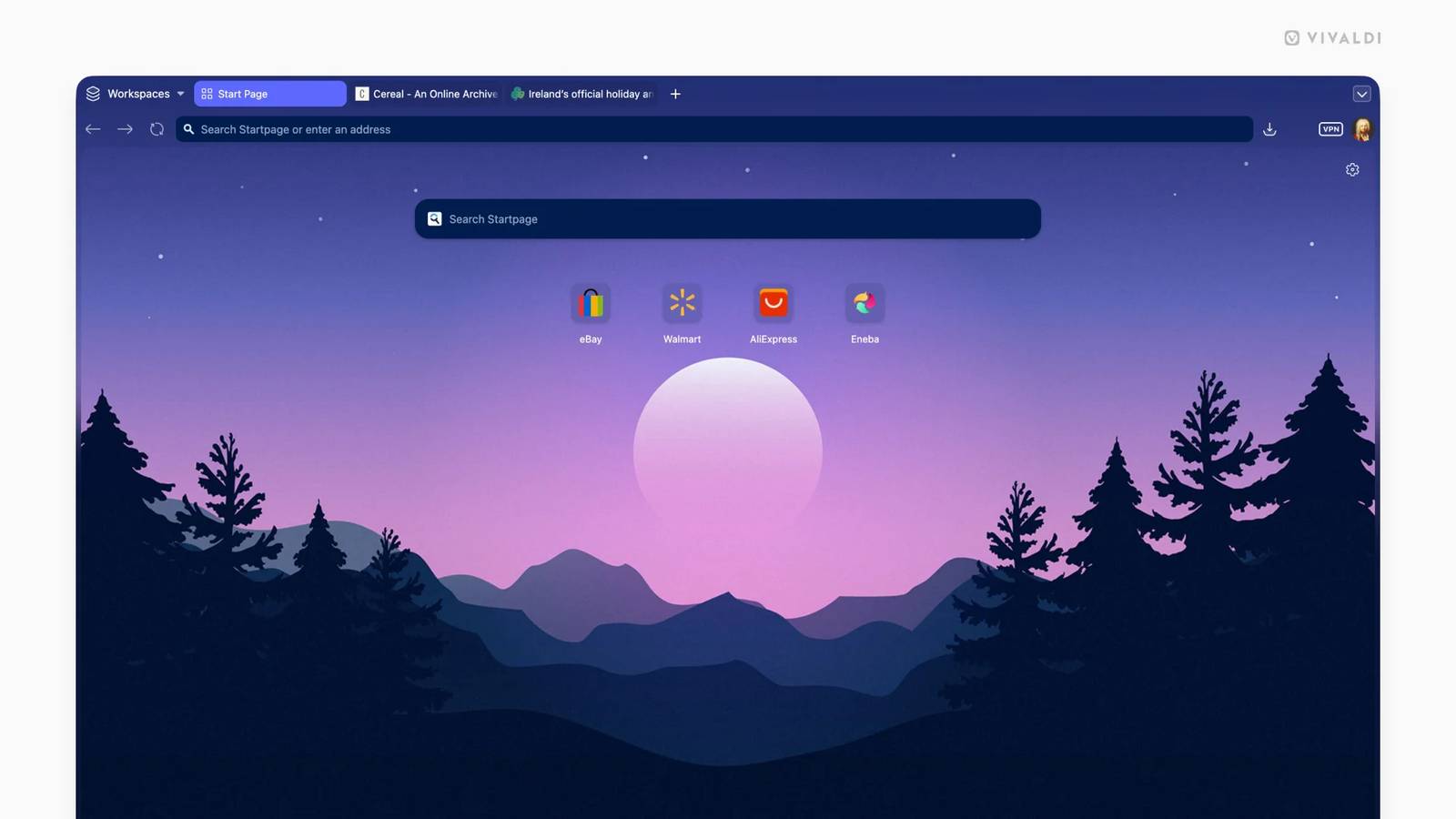
According to the official Vivaldi development blog, the shift was necessary to accommodate the growing complexity of the browser. As users continue to layer more tools—mail clients, calendar integrations, note-taking apps, and advanced tab management—into their workflow, the UI needed to evolve from a "patchwork" of features into an integrated workspace.
A Chronology of Vivaldi’s Evolution
To understand the significance of Vivaldi 8.0, one must look at the trajectory of the browser since its inception. Founded by Jon von Tetzchner, the former CEO of Opera, Vivaldi was built on the premise that browsers should adapt to the user, not the other way around.
- 2016: Vivaldi 1.0 launches, bringing "Tab Stacking" and "Notes" to a wider audience, positioning itself as the spiritual successor to classic Opera.
- 2018–2020: The browser introduces robust features like side panels, advanced history management, and the Vivaldi Mail beta, cementing its reputation as a powerhouse for productivity.
- 2022–2024: Vivaldi focuses on performance and cross-platform consistency, optimizing the Chromium engine for a leaner experience while maintaining its complex customization engine.
- 2026: Vivaldi 8.0 debuts, signaling a shift from adding raw utility to refining the user experience through a unified design language, moving away from the "cluttered power-user" stereotype.
This timeline shows a clear progression: early years were defined by feature acquisition; the middle years by platform stability; and 8.0 is defined by design maturity.
Supporting Data and Technical Refinement
The move to a Unified interface is not merely aesthetic; it has functional implications for how the browser handles themes and CSS injection. In older versions, applying a dark mode or a custom accent color often required the browser to calculate how to apply those colors to individual, separate containers.

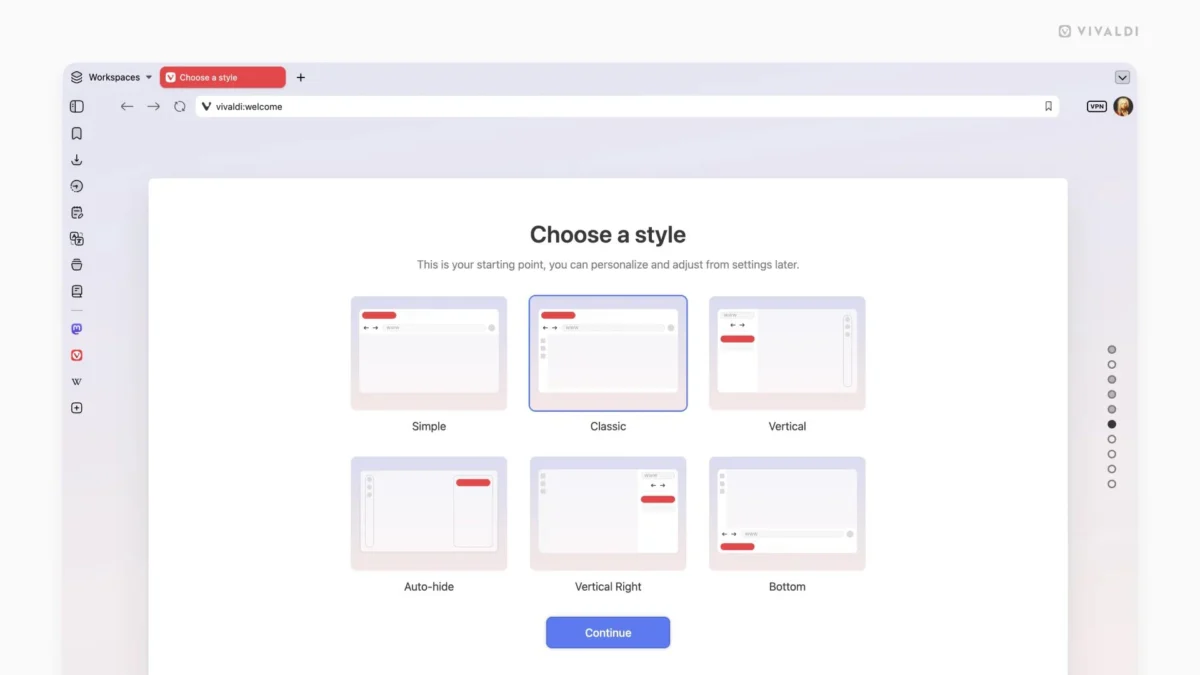
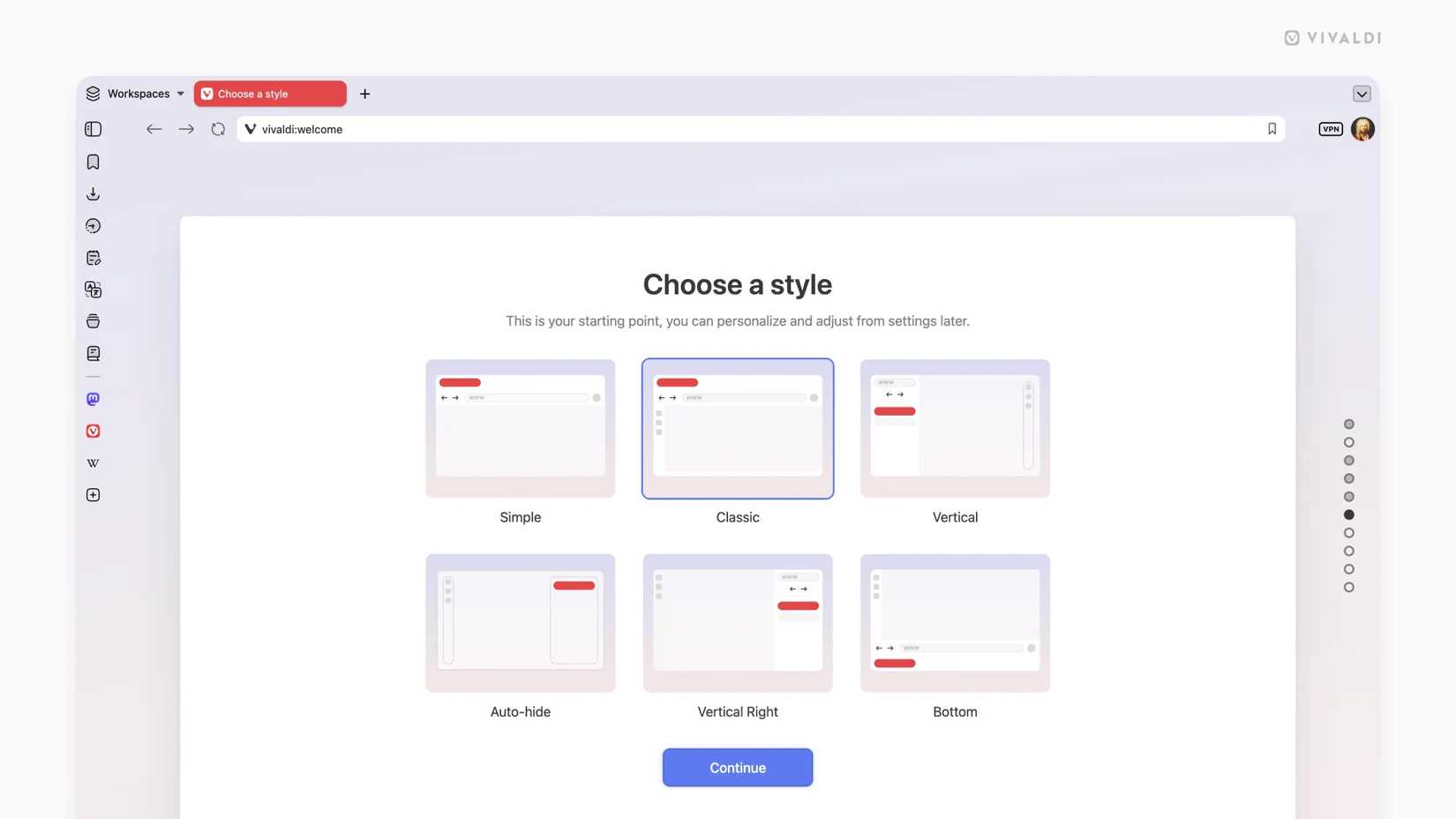
In version 8.0, because the interface operates on a single visual plane, themes are applied globally and instantaneously. This reduces the "flicker" or loading lag often associated with complex theme changes in earlier versions. Furthermore, the 8.0 update introduces six distinct "Unified Layouts," allowing users to toggle between different configurations—such as minimalist, sidebar-heavy, or classic top-down—without breaking the continuity of the interface.
Preliminary performance benchmarks from the Vivaldi team suggest that by flattening the UI structure, the browser consumes slightly less memory when rendering the interface, as it no longer needs to track the z-index and boundaries of dozens of independent UI sub-components. For a browser that is often criticized for its "heavy" resource footprint, this is a significant, if incremental, victory.
Official Responses and Developer Insight
Jon von Tetzchner, in his commentary accompanying the release, emphasized that the goal was never to strip away the functionality that Vivaldi is known for. "We know our users want power," he noted. "The challenge for 8.0 was to provide that power without the visual overhead that can distract from the task at hand. Unified is our answer to the question: ‘How can we do everything, but feel like we’re doing nothing?’"
The development team also addressed the feedback regarding the browser’s learning curve. One of the primary barriers to entry for Vivaldi has been the overwhelming nature of its settings menu. While version 8.0 doesn’t necessarily hide these settings, the new layout makes the default state of the browser much more intuitive for new users, potentially widening the browser’s appeal beyond the niche "tech enthusiast" demographic.
Implications for the Browser Market
The release of Vivaldi 8.0 arrives at a critical juncture for the web browser market. With Chrome moving heavily toward AI-integrated search and Edge aggressively pushing its Copilot features, the browser market is increasingly becoming a battleground for "intelligent" assistance.
Vivaldi has conspicuously chosen a different path. While other browsers are adding "AI bloat," Vivaldi is doubling down on "Human-Centered Design." The implication here is clear: Vivaldi is betting that the power user of 2026 is tired of being "helped" by an algorithm and instead wants a reliable, customizable, and visually clean environment where they are in total control.
What This Means for Users
- For the Power User: The transition to Unified means that your complex workspace—with dozens of tabs, side-panels, and split-screen views—will look more intentional and less like a messy dashboard.
- For the New User: The default configuration is now much more approachable. If you have been intimidated by Vivaldi in the past, version 8.0 is the most "plug-and-play" version the company has ever released.
- For the Industry: Vivaldi 8.0 proves that there is still room for a "browser-first" philosophy. By focusing on the UI/UX rather than just AI integration, Vivaldi is positioning itself as the premier choice for users who want a browser that functions as a professional tool rather than a consumer portal.
Looking Ahead: The Future of Vivaldi
As we look toward the post-8.0 era, the company has hinted that the next phase of development will focus on "Interoperability." If 8.0 was about fixing the look and feel, future updates are expected to lean into how Vivaldi talks to other applications—better integration with local file systems, improved API hooks for developers to create their own Vivaldi extensions, and potentially more native support for decentralized web technologies.
For now, Vivaldi 8.0 stands as a landmark release. It proves that a browser can grow in complexity while simultaneously simplifying its interface. For those who feel that modern browsers have become too restricted or too pushy with AI, Vivaldi 8.0 offers a refreshing, customizable, and sophisticated alternative that respects the user’s intelligence and aesthetic preferences.
Whether you are a long-time user or a curious newcomer, the Unified update is a compelling reason to download the latest installer from the Vivaldi website. It is a rare example of software that manages to evolve without losing its soul, proving that even after eight major iterations, a browser can still find new ways to feel fresh.












No comments yet. Be the first to join the conversation!