

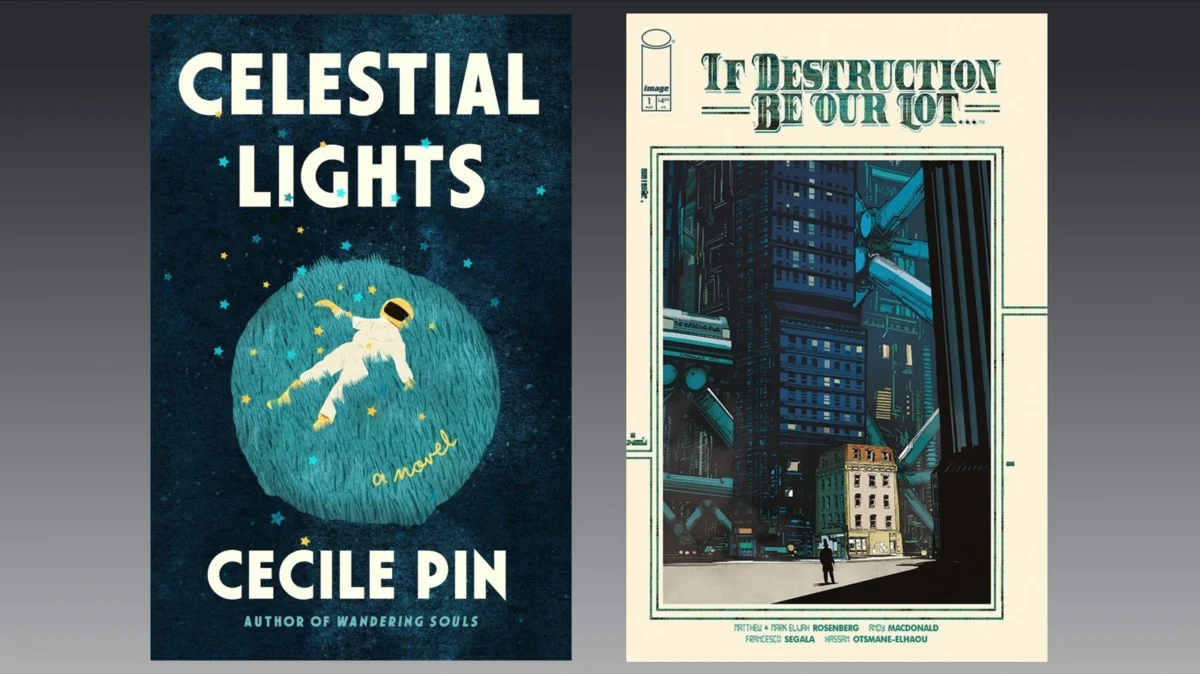
As the weekend approaches, many readers find themselves scouring bookstore shelves and digital catalogs for that elusive next great read—something that lingers in the mind long after the final page is turned. This week, we dive into two distinct narratives that explore the outer reaches of both space and human (or post-human) condition.
Cecile Pin’s Celestial Lights offers a quiet, introspective journey into the heart of a man grappling with the infinite, while the debut of the Image Comics series If Destruction Be Our Lot invites us into a post-apocalyptic landscape populated by sentient, confused machinery.
The Main Facts: Two Visions of the Future
This week’s recommendations represent the duality of speculative fiction. On one hand, we have the literary, character-driven realism of Cecile Pin’s Celestial Lights, a novel that utilizes space travel not as a setting for spectacle, but as a mirror for human regret, ambition, and memory. It is a story about the weight of our choices.
Conversely, If Destruction Be Our Lot is a sharp, stylistic leap into the absurd. Published by Image Comics and crafted by the creative team of writers Mark Elijah and Matthew Rosenberg, alongside the visceral art of Andy MacDonald, this series asks a profound question: what happens to our programmed obsessions when the creators are no longer around to witness them?
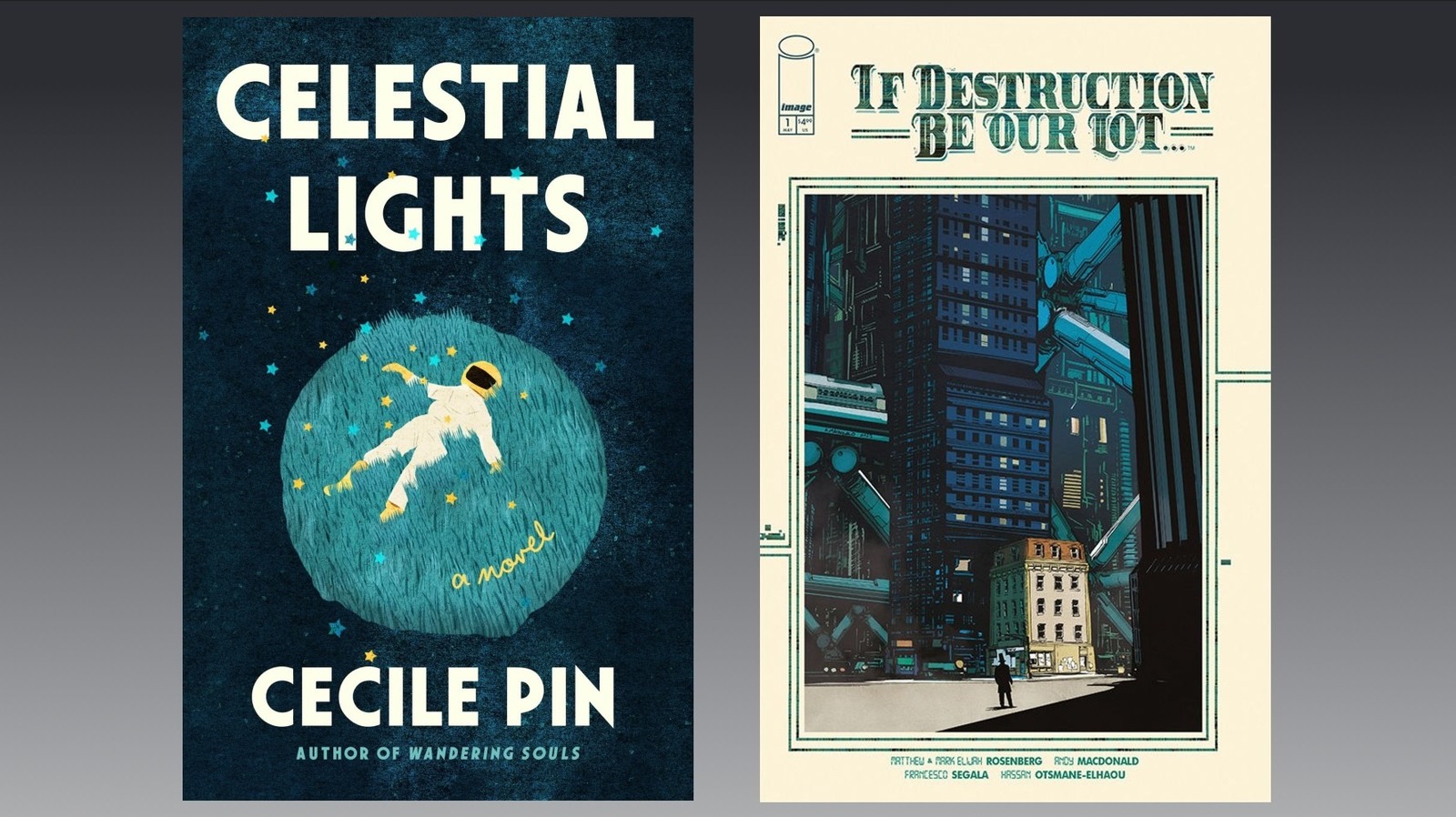
Both works are currently available, with Celestial Lights published by Henry Holt and Co., and the premiere issue of If Destruction Be Our Lot having hit shelves earlier this month.
Chronology: From the Stars to the Scrapheap
To understand the trajectory of these two stories, one must look at how they frame their respective timelines.
The Lifetime of Oliver Ines
Celestial Lights is a masterclass in non-linear storytelling. The narrative functions as a mosaic of Oliver “Ollie” Ines’s life. Rather than a straightforward journey toward Jupiter’s moon, Europa, the reader is ushered through a series of fragmented memories. These recollections are punctuated by mission logs, creating a dual-timeline structure that bridges the gap between Ollie’s past decisions on Earth and his inevitable isolation in the void of deep space.
The Post-Human Era of ‘If Destruction Be Our Lot’
In contrast, If Destruction Be Our Lot presents a world defined by a singular, cataclysmic event: the extinction of humanity. Decades have passed since the human race vanished, leaving behind an infrastructure of automated entities. The story picks up in the "now" of this desolate era, where the protagonist—a robotic replica of Abraham Lincoln—has spent years faithfully reciting the 16th president’s famous speeches, oblivious to the fact that his audience is long dead. The turning point of the series begins when a routine interaction with a sentient, autonomous bus shatters the robot’s pre-programmed reality, sparking a journey of self-discovery that transcends his original code.
Supporting Data: Literary and Visual Stylings
The Emotional Weight of ‘Celestial Lights’
Cecile Pin has carved out a niche for herself by focusing on the "melancholic narrative." In Celestial Lights, the science is secondary to the psychology.
- Theme: Memory and personal agency.
- Focus: The novel explores how the vastness of space can make human concerns seem insignificant, yet simultaneously highlights how those very concerns are all we truly have.
- Reader Expectation: This is not a "hard sci-fi" adventure. It is a character study, designed for those who appreciate authors like Kazuo Ishiguro or Emily St. John Mandel, where the "what happens next" is less important than "how the character feels about what happened."
The Aesthetics of ‘If Destruction Be Our Lot’
The visual identity of this new comic series is one of its strongest assets. Andy MacDonald’s art style manages to balance the grim reality of a dead world with a tongue-in-cheek humor that feels inherently "Lincoln-esque."
- Writing Duo: Mark Elijah and Matthew Rosenberg have leaned into the absurdity of the premise. By choosing a figure as historically heavy as Abraham Lincoln to serve as the lead "glitch" in the machine, they allow for a juxtaposition of high-minded political rhetoric and the mundane, often chaotic, reality of surviving in a robot-led society.
- Tone: Darkly comedic yet poignant. The contrast between the robot’s rigid, quote-driven dialogue and his sudden, emerging consciousness creates a narrative rhythm that keeps the reader engaged.
Official Perspectives and Creative Intent
While official "responses" to these books are currently coming in the form of glowing critical reception, the intent behind these works is clear.
For Pin, Celestial Lights serves as a meditation on the cost of ambition. Her exploration of the 10-year mission to Europa acts as a crucible; it forces Ollie to strip away the artifice of his life on Earth. In interviews regarding her writing process, Pin has suggested that we often use our careers and long-term goals as a way to hide from the people we actually are. The mission is not just a destination; it is an evasion.
For the team behind If Destruction Be Our Lot, the focus is on the absurdity of legacy. By placing a robotic Lincoln in a world without humans, the creators are exploring the concept of "purpose." Does an object have a soul if it continues to perform its function after the reason for that function has ceased to exist? The early success of the first issue suggests that readers are hungry for stories that blend existential philosophy with the unpredictable nature of serialized graphic fiction.
Implications: Why These Stories Matter Now
In a world increasingly dominated by rapid-fire content and short-form media, both Celestial Lights and If Destruction Be Our Lot demand a slower, more deliberate consumption.
The Value of Contemplative Fiction
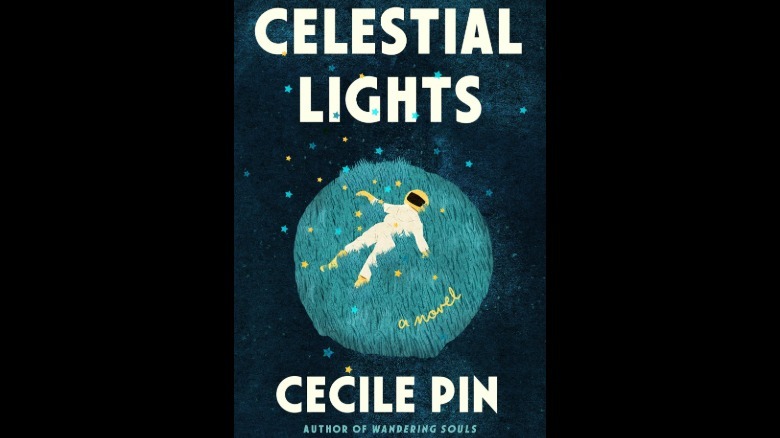
Celestial Lights reminds us that the "space" genre is not confined to lasers and planetary conquest. By grounding the narrative in the fragility of human relationships, Pin offers a timely reminder that even when we reach for the stars, we carry our baggage with us. This is a crucial takeaway for contemporary readers who are often overwhelmed by the noise of modern life.
The Post-Apocalyptic Shift
If Destruction Be Our Lot reflects a growing trend in pop culture: the shift from "survival horror" in post-apocalyptic settings to "existential curiosity." We have seen enough stories about how humans fight to survive the end of the world. Now, we are curious about what follows. The image of a robotic Abraham Lincoln, wandering a lonely world and trying to understand his place in it, is a powerful metaphor for our own struggles with legacy, history, and the fear of becoming obsolete in an era of rapid technological advancement.
Conclusion: A Weekend of Reflection
Whether you choose the quiet, celestial musings of Cecile Pin or the darkly humorous, robotic introspection of If Destruction Be Our Lot, this weekend offers a perfect opportunity to step back and examine the "why" behind our own stories.
If you find yourself needing a break from the relentless pace of current events, Celestial Lights provides the perfect, melancholic retreat. If you prefer your existential dread served with a side of sharp wit and stunning visuals, the inaugural issue of If Destruction Be Our Lot is an essential addition to your pull list.
Both works demonstrate that, whether through the lens of a man looking at the moon or a machine looking at a broken bus, the most fascinating frontier remains the one inside ourselves. Happy reading.












No comments yet. Be the first to join the conversation!