

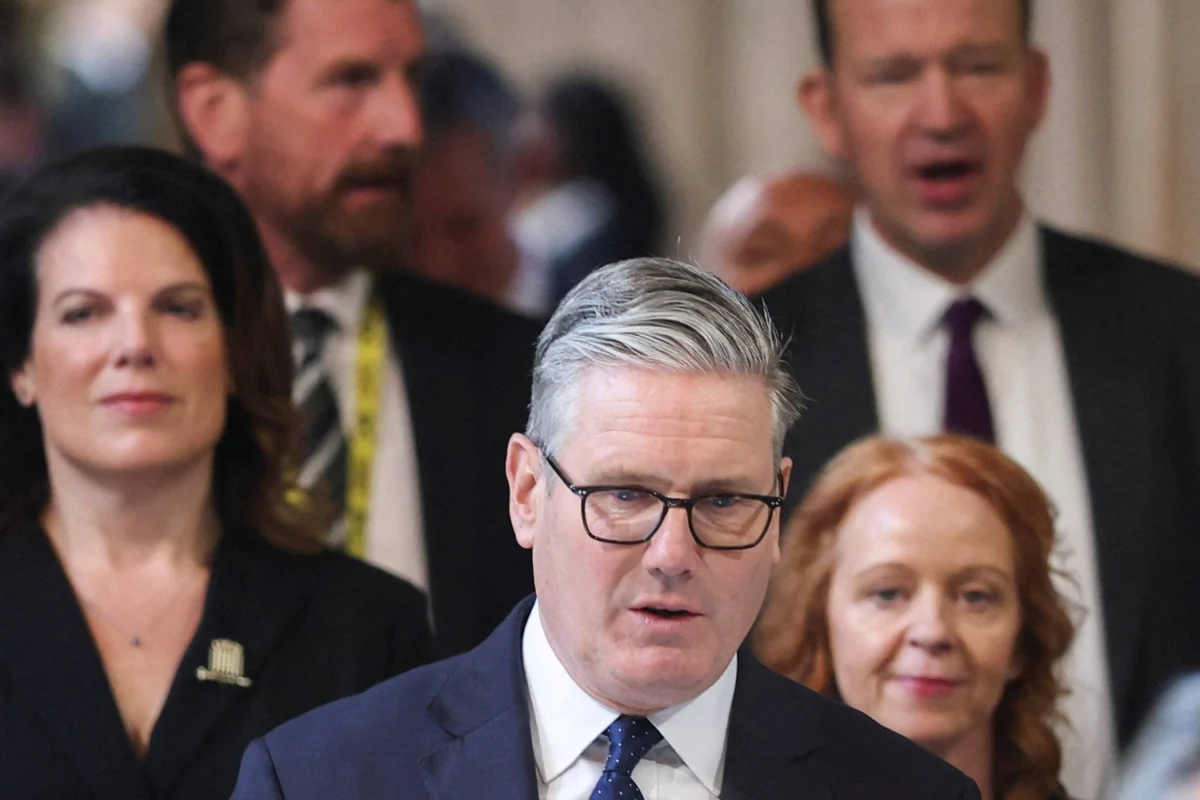
LONDON — The political landscape in the United Kingdom has shifted violently beneath the feet of Prime Minister Keir Starmer. Less than two years after securing a landslide victory on a mandate of “stability and restoration,” the Labour administration is facing an existential crisis. The resignation of Health Minister Wes Streeting on Thursday has transformed a period of simmering internal discontent into an open rebellion, leaving Starmer’s leadership in a state of fragile suspension.
The resignation, delivered in a stinging letter that accused the Prime Minister of “political drift,” has acted as a catalyst for a wider insurrection. As Starmer returned to the House of Commons this week following the ceremonial State Opening of Parliament—a ritual intended to showcase the strength of his legislative agenda—the atmosphere in Westminster was not one of continuity, but of a government bracing for collapse.
The Chronology of a Disintegrating Mandate
The current crisis did not emerge in a vacuum. It is the culmination of eighteen months of mounting frustration, punctuated by a series of political missteps and economic stagnation.
- July 2024: Keir Starmer takes office following a sweeping general election victory, promising to “end the chaos” that defined the previous decade of Conservative governance.
- Early 2026: Public dissatisfaction begins to manifest in polling data, as the government struggles to deliver on ambitious promises regarding the National Health Service (NHS) and the cost-of-living crisis.
- May 2026 (Local Elections): The Labour Party suffers what analysts describe as “disastrous” results in local elections. The loss of key council strongholds signals a profound disconnect between the government and its core voter base.
- Early May 2026: Backbench Labour MPs begin whispering of a leadership challenge, citing a lack of clear direction and an inability to address the nation’s economic malaise.
- Thursday, May 14, 2026: Wes Streeting, a heavyweight in the cabinet and a former contender for the party leadership, resigns. His letter, explicitly questioning Starmer’s capacity to lead the party into the next general election, sends shockwaves through Whitehall.
The Catalyst: Why Wes Streeting’s Departure Matters
The resignation of Wes Streeting is not merely a personnel change; it is a signal of a deepening ideological rift. As the former Health Minister, Streeting was the face of the government’s most vital domestic project: the reform of the NHS. By abandoning his post, Streeting has effectively declared that the Prime Minister’s current trajectory is a dead end.
In his resignation statement, Streeting wrote: “It is now clear you will not lead the Labour Party into the next general election with the conviction required to win. The drift we have witnessed is not merely a matter of policy, but of purpose.”
For Starmer, who built his platform on the promise of competent, professional governance, the loss of a senior minister who was widely seen as a potential successor is devastating. It validates the fears of many backbenchers who believe that the Prime Minister has become detached from the grassroots concerns of the electorate.
Supporting Data: The Erosion of Labour’s Support
The skepticism surrounding Starmer’s leadership is backed by sobering data. Recent polling indicates that the “Starmer surge” that defined the 2024 election has evaporated.
According to recent surveys, Labour’s approval rating has plummeted to its lowest point since the party took power. Key metrics contributing to this decline include:
- Economic Perception: Despite efforts to stimulate growth, inflation remains stubborn, and the tax burden remains at a historic high. A majority of voters now perceive the government as having no clear strategy for economic recovery.
- NHS Waiting Lists: Despite initial promises to slash waiting times, the reality on the ground has seen record-breaking delays, which directly undercut the credibility of the administration.
- Local Election Trends: The May 2026 results showed a significant shift in the "Red Wall" seats—the very regions that handed Starmer his mandate. Voters in these areas expressed fatigue with the lack of tangible improvement in public services.
Official Responses and the View from Westminster
The response from 10 Downing Street has been characterized by a defensive posture. In a brief statement issued shortly after Streeting’s resignation, a spokesperson for the Prime Minister insisted that Starmer remains "entirely focused on the delivery of the government’s legislative program" and that the King’s Speech, delivered only days prior, provides a clear roadmap for the remainder of the parliamentary session.

However, the mood in the Commons tells a different story. Conservative opposition leaders have seized upon the chaos, framing the resignation as proof that Labour is "in a state of total, uncontrolled collapse." Meanwhile, senior Labour figures—some of whom are now openly positioning themselves for a potential leadership contest—have been more measured but equally critical.
“The Prime Minister must recognize that the status quo is no longer tenable,” one senior Labour MP noted on condition of anonymity. “We are currently witnessing a government that has lost its rudder. Unless there is a significant change in tone and a pivot in policy, we are sleepwalking toward a catastrophic defeat at the next election.”
Implications: A Government at the Crossroads
The implications of this crisis are profound, extending far beyond the walls of the Palace of Westminster.
1. Legislative Gridlock
With a cabinet in flux and the loyalty of backbenchers in question, the government’s ability to pass critical legislation is severely compromised. The agenda outlined in the King’s Speech—which includes reforms to energy policy and constitutional oversight—now faces a precarious path through Parliament.
2. The Threat of a Leadership Challenge
The resignation of Streeting has effectively opened the door for a formal challenge. Under Labour party rules, a threshold of MPs must submit letters of no confidence to trigger a leadership contest. While that threshold has not yet been reached, the momentum is undeniably moving in that direction.
3. International Stability
Britain’s standing on the global stage is intrinsically linked to the stability of its domestic government. International partners and markets are watching the developments in London with concern. A prolonged period of political uncertainty risks undermining the U.K.’s influence in ongoing trade negotiations and its commitment to international security alliances.
The Path Ahead: Can Starmer Survive?
For Keir Starmer, the coming weeks represent the most significant challenge of his political life. To survive, he must move beyond the bureaucratic language of “delivery” and provide a compelling vision that resonates with a disillusioned public.
Political analysts suggest that the Prime Minister has three primary options:
- A Major Cabinet Reshuffle: Bringing in new faces to replace the dissenters and signaling a fresh start.
- Policy Pivot: Abandoning the current, criticized approach to economic and public sector reform in favor of a more radical, populist agenda.
- The "Confidence" Gambit: Calling for a vote of confidence within the party to force his detractors to either publicly back him or trigger an immediate contest.
As the echoes of the King’s Speech fade, the reality facing the British government is stark. The mandate for stability has been replaced by an environment of acute volatility. Whether Keir Starmer can navigate this crisis or whether his premiership will be remembered as a short-lived interlude of drift remains to be seen. What is certain, however, is that the political clock in London is ticking, and the window for corrective action is rapidly closing.












No comments yet. Be the first to join the conversation!