

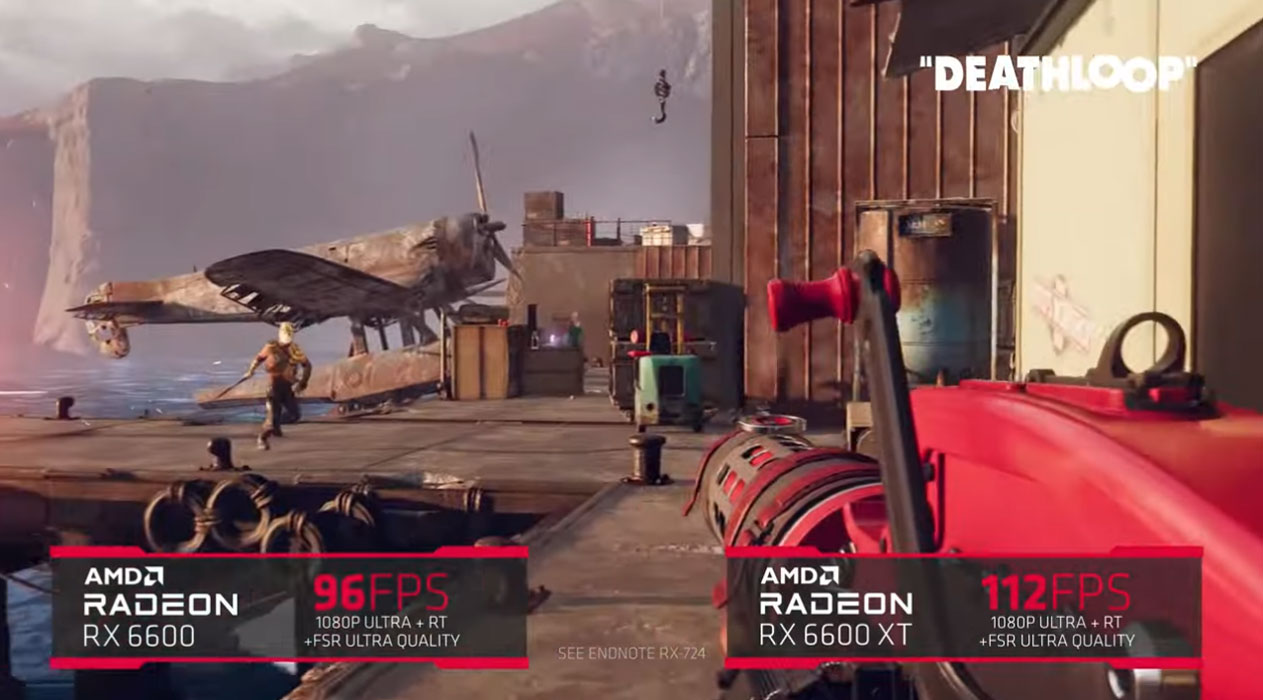
Following the successful July debut of the Radeon RX 6600 XT—a card squarely aimed at high-fidelity, high-framerate 1080p gaming—AMD has officially pulled back the curtain on its latest midrange contender: the Radeon RX 6600. Long whispered about in industry circles and subject to a flurry of pre-launch leaks, the non-XT variant is now a reality, promising to bring the sophisticated architecture of RDNA 2 to a broader segment of the gaming population.
As the GPU market continues to navigate complex supply chain dynamics and unprecedented demand, the arrival of the RX 6600 offers a fresh strategic move for AMD, aiming to solidify its presence in the highly contested 1080p performance bracket.
Main Facts: The Anatomy of the Radeon RX 6600
At its core, the Radeon RX 6600 shares a deep technological lineage with its older sibling, the RX 6600 XT. Both cards are built upon the Navi 23 silicon, leveraging AMD’s mature RDNA 2 architecture. However, the RX 6600 is effectively a "cut-down" version, designed to hit a lower price point while maintaining the core benefits of the platform.
Technical Specifications and Trade-offs
To achieve a roughly 15 percent lower MSRP compared to the XT variant, AMD has implemented a calculated reduction in the card’s hardware specifications. The most notable changes include:
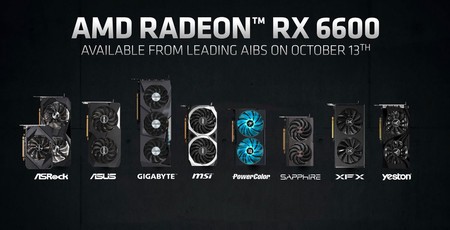
- Compute Units and Processors: The RX 6600 sees a reduction in both stream processors and texture units compared to the XT, though the Render Output Units (ROPs) remain locked at 64.
- Clock Speeds: The non-XT model operates at lower GPU boost, game, and memory clocks. Notably, the memory interface operates at 14Gbps, compared to the 16Gbps found in the 6600 XT.
- Power Envelope: One of the most impressive technical aspects of the card is its power efficiency. The RX 6600 boasts a Total Board Power (TBP) of just 132W, significantly lower than the 160W of its predecessor.
Despite these cuts, the card is marketed as "future-ready" for modern gaming, optimized for high-refresh-rate 1080p titles. It provides a balanced profile that avoids the power-hungry nature of higher-end enthusiast cards while delivering performance that is more than sufficient for the average consumer’s display.
Chronology: From Rumors to Retail
The path to the RX 6600’s release was paved with significant speculation. The tech industry has been anticipating this "entry-midrange" card since the initial RDNA 2 rollout.
- Late July 2021: AMD launches the Radeon RX 6600 XT, setting the stage for the RDNA 2 midrange strategy.
- August – September 2021: Rumors intensify regarding a "cut-down" Navi 23 card. Leak trackers and industry insiders point to a release intended to counter Nvidia’s hold on the sub-$400 market.
- Early October 2021: Official press communications begin as AMD confirms the October 13 launch date.
- October 13, 2021: Global launch. Embargoes lift, and third-party benchmarks from reviewers worldwide hit the web simultaneously, providing a holistic view of the card’s performance against the competitive landscape.
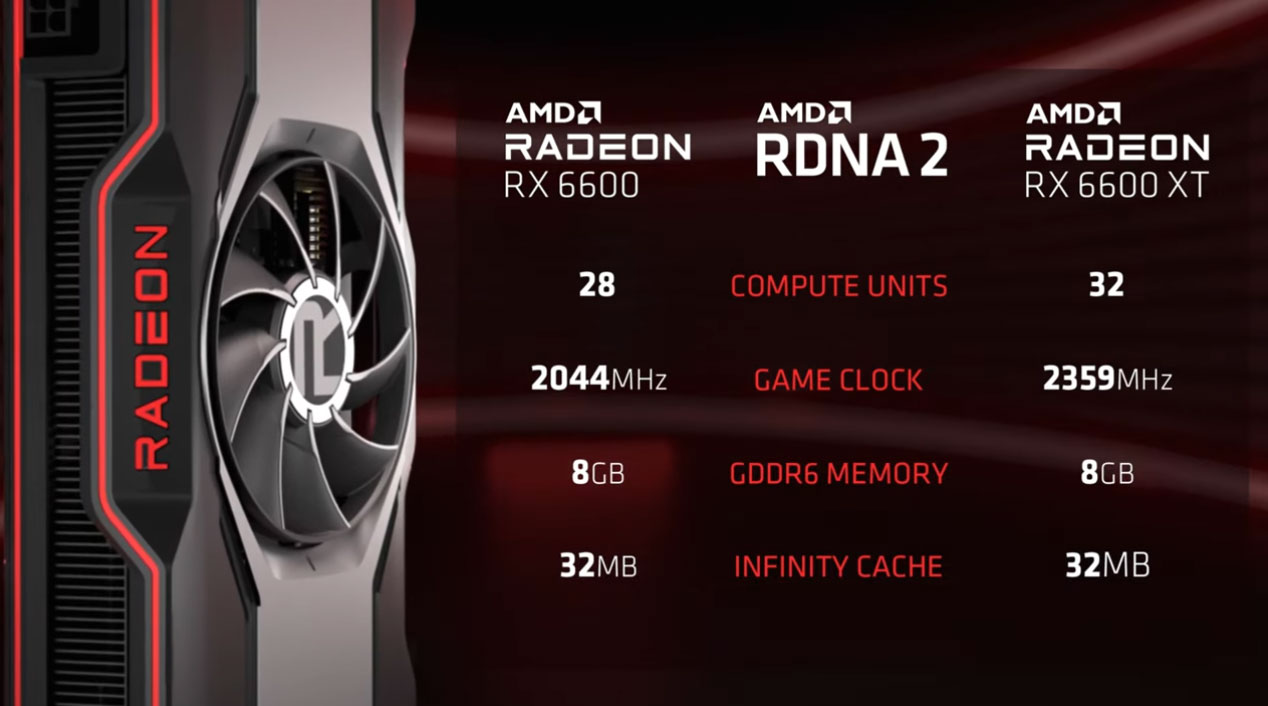
- Post-Launch: Partner cards from ASRock, Asus, Gigabyte, MSI, PowerColor, Sapphire, XFX, and Yeston begin appearing at retailers, accompanied by the gradual integration of the card into pre-built desktop systems.
Supporting Data: Benchmarks and Competitive Analysis
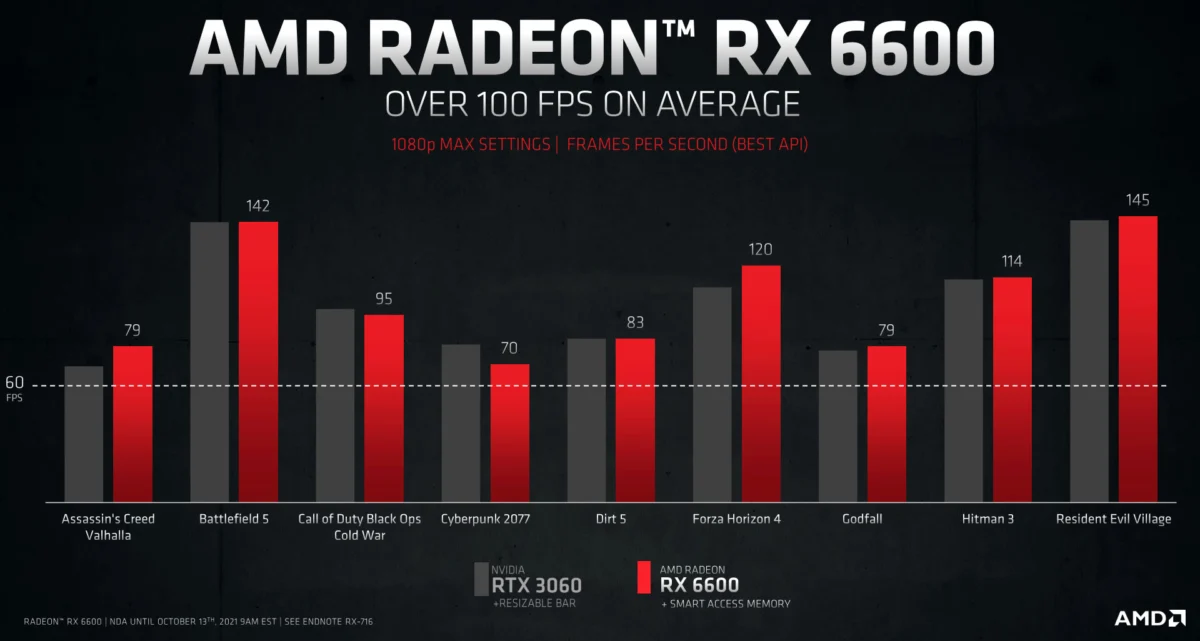
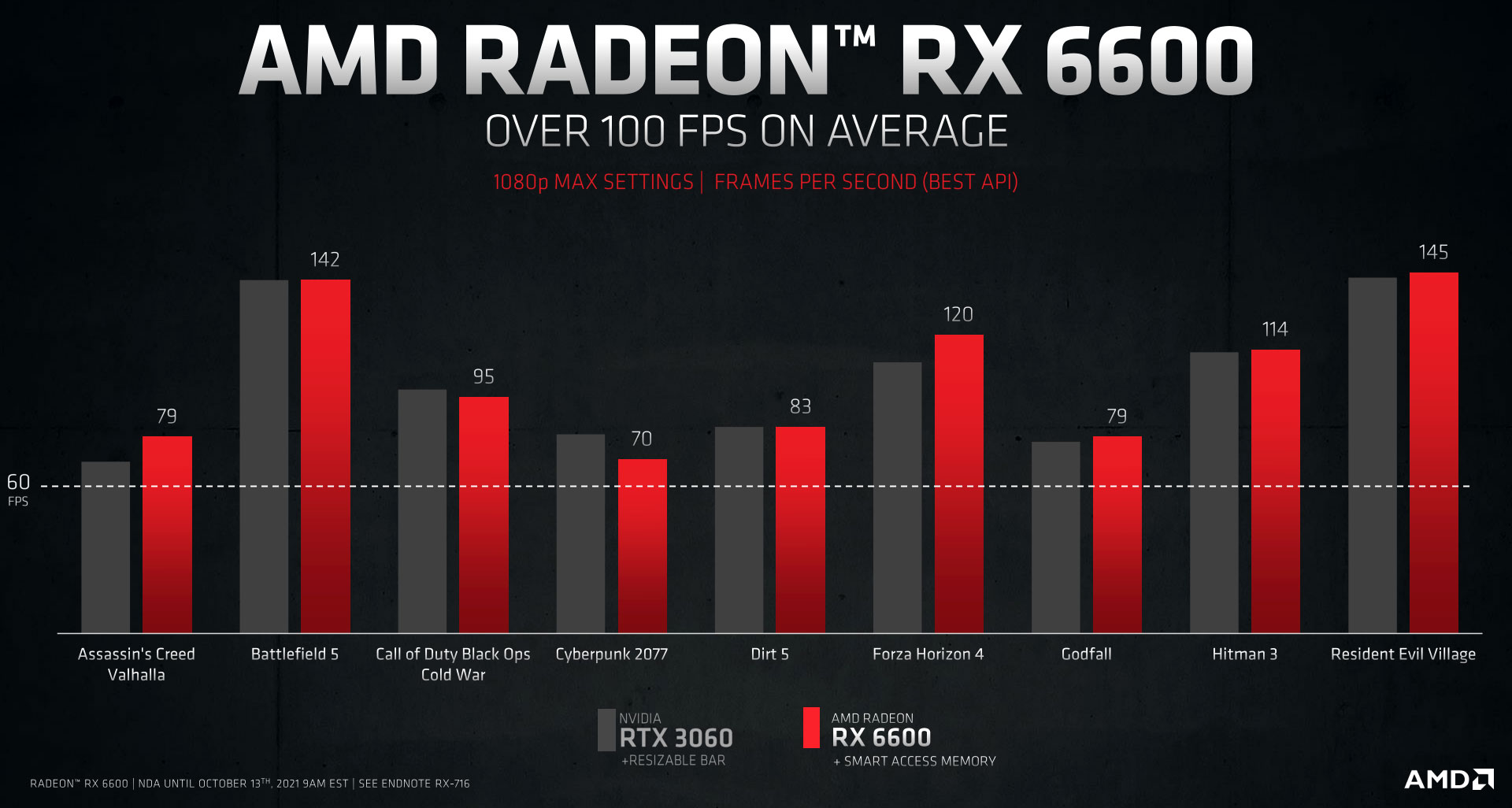
The release of the RX 6600 has provided a treasure trove of data for enthusiasts. When looking at the aggregate results from third-party benchmarks, a clear picture emerges regarding its positioning against the competition—specifically the Nvidia GeForce RTX 3060.
The Duel: RX 6600 vs. RTX 3060
The Nvidia GeForce RTX 3060 and the AMD Radeon RX 6600 share a similar target price point, making them direct rivals.
- Performance Parity: In traditional rasterization, the two cards are remarkably well-matched. Performance fluctuates depending on the game engine, with titles favoring either the "Green Team" or "Red Team" architecture.
- Efficiency: The most significant victory for AMD in this comparison is the power efficiency. At 132W, the RX 6600 runs cooler and more efficiently than the 170W RTX 3060. This translates to quieter cooling solutions and less strain on power supplies.
- Ray Tracing: While the RX 6600 is capable of handling ray tracing, it is not its primary strength. In titles that push ray tracing to the limit, the card often requires assistance from AMD’s FidelityFX Super Resolution (FSR) upscaling technology to maintain playable framerates.
Thermal and Design Observations
Interestingly, because the RX 6600 shares its board design with the RX 6600 XT, many partner cards feature cooling solutions that are actually over-engineered for the lower-wattage chip. Consumers are seeing an influx of bulky triple-fan and dual-fan designs. While this may seem like overkill for a 132W card, the benefit is undeniable: these cards run exceptionally cool and quiet out of the box, as the thermal overhead is significant.
Official Responses and Strategic Positioning
AMD’s official stance on the RX 6600 is one of pragmatism. According to their press releases, the card is designed to "provide visually stunning, high-refresh rate 1080p gaming experiences to the midrange market."
AMD acknowledges that the market is currently in a state of flux. By offering a card that excels at 1080p and handles entry-level 1440p gaming, they are catering to the largest demographic of PC gamers. The "future-ready" label is not just marketing hyperbole; it refers to the inclusion of full support for modern APIs and features like SAM (Smart Access Memory) and FSR, which extend the longevity of the hardware by allowing software-based performance boosts in demanding future titles.
Implications: What This Means for the Consumer
The GPU market remains difficult for the average buyer, defined by limited supply and inflated prices. However, the launch of the RX 6600 carries several long-term implications for the industry.
1. The Value of Choice
Consumers today have less luxury of choice than in previous hardware cycles. If a shopper can find the RX 6600 at or near its intended MSRP, it represents one of the most balanced options currently available for a 1080p build. It is not an enthusiast-grade card, but for the vast majority of gamers, it provides exactly what is needed for a fluid, high-fidelity experience.
2. The Shift to Efficiency
AMD’s focus on power efficiency with the RX 6600 sets a new standard for midrange GPUs. As electricity costs rise and the demand for compact, low-noise systems grows, the 132W power footprint becomes a major selling point. It suggests a future where performance is measured not just in frames per second, but in frames per watt.
3. Market Rivalry and Future Rumors
The release of the RX 6600 has already spurred renewed speculation regarding Nvidia’s next move. Reports from industry observers like kopite7kimi suggest that Nvidia is now under pressure to finalize its own entry-level solutions, specifically the rumored GeForce RTX 3050 and 3050 Ti. There is even chatter regarding potential VRAM upgrades (6GB or 12GB models) for those desktop variants to better compete with AMD’s current offerings.
4. Impact on Pre-built Systems
Beyond the DIY market, the RX 6600 is set to become a staple in pre-built gaming desktops. System integrators favor cards that are easy to cool and reliable, and the RX 6600 fits this bill perfectly. This will likely provide a path for consumers to enter the high-refresh-rate 1080p ecosystem without needing to source a standalone GPU in a volatile secondary market.
Conclusion: A Reliable Workhorse for the Modern Era
The AMD Radeon RX 6600 does not attempt to reinvent the wheel, nor does it aim to conquer 4K gaming. Instead, it occupies a vital space in the gaming landscape, serving the needs of the mainstream user who values performance, efficiency, and longevity.
While the competition with the RTX 3060 remains fierce and availability will ultimately dictate the success of the product, the RX 6600 is undeniably a strong addition to AMD’s portfolio. Its ability to leverage RDNA 2 in a low-power, high-efficiency package makes it a compelling choice for those looking to upgrade their systems for a modern 1080p experience. As the market continues to evolve, the RX 6600 stands as a testament to AMD’s commitment to the midrange, ensuring that high-performance gaming remains accessible, even in challenging times.
For the prospective buyer, the recommendation is clear: if you are in the market for a 1080p workhorse, keep a close eye on retail stock. While the market may be unpredictable, the RX 6600 offers the kind of stable, efficient, and capable performance that defines a true "gamer’s card."










No comments yet. Be the first to join the conversation!