Jia Lissa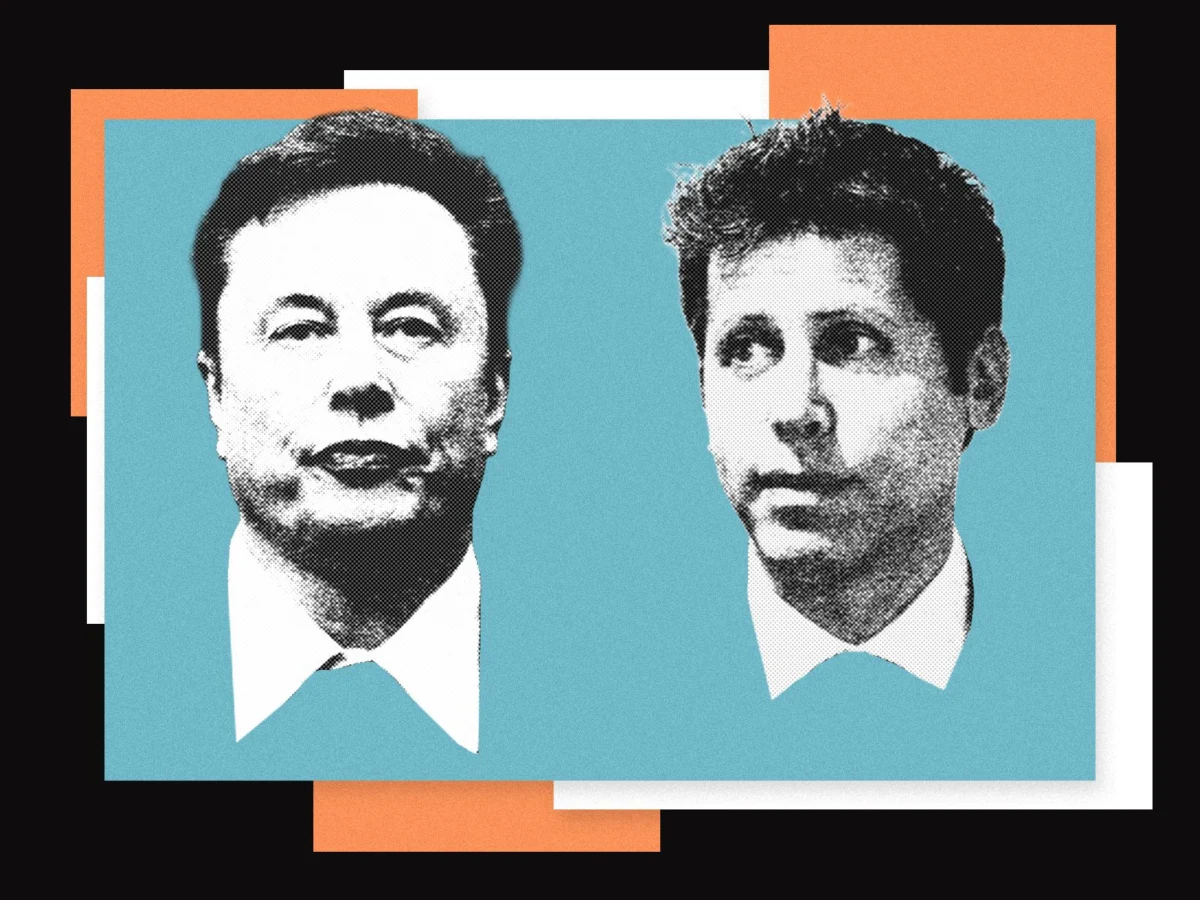
The courtroom drama that has captivated the technology world—the Musk v. Altman trial—reached its climactic conclusion this past Thursday. As attorneys delivered their final arguments, the silence in the room belied the seismic implications of the proceedings. For weeks, the legal teams representing Elon Musk and Sam Altman have labored to convince a judge and jury of a singular, self-serving narrative: that their respective clients are the true, incorruptible stewards of OpenAI’s original, nonprofit mission.
A verdict, expected as early as next week, will serve as the final chapter in a decade-long saga that pits two of the most formidable figures in Silicon Valley against one another. Yet, as the legal dust settles, a growing consensus among observers suggests that regardless of who carries the day in court, the true losers have already been identified. They are the employees, the policymakers, and the members of the public who invested their trust—and in some cases, their careers—into the promise of a nonprofit research lab designed to benefit all of humanity.
The Mirage of the Nonprofit Mission
At the heart of the dispute lies a fundamental tension between the idealistic origins of OpenAI and its current reality as a trillion-dollar-valuation juggernaut. What began as a collaborative research venture aimed at ensuring artificial general intelligence (AGI) would be developed safely for the benefit of mankind has, in the eyes of critics, morphed into a hyper-competitive race for market dominance.
"It’s hard to see how the public interest is being protected by either of these parties, and that is really what is ultimately at stake in a case about a nonprofit," notes Jill Horwitz, a Northwestern University law professor and expert in nonprofit governance. "The public interest in the nonprofit is at risk no matter who wins."
This sentiment is echoed by those on the inside. Daniel Kokotajlo, a former OpenAI researcher who joined the company in 2022, has become a vocal critic of the organization’s shifting internal culture. "Musk and Altman are basically locked in a race to be the first to build superintelligence, and they both rightly fear what the other will do if they win," Kokotajlo says. "The rest of us should fear them both."
A Chronology of Ambition and Acrimony
The origins of OpenAI were painted with a brush of altruism, yet the internal documents and communications revealed during the trial tell a more pragmatic, and at times cynical, story.
2015–2016: The Genesis of the "Nonprofit"
In May 2015, email correspondence shows Sam Altman proposing the creation of "some sort of nonprofit" to Elon Musk. Even at this early stage, the goal was explicitly to compete with Google’s DeepMind. While the nonprofit structure provided a "moral high ground"—a strategic advantage in recruiting elite research talent—the founders were already contemplating the necessity of commercialization. By December 2016, Musk’s enthusiasm for the nonprofit model had begun to wane, with the billionaire writing to his cofounders that the structure might have been the "wrong move" because it lacked the requisite sense of urgency.
2017–2018: The Pivot to Profit
The following year, the founders made an aggressive push to integrate a for-profit arm, or even dissolve the nonprofit entirely. These efforts stalled primarily due to internal friction over power and equity. Internal diaries from cofounder Greg Brockman from this period reveal candid discussions regarding how the organization could lead to his own status as a billionaire. In February 2018, the situation grew more desperate; Musk attempted to fold OpenAI into his own company, Tesla, offering Altman a board seat and attempting to recruit the team into a "deeply proprietary" AI unit.
2019–2023: The Microsoft Era and the Ouster
As OpenAI moved toward its current structure, it solidified its partnership with Microsoft. Emails from Microsoft CTO Kevin Scott during this transition period reveal the tech giant’s awareness of the shift, noting his surprise at the pivot from an "open effort" to a "closed, for-profit thing." The period culminated in the November 2023 board crisis, where Altman was temporarily ousted, only to return with a board hand-picked by himself and Microsoft CEO Satya Nadella—a move Altman later described as "running back into a burning building."
Supporting Data: Governance vs. Philanthropy
OpenAI’s legal defense, led by attorney William Savitt, rests on the argument that the company’s nonprofit roots remain intact. They point to the $200 billion stake the nonprofit holds in the for-profit entity as evidence that the organization is fulfilling its mission. However, advocacy groups and legal experts argue that funding is not a proxy for mission adherence.
Nathan Calvin, VP of state affairs for the AI safety nonprofit Encode, emphasizes the distinction. "The mission of the nonprofit is not that of a typical foundation," Calvin argues. "It is specifically to ensure that AGI benefits all of humanity. Money is important for that goal, but it is not the goal in and of itself."
The evidence suggests that the nonprofit structure has been treated more as a corporate shield than a governance body. Throughout the trial, it became clear that the nonprofit’s role in decision-making was often sidelined in favor of the speed required to keep pace with industry rivals.
Official Responses and Defensive Postures
The defense strategy presented by OpenAI has been consistent: Musk’s lawsuit is characterized as a case of "sour grapes" born from his loss of control over the AI lab. The company maintains that without the transition to a for-profit structure, the mission would have inevitably collapsed under the sheer cost of the compute power required to train large language models.
On the other side, Musk’s legal team has focused on the breach of contract, asserting that the $38 million he initially invested was provided under the explicit condition that it be used for charitable, open-source purposes. They argue that the transformation into a closed-source, profit-seeking entity constitutes a fundamental betrayal of the trust and conditions under which the original capital was donated.
The Broader Implications for AI and Society
The outcome of Musk v. Altman extends far beyond the boardroom of a single AI startup. It highlights the growing tension between the unchecked advancement of "superintelligence" and the safety protocols intended to govern it.
The Liability Gap
As OpenAI continues to grow, it faces a mounting list of legal challenges, ranging from copyright infringement lawsuits by media conglomerates to allegations of negligence in cases where users claim AI chatbots contributed to self-harm or violent incidents. The company’s recent support for an Illinois bill aimed at shielding AI labs from liability for "societal disasters" suggests that OpenAI, like its competitors at Google and Meta, is prioritizing regulatory protection over the absolute caution that once defined its mission statement.
The Erosion of Public Trust
Perhaps the most damaging fallout from this trial is the complete erosion of the "nonprofit" brand. Once a beacon of hope that promised to keep AI out of the hands of big-tech monopolies, OpenAI now finds itself indistinguishable from the very companies it once sought to disrupt. The "shine," as observers have noted, has worn off.
The Future of AGI Research
The case has forced a public reckoning regarding the accountability of AI researchers. If the nonprofit structure—the very mechanism designed to ensure altruism—can be bypassed so easily, what legal or ethical frameworks remain? The trial has demonstrated that when the incentives of fame, fortune, and the race to AGI converge, the original, high-minded promises of the founders are the first casualties.
Conclusion: A Pyrrhic Victory
As the jury prepares to deliberate, one thing is certain: the winner of this trial will be walking away with a hollow trophy. If Musk wins, he successfully proves that the current OpenAI is a shadow of its intended self, yet he does little to provide a viable path for the ethical development of AI in an era where global corporations have already claimed the field. If Altman wins, the company continues its trajectory as a for-profit giant, but it does so with the permanent stain of having been forced to admit, through testimony and evidence, that its "nonprofit" status was a convenient narrative rather than a guiding principle.
In the final analysis, the Musk v. Altman trial is a diagnostic tool for the tech industry at large. It reveals that in the current landscape of rapid AI development, the "mission" is often a malleable concept, easily reshaped by the currents of capital and the desire for technological supremacy. For the public, the lesson is clear: the future of artificial intelligence is being built on a foundation of litigation, power struggles, and billion-dollar bets, far removed from the safe, transparent, and humanity-first ideal that was promised a decade ago. Whether the court rules for the plaintiff or the defendant, the public interest remains the primary casualty in the race to build the future.

 Evan Lee Salim
 Ali Ikhwan