Siti Muinah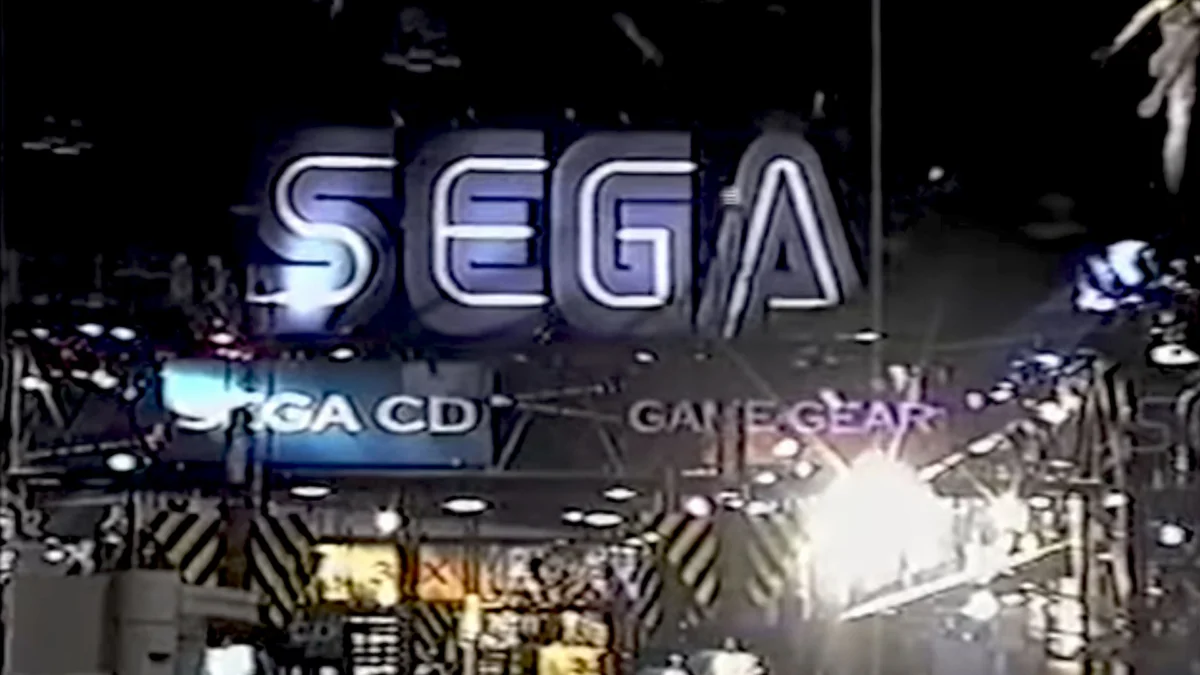
Before the era of sleek, pre-recorded Nintendo Directs, influencer-led YouTube reveals, and the polished digital presentation of Summer Game Fest, there was only one summit that mattered. For nearly three decades, E3—the Electronic Entertainment Expo—was the beating heart of the gaming industry. It was the annual pilgrimage for developers, journalists, retailers, and eventually, the fans, serving as the crucible where the future of entertainment was forged.
As we look back at the landscape of the industry today, it is difficult to overstate how much E3 shaped the cultural identity of gaming. It wasn’t just a trade show; it was a global phenomenon, a week-long spectacle that held the world’s attention in a vice-like grip.
The Genesis: Breaking Free from the Consumer Electronics Show
To understand the birth of E3, one must understand the identity crisis gaming faced in the early 1990s. For years, video games were relegated to the outskirts of the Consumer Electronics Show (CES). Gaming was treated as a secondary curiosity, forced to compete for attention alongside toaster ovens, vacuum cleaners, and bulky television sets.
The industry was beginning to realize its own potential. As the 16-bit era of the Super Nintendo and Sega Genesis reached its zenith, a seismic shift toward 3D graphics and CD-ROM technology was underway. The industry needed a stage of its own—a venue that treated games not as gadgets, but as art.

The Interactive Digital Software Association (IDSA), now known as the Entertainment Software Association (ESA), took the bold step of establishing E3. The inaugural event took place from May 11 to May 13, 1995, at the Los Angeles Convention Center. Approximately 50,000 industry professionals descended upon the venue, marking a watershed moment in gaming history. For the first time, gaming was the sole protagonist, and the world was watching.
Chronology: From 1995 to the End of an Era
The timeline of E3 is effectively a history of the medium itself.
- 1995: The Big Bang. The inaugural show saw the aggressive entry of the Sega Saturn and the legendary mic-drop moment from Sony. When Sega announced a $399 price point for the Saturn, Sony’s Steve Race took the stage, uttered "$299," and walked off. It was a masterclass in marketing that cemented the original PlayStation as a titan.
- 1996–2000: The 3D Revolution. These years saw the introduction of the Nintendo 64, the rise of PC gaming giants like Blizzard and id Software, and the birth of iconic franchises like Metal Gear Solid and Final Fantasy VII.
- 2001–2005: The Console Wars. The arrival of the Xbox and the GameCube turned E3 into a high-stakes battlefield. Microsoft’s aggressive push into the console space changed the dynamics of the show floor, with massive, multi-million dollar booths becoming the norm.
- 2006–2010: Expansion and Excess. E3 moved briefly to Santa Monica (a move widely considered a failure) before returning to the LACC. This period was defined by the Wii’s motion control craze and the rise of the HD era with the PS3 and Xbox 360.
- 2011–2017: The Peak. E3 opened its doors to the public, transforming from a strict trade-only event into a fan festival. The "Big Three" press conferences became global media events.
- 2018–2023: The Digital Pivot and Decline. The rise of independent digital showcases, combined with the logistical and financial strain of a massive physical event, led to a slow exodus of major players like EA and Sony. The COVID-19 pandemic served as the final catalyst, forcing the industry to prove it could survive without the convention. In 2023, the ESA officially shuttered E3 for good.
Supporting Data: The Economics of the Expo
The logistical footprint of E3 was staggering. At its height, the event occupied the entirety of the Los Angeles Convention Center, with peripheral events spilling out into the surrounding L.A. Live district and various hotel ballrooms.
Financially, E3 was a black hole for publishers. Estimates suggest that a major "Triple-A" publisher could spend anywhere from $5 million to $20 million on a single E3 presence. This budget included the construction of elaborate, multi-story booths, the hiring of thousands of staff, transportation, lodging, and the production of "sizzle reels."

While these costs were astronomical, the return on investment was measured in media impressions. E3 was the primary source of news for gaming outlets for the entire year. By the mid-2010s, however, companies began questioning whether the physical booth was worth the cost compared to the precision-targeted reach of a digital livestream. A Nintendo Direct could reach millions of fans globally for a fraction of the cost of a physical booth, without the need to compete with other companies for the attention of a distracted trade show crowd.
Official Responses and the Industry Shift
The decline of E3 was not a sudden collapse but a slow, strategic withdrawal. In 2016, Electronic Arts (EA) made the first major crack in the dam when they decided to host their own "EA Play" event across the street from the convention center, rather than paying for floor space inside.
"We want to talk directly to our players," was the recurring sentiment from publishers during this transition. When Sony, the long-time king of E3, announced they would skip the 2019 show, the writing was on the wall.
In a statement following the final cancellation, the ESA noted that while E3 was a cornerstone of the industry, the "way the industry communicates and connects with fans has evolved." The organization acknowledged that the digital-first model—pioneered by Nintendo’s highly effective direct-to-consumer strategy—had rendered the massive, centralized trade show model obsolete.

Implications: A New Era of Gaming Communication
The death of E3 leaves a profound void in the industry’s calendar. For three decades, the show provided a sense of unity. It was a week where everyone, from the most hardcore enthusiast to the casual gamer, was tuned into the same frequency.
Today, the gaming news cycle is fragmented. Announcements are scattered throughout the year, filtered through corporate-controlled channels that minimize risk and maximize brand safety. While this allows for more frequent updates, it lacks the chaotic, unpredictable, and community-driven energy of the E3 floor.
The industry has gained efficiency, but it has lost the "water cooler" moment. The surprise announcements, the unintentional leaks, the awkward stage presentations, and the sheer excitement of being in a room with 50,000 other people who love video games are gone.
Conclusion: The Legacy of the Expo
E3 was a mirror reflecting the growth of the video game industry from a niche hobby into a dominant cultural force. Its rise mirrored the expansion of gaming, and its fall mirrors the maturation of a business that no longer needs to prove its legitimacy to the world. While we may never again see a singular event that commands the world’s attention in the same way, the legacy of E3 remains etched into the history of the medium. It was the place where legends were born, where consoles were fought over, and where the dreams of millions of players were validated. The expo is dead, but the spirit of the "E3 week" lives on in the collective memory of every gamer who ever stayed up late to watch a livestream, hoping to see the next big thing.


 Asro
Asro
 Muslim