Ali Ikhwan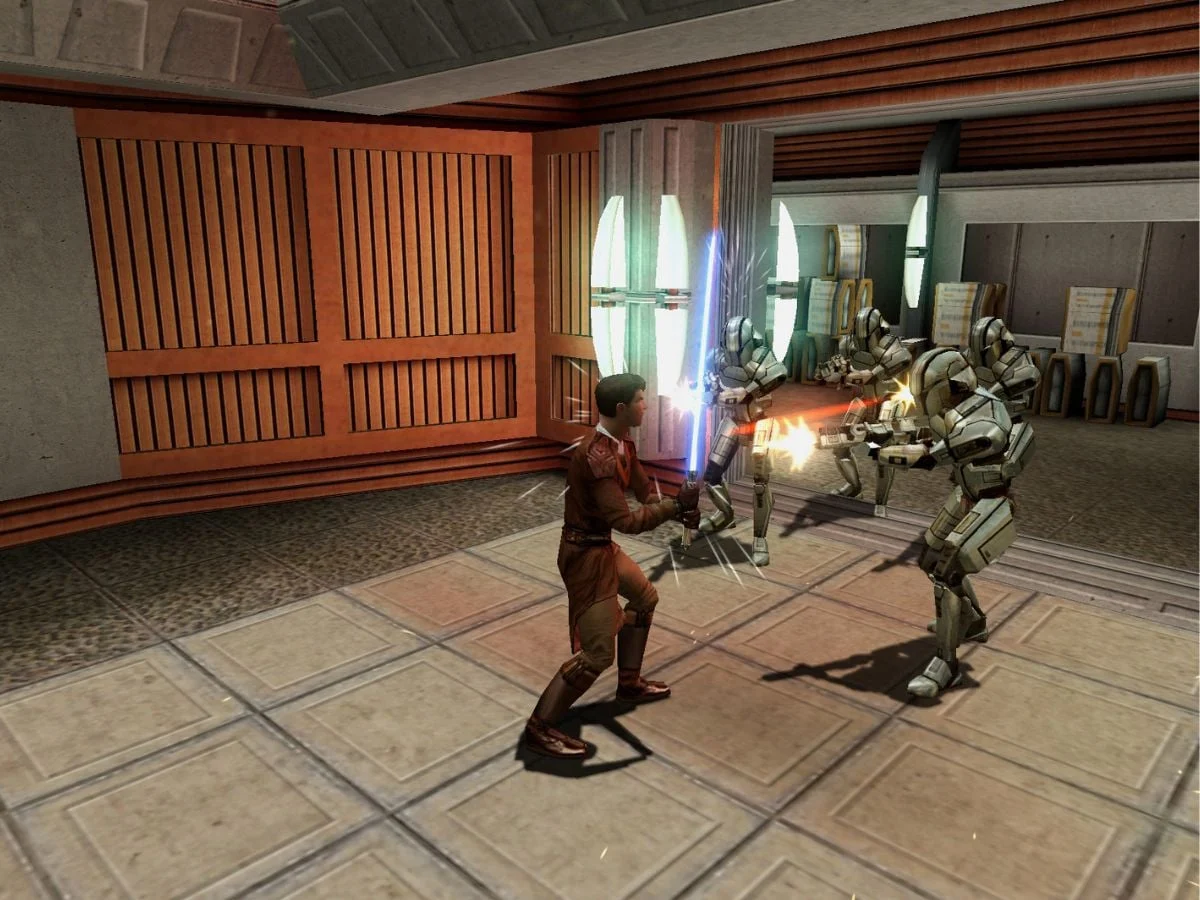
In an industry currently obsessed with the efficiency of automation and the scale of "endless" content, one of gaming’s most influential architects is drawing a firm line in the sand. Casey Hudson, the visionary director behind the legendary Mass Effect trilogy and the original Star Wars: Knights of the Old Republic (KOTOR), has emerged as a vocal critic of the industry’s pivot toward Generative AI. As he spearheads the development of his new studio, Arcanaut Games, and their upcoming project, Star Wars: Fate Of The Old Republic, Hudson is championing a return to human-centric design, arguing that the soul of interactive entertainment is currently at risk.
The Main Conflict: Artistry Versus Automation
For years, the gaming industry has operated on a spectrum of technological advancement. From the early days of pixel art to the hyper-realistic engines of today, tools have always served to expand the creative potential of developers. However, the rise of Generative AI—tools capable of writing dialogue, generating assets, and predicting player behavior—has sparked a fierce debate. While many AAA studios view these technologies as a panacea for rising development costs and shrinking production timelines, Hudson views them as an existential threat to the medium’s artistic integrity.
Speaking candidly in a recent interview with Bloomberg, Hudson did not mince words regarding his stance on the integration of AI in creative workflows. "I just find AI to be creatively soulless," he stated. "It’s hard to imagine where it’s actually helpful in the process. I’m just really unimpressed with it."
This dismissal is significant coming from a man whose career was defined by the deep, emotional, and branching narratives of Mass Effect. For Hudson, the "soul" of a game is not merely the sum of its assets or the complexity of its code; it is the deliberate, human-authored choice that defines a narrative experience.

Chronology: From the Citadel to Arcanaut Games
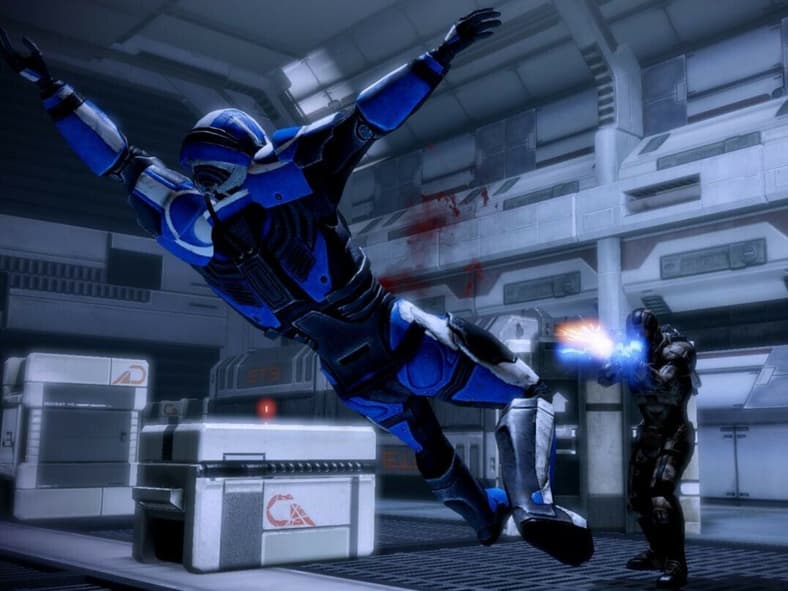
To understand why Hudson’s perspective carries such weight, one must look at the trajectory of his career. Hudson’s tenure at BioWare in the mid-2000s and 2010s set the gold standard for what a modern RPG could be. Knights of the Old Republic (2003) revolutionized how players interacted with the Star Wars lore, while Mass Effect 2 remains a touchstone for character-driven storytelling.
Following his departure from BioWare and the subsequent founding of Arcanaut Games, the industry watched closely to see what he would produce next. The reveal of Star Wars: Fate Of The Old Republic at The Game Awards in December sent a shockwave of nostalgia and excitement through the fanbase. The project is explicitly framed as a spiritual successor to his early work—a single-player, narrative-focused RPG that prioritizes the "human" touch of storytelling over the procedural generation that defines many modern titles.
The timeline of this project has been a subject of intense speculation. Rumors had circulated across various forums and news outlets suggesting a massive, decade-long development cycle, with some claiming the game would not see a release until 2030. Hudson, ever the communicator, took to social media to dispel these concerns, noting with a touch of humor: "Don’t worry about the ‘not till 2030’ rumors. Game will be out before then. I’m not getting any younger."
Supporting Data: The Bloat of Modern Gaming
Hudson’s critique of AI is only half of his broader thesis on the state of the industry. He is equally concerned about the "size" of modern games. We are currently in an era where "bigger is better" has become the mantra for major publishers. Open-world games are frequently marketed by their square mileage, and RPGs are touted for their 100-plus-hour completion times.

Hudson argues that this push for scale is actively harming the player experience. Referring to sprawling titles like Elden Ring and Crimson Desert, he pointed out a disconnect between developer ambition and player reality.
"Bigger isn’t necessarily better," Hudson observed. "If I’m excited about a game and then I find out that it’s 200 hours long—even if I have no ambition to actually finish it—I wonder, if I put 20 hours in, will I even be out of act one? A lot of players just want to play something and finish it."
This data-driven reality—that a significant portion of the player base does not, or cannot, complete massive 100-hour epics—suggests that the industry’s pivot toward massive, AI-assisted content generation is answering a demand that may not actually exist. If players are suffering from "content fatigue," flooding the market with procedurally generated side-quests and bloated maps may be a strategic miscalculation.
Official Responses and Industry Context
Hudson’s stance is a direct pushback against the current industry consensus. Major players such as Ubisoft, Electronic Arts, and NVIDIA have publicly invested in Generative AI, aiming to use the technology to voice NPCs, generate environmental textures, and optimize NPC pathfinding. These companies argue that AI is a tool for efficiency, allowing smaller teams to punch above their weight.
However, the creative community remains divided. Writers, artists, and sound designers have voiced concerns regarding copyright, the devaluation of human labor, and the "homogenization" of creative output. When an algorithm is trained on the entirety of human-created games, the output tends toward the "average," potentially stripping away the quirks, risks, and innovations that defined the masterpieces of the past.
By rejecting AI, Hudson is making a strategic choice to invest in human talent. In an era of mass layoffs within the gaming sector, his commitment to a smaller, more focused team working on a "spiritual successor" serves as a counter-narrative to the "efficiency at all costs" mentality currently pervading Silicon Valley-influenced game studios.
The Implications for ‘Fate Of The Old Republic’
What does this mean for the actual gameplay of Star Wars: Fate Of The Old Republic? Based on the official description, players can expect a return to the roots of the classic BioWare style. The game is described as an experience where "every decision deepens your journey toward light or darkness."
This emphasis on player agency is inherently difficult to replicate with AI. While large language models can generate dialogue, they often struggle with the long-term, consequence-based narrative architecture that made KOTOR a classic. By eschewing AI, Hudson is signaling that the game will rely on bespoke, human-authored scenarios where choices have weight—the kind of weight that only a human writer can imbue into a script.
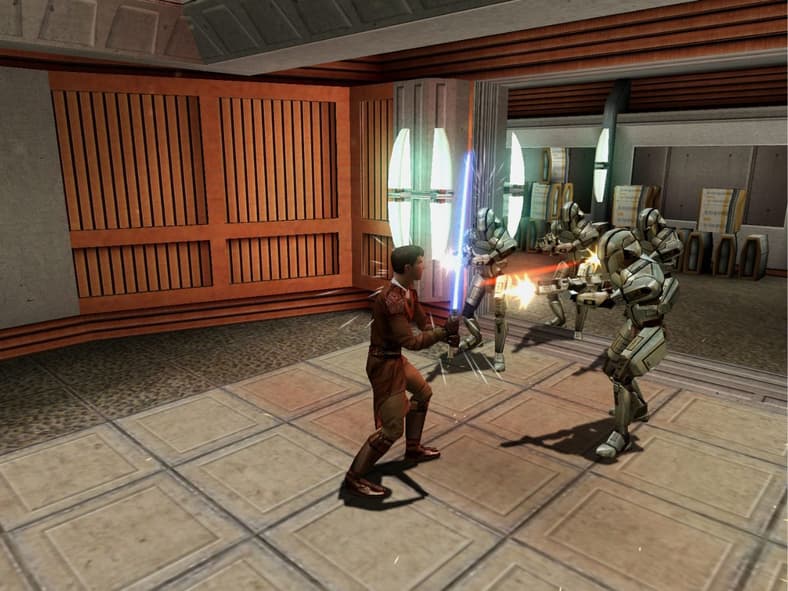
Furthermore, the rejection of "bloat" suggests that Fate Of The Old Republic may be a more condensed, high-impact experience. In an industry where players are increasingly time-poor, a 30-to-40-hour masterpiece that is dense with meaning may prove more commercially and critically successful than a 200-hour slog filled with repetitive, AI-generated fetch quests.
Conclusion: A Philosophy of Preservation
Casey Hudson’s intervention in the AI debate is more than just a preference; it is a philosophy of preservation. As the industry stands at a technological crossroads, the question is not just whether we can automate the creative process, but whether we should.
If the goal of a video game is to transport the player into a world that feels alive, intentional, and emotionally resonant, then the "human element" is not a bottleneck—it is the destination. By refusing to chase the trends of the day, Hudson is betting that players will always be able to distinguish between a product manufactured by an algorithm and a world crafted by human hands. Whether or not Star Wars: Fate Of The Old Republic succeeds, the conversation Hudson has started will undoubtedly echo through the boardrooms and design docs of every major studio for years to come. In the struggle for the future of interactive storytelling, the "soul" of the game may be the only asset that truly matters.


 Sagoh
Sagoh
 Ammar Sabilarrohman