Lina Hope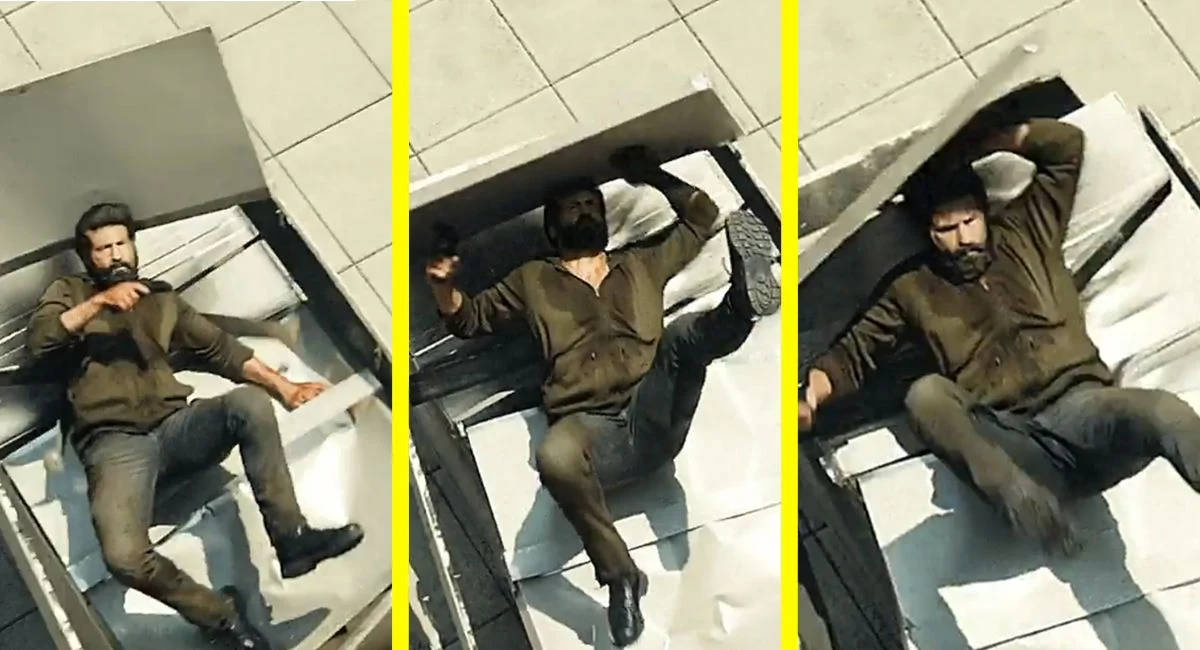
The release of The Punisher: One Last Kill on Disney+ was intended to be a gritty, high-octane homecoming for Jon Bernthal’s beloved anti-hero. While the special has garnered generally favorable reviews for its narrative punch and Bernthal’s visceral performance, a single, fleeting stunt shot has ignited a firestorm of controversy.
Social media platforms, particularly X (formerly Twitter), have been flooded with frame-by-frame analyses of a specific sequence in which Frank Castle is shoved from a building, plummeting onto a wooden crate. The shot, which lasts only a few seconds, has been labeled by many viewers as "unfinished VFX," "lazy CGI," or, perhaps most damningly, "AI-generated slop." This incident serves as a fascinating case study in modern visual effects, the "uncanny valley," and the growing public obsession with identifying digital artifice.
The Anatomy of the Controversy: A Shot Under the Microscope
The controversy erupted almost immediately following the special’s debut. In the sequence in question, the character of Frank Castle falls from a height and impacts a crate. To the casual observer, the movement appeared disjointed, and the rendering of the character’s face lacked the fidelity expected of a high-budget Marvel Television production.
Within hours, internet sleuths began dissecting the clip. By slowing down the footage and zooming in, users compared the visual quality to outdated video game cutscenes, specifically citing titles from the PlayStation 3 era like Max Payne or The Last of Us. The primary grievance was the apparent lack of physical weight; the character’s movement, according to critics, mimicked "ragdoll physics"—a term used in gaming to describe procedural character animations that often appear unnatural and rubbery.
One viral post on X encapsulated the frustration of the fanbase: "Marvel ‘accidentally’ dropping unfinished VFX in 2026 is crazy—Jon Bernthal is out here doing God-tier Punisher rage, but they hit him with PS3 ragdoll physics."
The AI Accusation
Beyond claims of poor CGI, a significant contingent of the audience became convinced that the shot was the result of generative AI. Commenters pointed to the behavior of the crate upon impact, noting that the object failed to deform or splinter in a way that adhered to traditional physics engines. "Look how the box he was dropped on retained its shape after the broken pieces slide off," one user noted. "A CG artist would at least have deformed the object. An AI fed a screenshot with a prompt, however, would very possibly maintain the box’s shape to keep consistency with the prompt image."
This hypothesis gained traction, reflecting a broader cultural anxiety regarding the infiltration of AI into professional filmmaking. The perception that Disney—a studio known for pioneering animation and visual effects—might be cutting corners with generative tools has become a sensitive trigger point for audiences.
The Reality: A Triumph of Practical Stunts Over Digital Perception
Despite the digital pitchforks, the truth behind the scene is far more grounded in physical reality. According to a report from The Hollywood Reporter, which cited a source close to the production, the sequence was, in fact, a genuine, in-camera practical stunt.
The reality of the situation is a testament to the risks taken by stunt performers. The initial part of the fall was performed by Jon Bernthal himself, while the moment of high-impact collision was executed by a professional stunt double. The only significant digital intervention—the "VFX" that caused so much ire—was the standard industry practice of a "face swap," where the double’s features are digitally replaced with Bernthal’s likeness to maintain continuity.
Why Did It Look "Fake"?
If the stunt was real, why did it register as a digital rendering to thousands of viewers? The answer likely lies in a confluence of factors:
- The Face Swap Paradox: Digital face replacement is notoriously difficult to pull off perfectly. Even with modern technology, if the lighting on the CG face does not perfectly match the lighting of the stunt performer’s body, the brain immediately flags the image as "wrong." This often leads to the "uncanny valley" effect, where the human eye recognizes the face as human but perceives the movement as artificial.
- Angle and Motion Blur: The camera angle chosen for the shot may have inadvertently highlighted the lack of depth or texture in the facial composite. When combined with the high-speed nature of a fall, the resulting motion blur can cause digital overlays to smear in ways that look like low-resolution textures.
- The "Conditioning" of Modern Audiences: Perhaps the most compelling explanation is that we have become "conditioned by green screen slop." Audiences are now so accustomed to seeing heavy, polished, and often sanitized CGI that they have lost the ability to recognize the messy, sometimes jarring reality of practical stunt work. As one observant user on X noted, "We’ve been conditioned by green screen slop so hard that actual practical stunts now look ‘fake’ to us."
Implications: The New Era of VFX Scrutiny
This incident is not an isolated event; it is emblematic of a shift in the relationship between audiences and the media they consume. In the age of social media, every frame of a high-profile film or television show is subject to a level of forensic scrutiny that was impossible a decade ago.
The Rise of the "VFX Detective"
The modern viewer has become a de facto expert in VFX pipelines. Armed with high-definition screens, screen-capture tools, and a cynical understanding of budget constraints, fans are quick to call out perceived deficiencies. While this has forced studios to be more diligent, it has also created a culture of hyper-criticism where genuine, human-executed stunts are being derided as "fake."
The Shadow of AI
The paranoia surrounding AI is particularly significant. Because the public is aware that studios are experimenting with AI for background generation, rotoscoping, and texture mapping, every "glitch" is now interpreted as proof of an AI takeover. This creates a PR nightmare for studios, as they are now being accused of using cost-cutting AI even when they are employing traditional, high-cost practical effects.
The Balancing Act for Marvel
For Marvel Television, the challenge is clear: the optics of production quality are just as important as the quality itself. Even if a stunt is performed with the utmost safety and skill, if the final polish—the "last mile" of post-production—fails to bridge the gap between the physical footage and the digital overlay, the audience will be pulled out of the experience. The Punisher controversy suggests that the industry needs to rethink how it integrates VFX, perhaps opting for more subtle, practical-first approaches that prioritize continuity over the "perfect" but sterile look of high-end digital compositing.
A Legacy of Grit
The Punisher: One Last Kill remains a pivotal entry in the Marvel canon. It bridges the gap between the grounded 2017 series and the character’s upcoming appearance in Spider-Man: Brand New Day. While this specific stunt has become a meme, it has also sparked a necessary conversation about the value of practical filmmaking.
Ultimately, the backlash against this scene highlights a strange irony: in an era where we fear the total automation of art, we are also losing our ability to recognize the sweat and bone of human performers. When we dismiss a real stuntman’s dangerous work as a "PS3 cutscene," we are not just critiquing VFX—we are devaluing the physical craftsmanship that has defined action cinema for generations.
As studios move forward, the lesson from The Punisher is clear: transparency in the filmmaking process might be the only way to combat the digital skepticism of a hyper-aware audience. Until then, viewers will likely continue to hunt for "glitches," even in the most authentic of moments.


 Evan Lee Salim
 Rifan Muazin