

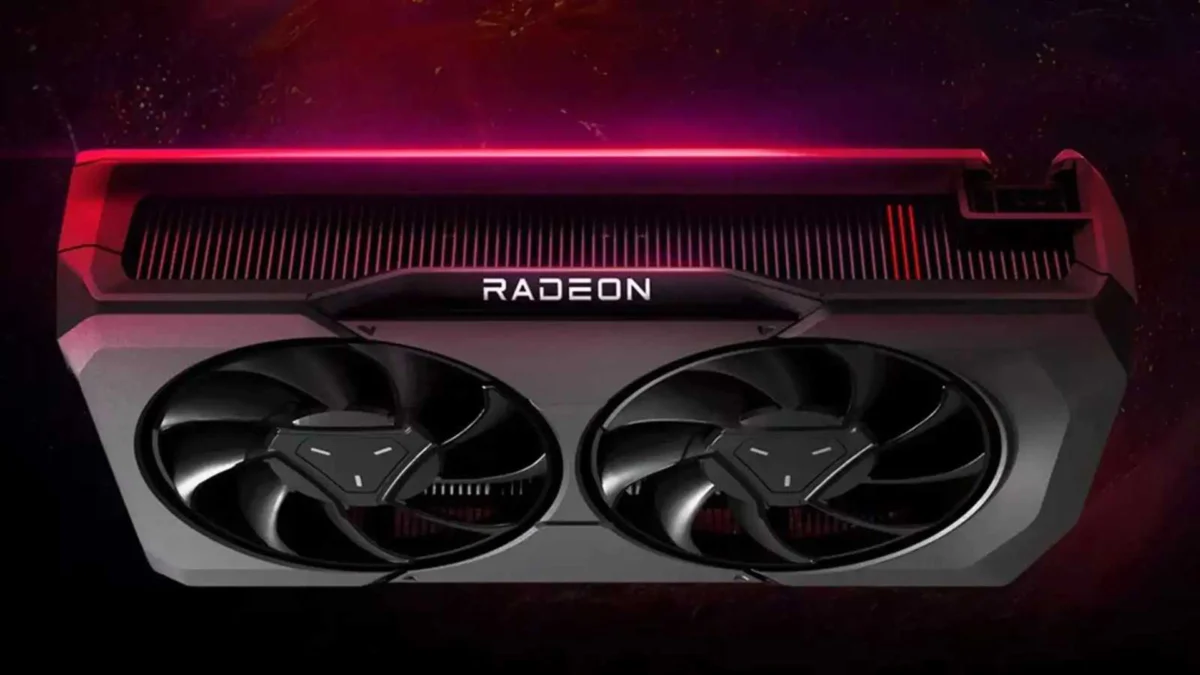
In a significant pivot for its graphics software strategy, AMD has officially bowed to community pressure, announcing that its cutting-edge FSR 4.1 AI upscaling technology will be coming to older Radeon architectures. Previously confined to the flagship RX 9000-series, this rollout promises to extend the longevity of RDNA 3 and RDNA 2 hardware, marking a major win for gamers who felt left behind by the company’s initial hardware-locked approach.
The Main Facts: Bridging the Generation Gap
AMD Vice President Jack Huynh confirmed the news in a recent public statement, detailing a structured roadmap for the rollout of FSR 4.1. The update will reach RDNA 3 (RX 7000-series) users in July, followed by a broader expansion to RDNA 2 (RX 6000-series) hardware in early 2027.
This decision effectively ends the period of exclusivity for the RX 9000-series, which had initially been touted as the sole beneficiary of FSR 4 due to its reliance on specific FP8 accelerated hardware. By optimizing the technology for INT8 operations—the standard for earlier architectures—AMD is bringing the advanced AI-driven upscaling capabilities of its newest cards to millions of legacy systems currently in circulation.
A Chronology of Conflict and Compromise
The journey to this announcement has been marked by significant tension between AMD and its dedicated user base.
- August 2025: The catalyst for change was an accidental leak of the FSR 4 source code. While AMD had intended for the technology to remain exclusive to RDNA 4 and newer, the leaked files revealed that an INT8-compatible version of the AI model existed within the code.
- Late 2025 – Early 2026: Savvy developers and community modders utilized the leaked source code to develop unofficial workarounds. Tools like Optiscaler allowed users to force FSR 4 functionality onto older cards. These implementations proved that, while not as efficient as on native hardware, the upscaler was entirely functional on RDNA 2 and 3 chips.
- The "Outcry" Phase: As the unofficial implementations matured, public sentiment grew increasingly frustrated. Users argued that locking a software-based AI upscaler behind the latest hardware generation was an artificial barrier rather than a technical necessity.
- The Present: AMD’s acknowledgment of this demand marks the conclusion of a months-long campaign for parity. By choosing to support FSR 4.1, AMD is not just providing a patch; it is validating the community’s technical assessment that these older cards are capable of running modern AI upscaling, provided the software is properly optimized.
Understanding the Technical Trade-offs
The transition from the hardware-accelerated FP8 model to an INT8 implementation is not without consequences. Because the older architectures lack the dedicated AI-processing hardware found in the newest flagship GPUs, the computational load is shifted to the general-purpose shaders, resulting in a performance hit.
Independent testing conducted by The FPS Review suggests that running FSR 4 on RDNA 2 hardware results in a 10-20% performance penalty compared to the traditional FSR 3. However, this figure is a double-edged sword. While the frame rate takes a dip, the jump in visual fidelity—specifically regarding temporal stability and the reduction of shimmering artifacts—is viewed by many as a net positive.
For the RX 7000-series, the performance impact is expected to be significantly lower. The architectural proximity between RDNA 3 and the newer generations suggests that the performance tax will be negligible, likely making it the preferred way to play for owners of the RX 7900 series and similar cards.
The FSR 4.1 Advantage: What Users Can Expect
The move to FSR 4.1 represents a substantial refinement over the original 4.0 launch version. For users upgrading from older temporal upscalers, the differences are expected to be profound:
- Temporal Stability: One of the most common complaints with older FSR iterations was the "shimmering" effect on fine geometry, such as power lines or chain-link fences. FSR 4.1 utilizes improved motion vector analysis to ensure edges remain steady during camera movement.
- Detail Retention: FSR 4.1 is specifically designed to handle fine textures and distant details without the "smearing" that often plagues lower-bitrate upscaling solutions.
- Particle and Alpha Effects: One of the most difficult elements for AI upscalers to handle is particle-heavy content, like smoke, embers, or explosions. The 4.1 update introduces advanced masking, ensuring that these elements do not "ghost" or dissolve into pixelation during high-action sequences.
- Reduced Blurring: The internal reconstruction model in 4.1 has been tuned to provide a sharper, more "native-like" image, effectively solving the "soft" look that some users associated with earlier AI-upscaling attempts.
Official Responses and Strategic Implications
AMD’s decision to open up FSR 4.1 to older hardware can be viewed as a strategic shift in the "Upscaling War." With NVIDIA’s DLSS maintaining a tight grip on the premium market through hardware-specific features, AMD has historically relied on an open, cross-platform, and inclusive approach to keep its user base loyal.
By finally embracing a broader support strategy, AMD is reinforcing its commitment to the "Radeon ecosystem." The delay—setting the RDNA 2 rollout for 2027—suggests that AMD is taking the time to ensure the software-based INT8 implementation is highly optimized, likely aiming to reduce that initial 10-20% performance penalty through driver-level enhancements before the final release.
Competitive Positioning
This move also serves to neutralize the argument that "buying a new GPU is the only way to get modern software." By providing a roadmap for older cards, AMD is effectively extending the product life cycle for millions of customers. In an economic climate where GPU prices remain high, this is a consumer-friendly move that may well prevent users from jumping ship to competing vendors.
Looking Forward: What This Means for Gamers
For the average gamer, this is a clear victory. If you currently own an RX 6000 or RX 7000 series card, you have a concrete date on your calendar for a significant feature upgrade.
The most important takeaway from this development is the validation of user-driven innovation. The community proved that the hardware could handle the task, and the manufacturer listened. While the performance gap between RDNA 2 and the latest hardware will persist, the ability to choose between a higher-fidelity image (via FSR 4.1) or higher raw frame rates (via FSR 3 or native rendering) provides the kind of flexibility that PC gaming is famous for.
As we move toward July and beyond, the focus will shift from "will it work?" to "how well does it perform?" With the power of FSR 4.1, many older cards that were starting to struggle with modern, demanding titles may find a second wind. The era of artificial software lock-outs appears to be coming to a close, and in its place, we are seeing a more inclusive approach that prioritizes the longevity of the hardware that is already sitting in our rigs.
Disclaimer: As of this report, AMD has not released specific performance metrics for the final 4.1 build. Users should expect variances in performance depending on individual system configurations, resolution, and the specific game engine in use. For the latest updates and technical deep-dives on the upcoming rollout, keep an eye on Tom’s Hardware for our hands-on testing once the July update drops.









No comments yet. Be the first to join the conversation!