

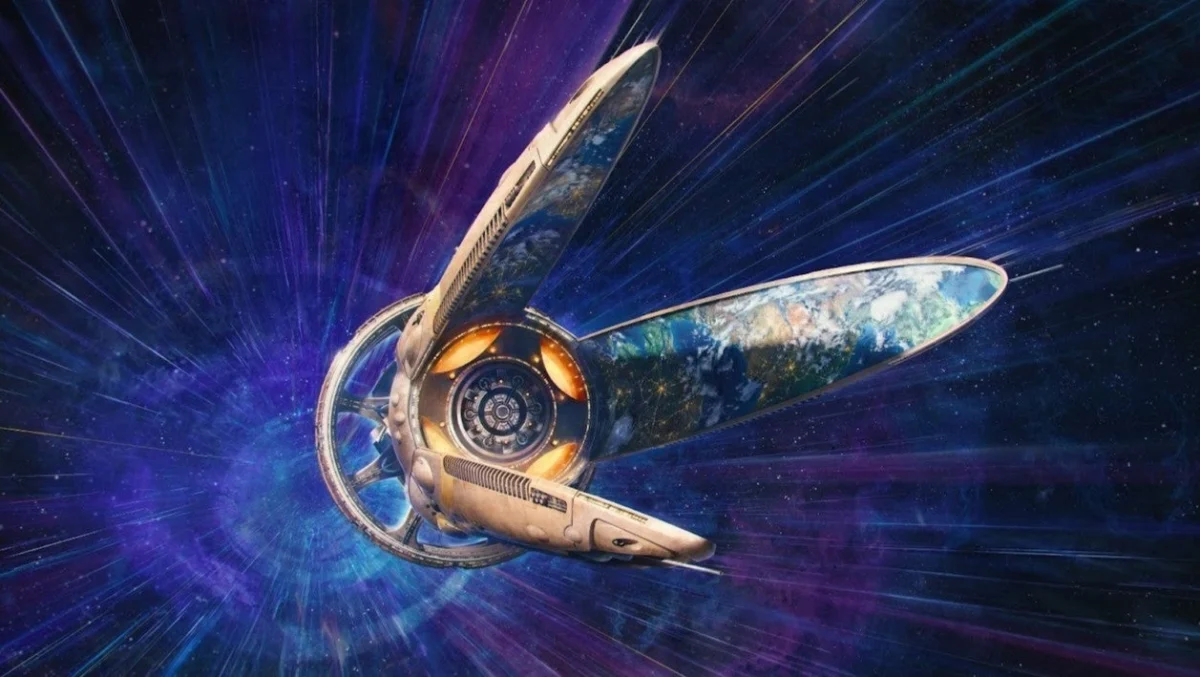
For nearly a decade, the Stellaris development team at Paradox Interactive has maintained a mantra that echoed through the halls of their Stockholm office: "Planets don’t move." It was a technical boundary so rigid that simply discussing the possibility of a mobile civilization was, according to Game Director Stephen Muray, enough to reduce the engineering team to tears.
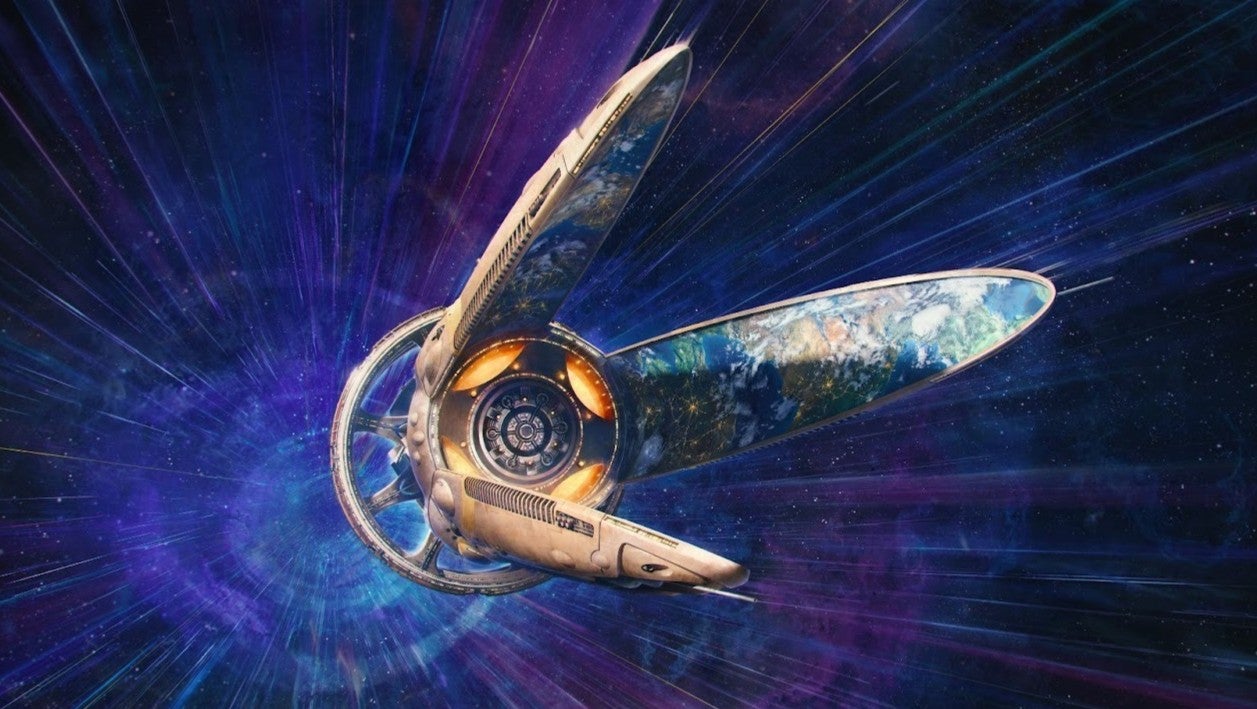
On June 15th, that barrier will officially shatter. The upcoming Nomads expansion, arriving alongside the free "Pegasus" 4.4 update, promises to fundamentally rewrite the rules of 4X strategy by allowing players to abandon the stationary traditions of galactic colonization. For the first time, home is not a static rock orbiting a star, but a trillion-tonne, hermetically sealed Arkship—a nomadic vessel that serves as a mobile capital, shipyard, and military fortress.
The Paradigm Shift: From Territoriality to Mobility
In the traditional Stellaris experience, victory is defined by the map: the acquisition of systems, the consolidation of territory, and the development of planetary infrastructure. The Nomads expansion introduces a radical departure from this "paint-the-map" philosophy. By jettisoning the concept of a fixed home world, players are invited to embrace a lifestyle of perpetual movement.
The mechanical implementation of this change is profound. Players will manage massive Arkships that act as the heart of their society. These vessels are not merely ships; they are mobile colonies that can be upgraded, specialized, and maneuvered across the galaxy. This shift requires players to rethink their resource management, defensive strategies, and diplomatic overtures. Whether you are a wandering scientific collective or a nomadic war-band, your survival depends on your ability to traverse the stars rather than hold a specific sector of space.
A Chronology of the Impossible
The journey to this expansion has been long and technically fraught.
- 2016–2020: The Era of Static Anchors. During the early life of Stellaris, the game’s architecture was built upon the assumption that population centers (planets) were fixed entities. Changing this would have required a total overhaul of the game’s coordinate systems and sector management code.
- 2021–2023: The Modular Transition. Through various updates like Overlord and The Machine Age, Paradox began experimenting with "habitat" mechanics and localized megastructures, slowly moving toward the concept of mobile space-based living.
- 2024: The Pegasus Breakthrough. With the development of the 4.4 "Pegasus" update, the team finally found a way to decouple colony logic from planetary entities. This required significant refactoring of the game’s core simulation loops.
- June 15, 2025: The Launch. The official release of the Nomads expansion marks the end of the "static-only" era, signaling a new chapter for the franchise where game-world physics can be manipulated in previously impossible ways.
Origin Stories: Defining the Nomadic Experience
Paradox has ensured that this new mobility isn’t a one-size-fits-all experience. The expansion introduces several distinct "Origins" that flavor the nomadic gameplay:
The Heirs of the Khan
Inspired by historical nomadic empires and space-faring lore, this origin casts the player as the successor to a legendary conqueror. Players must balance the internal politics of an exiled regime while constantly staying ahead of assassins and rival factions. It is a high-stakes, high-aggression playstyle that turns the galaxy into a dangerous playground of cat-and-mouse maneuvers.
The Sacred Path
For those who prefer a more ideological approach, The Sacred Path forces the player to engage in a galactic-scale pilgrimage. Arkships become centers of religious fervor, transforming civilian populations into priests and zealots. The narrative arc allows players to decide the ultimate fate of their faith—whether they remain true to their ancestral prophecies or choose to reveal that their "divine" mission was a fabrication all along.
Forever Cruise
Perhaps the most satirical of the bunch, "Forever Cruise" leans into the absurdity of the genre. Players manage a floating retirement home for the galactic elite. The objective is to visit major landmarks and spectacles, all while managing the crumbling morale of a crew forced to serve pampered aristocrats. It is a management challenge focused on luxury, leisure, and the inevitable social decay of a civilization that has nowhere to be but the next tourist trap.
Official Responses and Technical Hurdles
Game Director Stephen Muray’s recent dev diary on Steam offered a rare, candid glimpse into the engineering challenges of the expansion. "For years we have said that moving planets are impossible," Muray wrote. "We like to do the impossible, and we also (apparently) like to make our programmers cry. Despite having to change the carpets twice due to water damage, colonies have been separated from planets!"
The technical implications for the modding community are massive. By decoupling colonies from planetary surfaces, the Paradox team has effectively rewritten the underlying data structures that modders have relied on for years. While this will inevitably break existing mods, it also opens a new frontier for mod-makers to create their own mobile station types, custom arkships, and unique nomadic mechanics.
Strategic Implications: How to Survive the Void
Playing as a nomad is not without its limitations. To balance the immense strategic advantage of mobility, Paradox has introduced "Waystations." These are fixed structures players can build in systems to gather resources, conduct surveillance, and create "Waylines"—interconnected networks of modifiers that boost research and output.
However, there is a clear distinction between the Arkship and the standard fleet. Players must still rely on disposable, specialized science ships for risky ventures. "We don’t want your entire colony being eaten by a dimensional horror," Muray notes. This creates a fascinating gameplay loop: the Arkship is the high-value asset that must be shielded, while the smaller, replaceable vessels act as the sacrificial scouts for the unknown.
Implications for the 4X Genre
The introduction of nomadic mechanics in Stellaris challenges the fundamental "settler" trope that has dominated 4X gaming since the inception of titles like Civilization. By removing the need for a capital city and allowing players to drift through the stars, Paradox is essentially introducing a "roguelike" element to grand strategy.
This expansion reflects a broader trend in modern strategy games: the move away from rigid, linear progression toward systems that encourage player-driven storytelling. As Nic, a prominent voice in the Stellaris community, once noted, the joy of the game is not always about painting the map in your color; it is about the ability to leave a mark on the galaxy without the constraints of administrative bureaucracy and spreadsheet-heavy territorial management.
As June 15th approaches, the Stellaris community is bracing for a total shift in the meta. Whether the nomad playstyle will become the dominant way to play or remain a niche, specialized challenge, one thing is certain: the static boundaries of the galaxy have been permanently dismantled. For those who have spent years building empires of stone and steel, it may be time to pack up, trade in the planetary tax office for a command deck, and find out where the stars lead when you aren’t tied to a sun.











No comments yet. Be the first to join the conversation!