

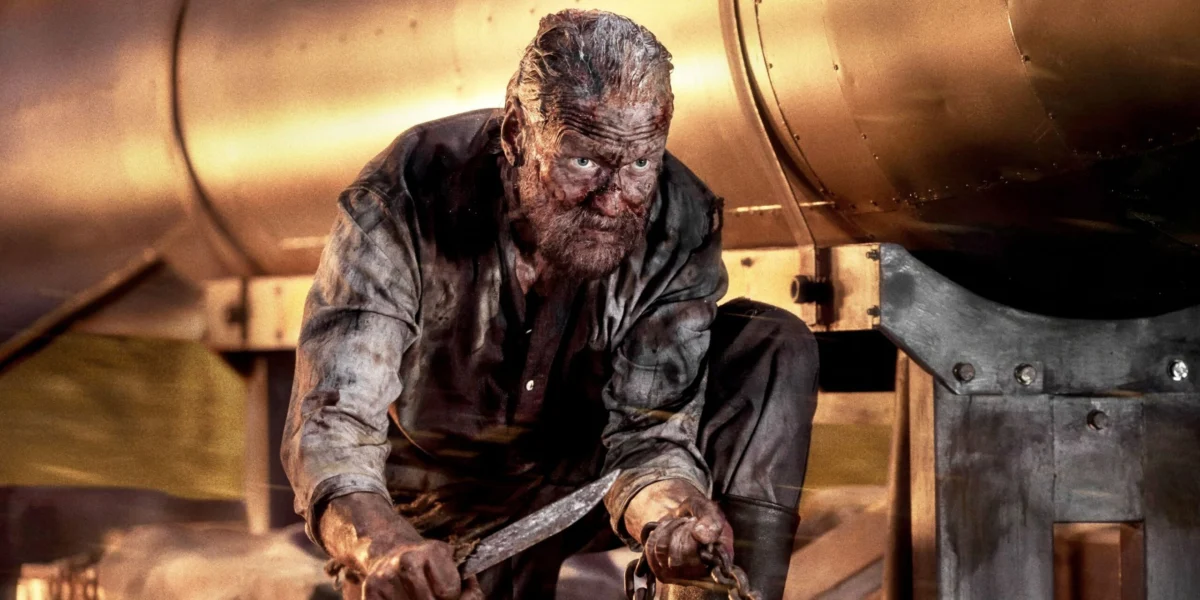
In 2022, Finnish filmmaker Jalmari Helander blindsided the global film industry with Sisu, a lean, mean, and hyper-violent action thriller that felt like a love letter to the grindhouse cinema of the 1970s. The film introduced us to Aatami Korpi (Jorma Tommila), a solitary gold prospector in the scorched landscape of Lapland during the twilight of World War II. With minimal dialogue and maximum carnage, Korpi became an instant icon—a man possessing the Finnish concept of "sisu," a grit and determination that defies the laws of physics and survival.
Four years later, the stakes have been raised, the scope has expanded, and the antagonist has been leveled up. Sisu: Road to Revenge is not merely a sequel; it is a structural evolution of the action genre. While the first film functioned as a survivalist fever dream, the follow-up introduces a centralized, terrifyingly calculated foil: Yeagor Draganov, portrayed by the legendary Stephen Lang.
The Evolution of the Hunt: From Faceless Nazis to Calculated Evil
To understand the impact of Road to Revenge, one must first acknowledge the simplicity of its predecessor. In the original Sisu, the enemies were essentially a monochromatic force of nature—a battalion of Nazis representing the banality of evil. They were obstacles to be removed, stepping stones for Korpi’s path of vengeance.
Road to Revenge pivots away from the "army as antagonist" trope, focusing instead on a singular, sophisticated threat. The narrative begins with a somber note: Korpi, having lost his family, is forced to abandon the remnants of his life to seek a new, secure horizon. He traverses the countryside with nothing but his loyal dog and a truck laden with lumber. However, the world remembers the "Koschei"—the immortal man who decimated a Nazi platoon.
Enter Yeagor Draganov. Unlike the chaotic officers of the first film, Draganov is a scalpel. Recently released from a Soviet-era prison, his motivations are not merely ideological or fueled by greed; they are deeply personal and, chillingly, professional. He views Korpi not as a mythical beast to be feared, but as a challenge to be dismantled. This shift in narrative structure—from survival to a psychological cat-and-mouse game—allows the film to breathe in a way its predecessor could not.
Chronology of a Collision Course
The tension in Road to Revenge is built upon a slow-burn convergence. The timeline of the film is meticulously paced to ensure that when the paths of Korpi and Draganov finally cross, the audience is primed for the collision.
- The Extraction: We witness Draganov’s release from incarceration. The environment is sterile and cold, mirroring his demeanor. His introduction is quiet, emphasizing his intellect over his brawn.
- The Pursuit: Draganov assembles a small, elite contingent of soldiers. This is not a mindless infantry squad; they are his instruments. The film tracks their movement across the desolate landscape, creating a sense of inevitability.
- The First Confrontation: The film’s mid-point features a masterclass in staging. As Korpi finds himself in a skirmish, he engages in a display of raw, kinetic energy. Draganov watches from the periphery. He observes, he analyzes, and he withholds his own strength.
- The Climax: The trajectory of the film leads to an inevitable, one-on-one showdown. By stripping away the secondary soldiers, the film focuses on the philosophical clash between Korpi’s "fire"—the impulsive, visceral will to live—and Draganov’s "ice"—the calculated, stagnant stillness of death.
Supporting Data: Why Stephen Lang is the Perfect Antagonist
Casting is the silent architecture of any great action film. In the genre, the villain often falls into one of two traps: they are either too campy to be taken seriously, or too generic to be memorable. Stephen Lang avoids both by leaning into the "less is more" approach that defined his breakout performance in the Don’t Breathe duology.
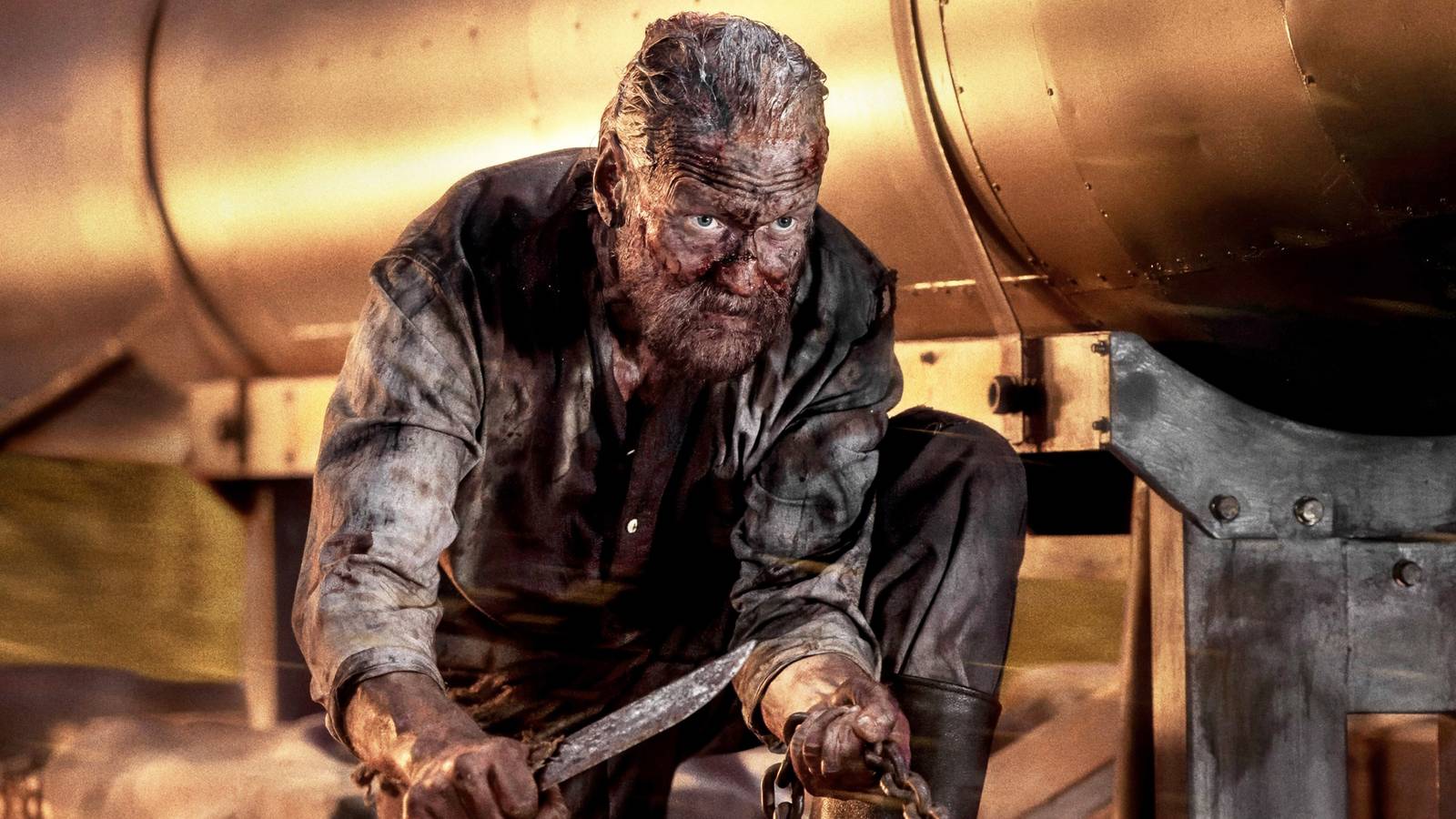
Lang brings a physicality to Draganov that suggests a life of sustained, controlled cruelty. His performance relies heavily on micro-expressions—a twitch of the eye, a tightening of the jaw, a posture that suggests he is never truly at rest.
The Monologue of Malice
Perhaps the most haunting sequence in the film is a mid-movie monologue in which Draganov recounts the death of Korpi’s son. In most films, a villain’s monologue is a vehicle for exposition. Here, it is a weapon. Lang delivers the lines with a terrifying fondness, his voice dripping with a nostalgia for the act of violence itself. It is a moment that shifts the film from a standard action romp into the realm of psychological horror.
The "choppy accent" utilized by Lang has been a point of discussion among critics, yet it serves a distinct purpose: it creates a sense of "otherness." It suggests a man who has existed in the dark corners of the world for so long that he has lost his origin, becoming a composite of the horrors he has committed.
Official Responses and Industry Context
Early screenings and box office returns indicate that Road to Revenge has successfully avoided the "sequel slump." Industry analysts note that Helander’s decision to elevate the antagonist has allowed the franchise to reach a wider demographic.
"Jalmari Helander understood that to make a sequel work, he didn’t need a bigger explosion; he needed a bigger presence," notes film historian and critic Marcus Thorne. "Stephen Lang isn’t just playing a bad guy; he’s playing the shadow of the protagonist. He forces the audience to confront the idea that for every man with the will to survive, there is a man with the will to extinguish it."
The reception of Draganov as a villain has already placed him in the conversation for the most iconic antagonists of the decade. He stands alongside the great cinematic killers—not as a slasher, but as a strategist.
Implications for the Genre
The success of Sisu: Road to Revenge signals a shift in contemporary action cinema. For years, the genre was dominated by high-concept science fiction or superhero spectacle. Sisu proves that there is still a massive, hungry audience for "grounded" violence that emphasizes character and stakes over CGI-heavy set pieces.

The implication for future installments or similar projects is clear: the antagonist is the heartbeat of the action film. By creating a character as complex as Draganov, the filmmakers have validated the idea that a movie is only as good as the resistance offered to its hero.
As we look at the landscape of modern action, we see a move toward the visceral. Audiences are tired of the sanitized, bloodless battles of the multiplex. They want to see the "sisu"—the grit, the bone-breaking, the sweat, and the sheer, unadulterated willpower.
Conclusion: A New Standard for Villainy
Sisu: Road to Revenge is a rare example of a sequel that expands the lore of the original while sharpening its focus. It takes the "mute miner" trope and places it in a crucible of pure, cold-blooded malice.
Stephen Lang’s Yeagor Draganov is not merely an obstacle; he is a mirror. He represents the void that Korpi has been fighting against for his entire life. When the credits roll, the audience is left with the sensation of having witnessed a primal struggle, one that lingers in the mind long after the theater lights come up.
Whether this is the final chapter of Aatami Korpi’s saga or merely the second act of a longer epic, one thing is certain: the bar for action villains has been raised. Draganov is a testament to the power of a quiet performance, a sharp script, and the realization that sometimes, the most terrifying thing a man can do is stand perfectly still while the world burns around him.











No comments yet. Be the first to join the conversation!