

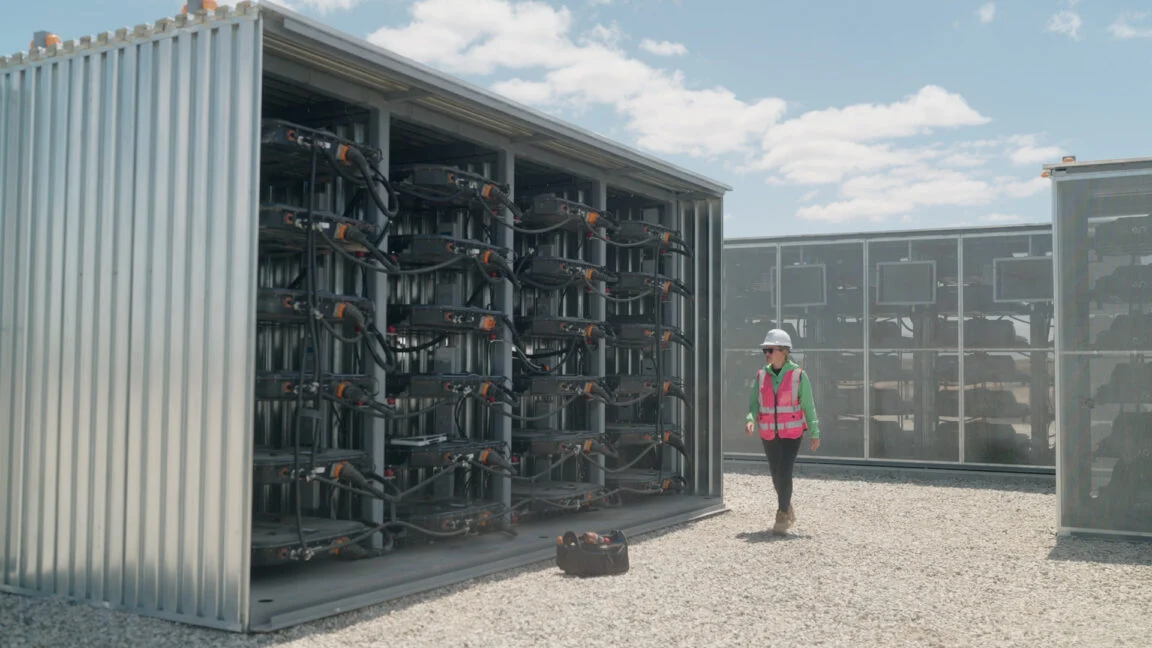
The transition to a decarbonized global economy hinges on two pivotal technologies: the electrification of transportation and the scaling of stationary energy storage. For years, these two sectors have existed in parallel, often sharing only the underlying chemistry of lithium-ion batteries. However, a new strategic partnership between Waymo, the autonomous driving arm of Alphabet, and B2U Storage Solutions has officially bridged this gap, creating a circular economy model that promises to revolutionize how we manage energy storage.
By repurposing the lithium-ion batteries that once powered Waymo’s autonomous robotaxi fleet for use in stationary grid-scale storage, the companies are not only extending the lifespan of critical minerals but are also providing a robust, cost-effective solution for stabilizing power grids in California and Texas.
The Intersection of Autonomy and Energy Storage
The core of the initiative lies in a "strategic supply agreement" announced on June 4, which outlines a framework for B2U to harvest "retired" or "swapped" batteries from Waymo’s rapidly expanding robotaxi fleet. As Waymo’s vehicles navigate complex urban environments, they are subject to intensive usage patterns that far exceed those of private consumer vehicles. This high-intensity operational model leads to faster capacity degradation, eventually reaching a point where the battery is no longer optimal for the stringent requirements of autonomous transport but remains perfectly capable of stationary storage.
Stationary storage facilities act as the "buffer" of the modern power grid. They capture excess energy generated by solar and wind farms during periods of low demand—when prices are often near zero or negative—and discharge that stored energy back into the grid during peak usage hours. This process helps prevent curtailment, mitigates grid congestion, and reduces the reliance on fossil-fuel-powered "peaker plants."
Chronology of a Circular Innovation
The partnership did not emerge overnight; it is the culmination of years of testing and the maturation of the second-life battery market.
- Early Development: B2U Storage Solutions began its journey by proving that used EV batteries—specifically those from early-generation vehicles like the Nissan Leaf—could be safely and effectively integrated into grid-scale projects. Their facility in Lancaster, California, became a proof-of-concept, housing over 1,300 repurposed battery packs that have operated for thousands of cycles with minimal performance loss.
- Waymo’s Fleet Expansion: As Waymo ramped up its commercial operations in cities like San Francisco, Los Angeles, and Austin, its fleet requirements grew. The company transitioned from early hardware iterations to the Jaguar I-Pace and, more recently, the Zeekr-based Ojai robotaxis. With thousands of vehicles on the road, Waymo began identifying the necessity of a sustainable "end-of-life" strategy for its battery assets.
- The Agreement (June 2026): After assessing the performance of batteries removed during proactive maintenance cycles, Waymo and B2U formalized their agreement. This move signaled a shift from experimental pilot programs to an industrial-scale initiative.
- Implementation Phase: B2U has already begun receiving the first batches of batteries from Waymo. These are currently being integrated into B2U’s existing infrastructure, with plans to scale significantly as more Waymo vehicles reach their retirement threshold or undergo battery refreshes.
Supporting Data: Why "Second-Life" Makes Sense
The economic and environmental logic for this partnership is supported by recent industry analysis. According to data from the telematics firm Geotab, electric vehicle battery health is remarkably resilient. A 2025 study examining over 22,700 electric vehicles revealed an average battery capacity degradation of only 2.3 percent per year. This suggests that even after eight years of rigorous service, a battery pack may retain over 80 percent of its original energy storage capacity.
For a Waymo vehicle, which may utilize a 90 kWh (Jaguar I-Pace) or 93 kWh (Zeekr Ojai) battery, an 80 percent "residual" capacity still leaves approximately 72–75 kWh of energy storage available. When multiplied by thousands of units, the potential for gigawatt-hour (GWh) scale storage becomes apparent.
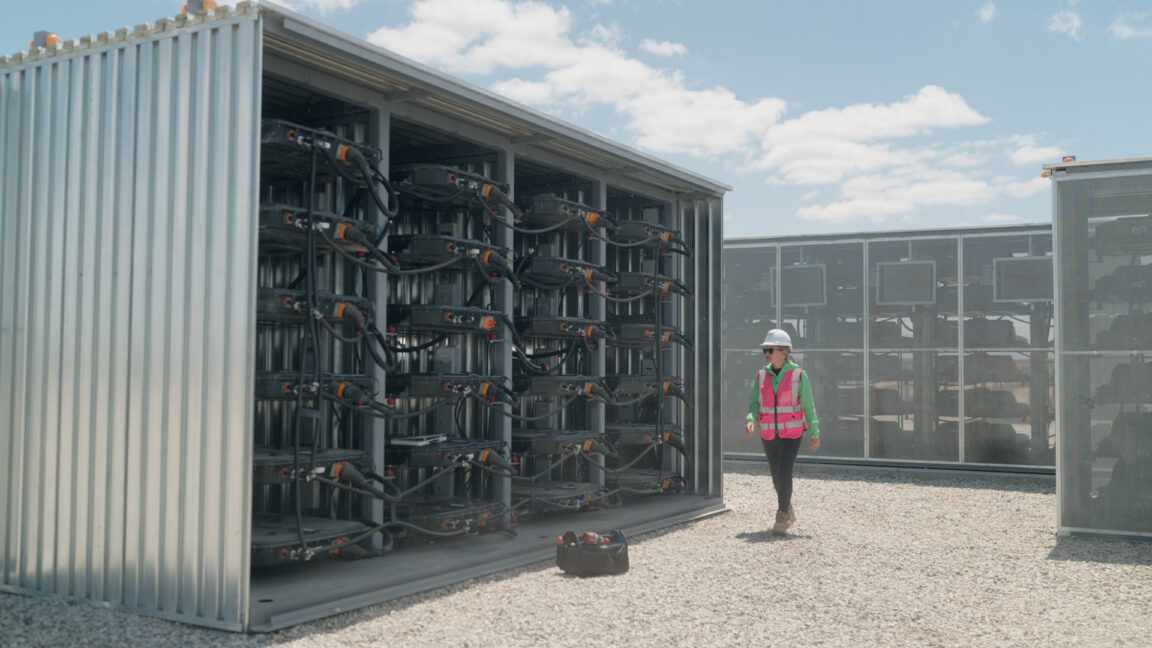
Freeman Hall, CEO of B2U Storage Solutions, notes that even with the "haircut" taken from usage-related degradation, these batteries offer significant utility. "We are talking about pretty significant capacity per battery," Hall explained. "When you aggregate these units into a large-scale storage facility, you are creating a meaningful asset that can be deployed quickly to support grid demand."
The broader U.S. market is ripe for such innovations. The Solar Energy Industries Association (SEIA) reported that the U.S. installed a record 9.7 gigawatt-hours of stationary storage in the first quarter of 2026 alone—a 32 percent increase year-over-year. By incorporating second-life batteries, B2U is helping meet this soaring demand without requiring the massive influx of virgin materials needed for brand-new battery manufacturing.
Official Responses and Strategic Vision
The collaboration is viewed by both parties as a critical component of their broader sustainability mandates. For Waymo, the goal is to prove that autonomous transportation can be a net-positive for the environment.
"Our business is getting the full residual value out of electric vehicle batteries after they’re no longer suitable for automotive use," says Freeman Hall. "Waymo puts a lot of miles on EVs, and their model is expanding rapidly. We are honored to be able to work with them to capture that value."
Adam Lenz, head of sustainability and environment at Waymo, emphasizes the "circularity" of the project. "What we think is really cool and unique about this opportunity is that these are the batteries that are helping serve our riders in these communities," Lenz told Ars. "They’re then being deployed in local grids near the communities we serve. It’s a nice circularity for our commitment to clean technology and supporting renewable energy on the grid."
This "community-linked" approach is not just a PR talking point; it is a strategic logistical benefit. By deploying repurposed batteries in regions where Waymo operates, the company helps stabilize the very power grids that charge its own fleets. For instance, a 24 MWh project in Bexar County, Texas, is poised to support Waymo’s growing presence in the San Antonio area, directly offsetting the grid strain caused by high-density EV charging.
Broader Implications for the Tech and Energy Sectors
The implications of this partnership extend far beyond the two companies involved. It sets a precedent for how "Big Tech" and the automotive sector should handle the growing wave of battery waste.

1. Reducing Mineral Dependency
The production of lithium-ion batteries is resource-intensive, requiring the mining of lithium, cobalt, nickel, and manganese. By extending the useful life of these batteries by 5 to 10 years in a stationary capacity, companies can delay the need for recycling or disposal, effectively increasing the "return on investment" for every ton of raw material mined.
2. Grid Resiliency
As the U.S. power grid struggles to accommodate intermittent renewables and the increased load from EV charging, distributed energy storage is the "missing link." Using retired EV batteries allows for the rapid deployment of storage projects at a lower cost than new installations, as the primary asset—the battery cell—is already paid for by its primary use.
3. Addressing Public Perception
Waymo has faced scrutiny regarding the environmental impact of its fleet, particularly in areas like Austin, Texas, where temporary charging solutions involving natural gas generators drew significant local criticism. By pivoting to a more sustainable, circular model for its batteries, Waymo is demonstrating a proactive commitment to "clean energy throughout the entire lifecycle of our vehicles," as the company aims to move toward fully renewable charging.
Conclusion: A Model for the Future
The partnership between Waymo and B2U Storage Solutions is more than a supply chain agreement; it is a blueprint for the future of the energy transition. By treating electric vehicle batteries as assets that evolve in function rather than waste to be discarded, the companies are pioneering a model of industrial ecology that addresses the urgent needs of the grid while maximizing the utility of advanced technology.
As the number of autonomous vehicles continues to climb, the volume of batteries reaching their "second-life" stage will accelerate. If this pilot proves successful at scale, it will likely serve as a catalyst for other ride-hailing giants and EV manufacturers to implement similar programs, ultimately turning the problem of battery waste into a solution for energy security. In the race to net-zero, Waymo and B2U have shown that the road to sustainability is paved with the batteries of yesterday, powering the grid of tomorrow.












No comments yet. Be the first to join the conversation!