

By [Your Name/Journalistic Byline]
May 15, 2026
In the closing moments of Rogue One: A Star Wars Story, cinema audiences witnessed one of the most visceral displays of power in modern film history. Darth Vader, shrouded in the gloom of a rebel corridor, systematically dismantles a squadron of soldiers with a lethal, terrifying efficiency. It is a sixty-second masterclass in cinematic menace. Yet, for all his lightsaber-wielding prowess and Force-choking dominance, Vader remains a mythological figure—a dark wizard in a galaxy of magic.
The true, bone-chilling terror of the Star Wars franchise does not reside in the glowing red blade of a Sith Lord, but in the sterile, grey-uniformed boardrooms of the Galactic Empire. It resides in men like Admiral Motti, the mid-level officer who dared to dismiss Vader’s "sorcerous ways" while casually advocating for the genocide of entire planetary populations. As the franchise has pivoted increasingly toward the spectacle of space magic, it has arguably lost its most potent villainous archetype: the "Company Man."
The Anatomy of the Bureaucratic Villain
To understand the decline of the mundane villain, one must first look at the archetype’s foundation. Admiral Motti, played with chilling, bureaucratic arrogance by Richard LeParmentier in the 1977 original, remains the gold standard. Motti is not a Sith; he is a man of spreadsheets and strategic logistics. When he famously declares, “This station is now the ultimate power in the universe! I suggest we use it,” he isn’t motivated by the Dark Side’s emotional turbulence. He is motivated by cold, calculated efficiency.
The horror of Motti lies in his normalcy. He is a man who would likely complain about the cafeteria food or the inefficiency of the docking bay, all while signing off on the destruction of Alderaan. This is the "banality of evil"—a term coined by philosopher Hannah Arendt—brought to life in a galaxy far, far away. When the franchise shifted its focus toward the supernatural, it traded this grounded, recognizable form of malice for the abstract, high-stakes battles of god-like entities.
Chronology: From Tarkin’s Leash to Galactic Lightning
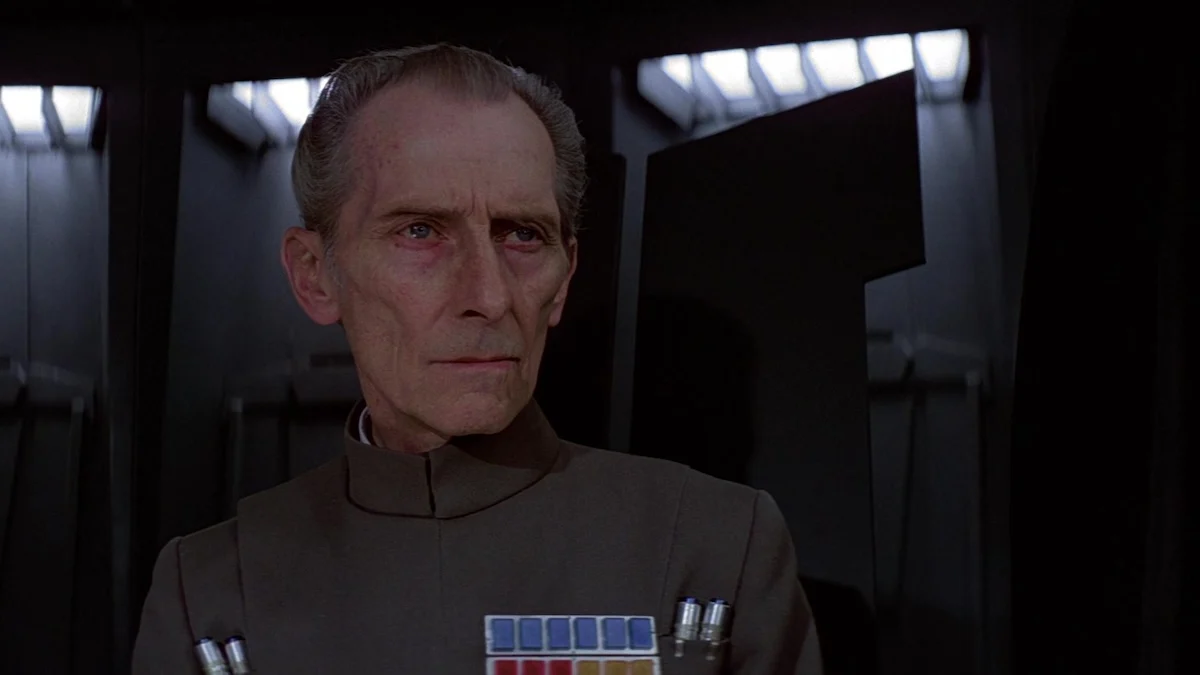
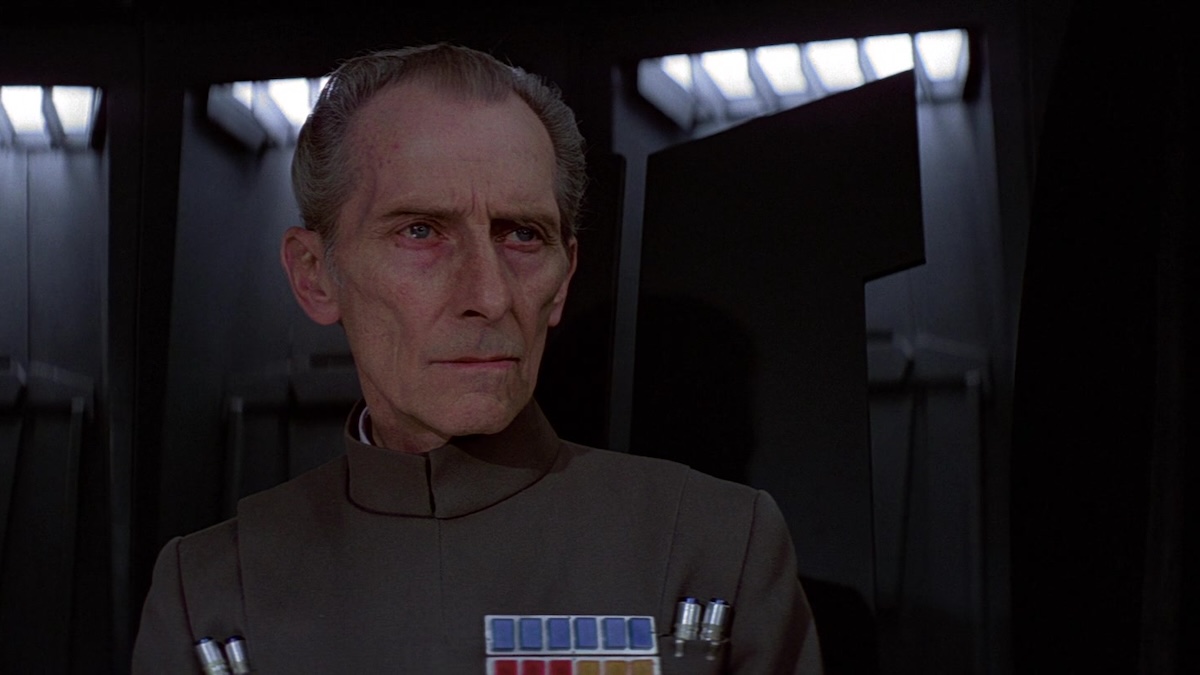
In the early days of Star Wars, the hierarchy was clear. Darth Vader was not the CEO of the Empire; he was the enforcer—the "weird religious nut" kept on a leash by the pragmatic, cold-blooded Grand Moff Tarkin. Princess Leia’s biting remark regarding Tarkin holding Vader’s leash was not merely a witty comeback; it was a structural observation of the Empire’s power dynamics.
The Shift in Power
- 1977 (A New Hope): The Empire is portrayed as a sprawling, militaristic bureaucracy. Vader is a subordinate, and Tarkin is the primary antagonist—a man who uses a planet-killing laser as a mere tool of regional governance.
- 1980–1983 (The Original Trilogy): With the introduction of Emperor Palpatine in The Empire Strikes Back and Return of the Jedi, the narrative focus shifts. The Empire evolves from a military machine into a cult. Vader’s role shifts from an enforcer to a centerpiece. The "Company Men," like Admiral Firmus Piett, are relegated to the background, serving as mere witnesses to the duels between Jedi and Sith.
- 1999–2005 (The Prequel Trilogy): While these films feature heavy political maneuvering, the "villains" are mostly monstrous-looking aliens or Palpatine himself, played with operatic malevolence. The grounded, human face of evil is replaced by CGI and high-fantasy archetypes.
- 2015–2019 (The Sequel Trilogy): General Hux was introduced as a potential successor to the bureaucratic villain, but the character was quickly flattened into a "passionate lunatic." By moving away from the detached, cold, and calculated demeanor of earlier functionaries, the sequels missed the opportunity to show the terrifying nature of a true believer in a fascist system.
The Cultural Significance of the "Paper Pusher"
The effectiveness of the Company Man relies on moral ambiguity. We understand, on an intuitive level, what it means to work for a bad boss or to be part of a flawed system. We do not understand what it means to be a Sith Lord.
The success of The Mandalorian provides a modern case study in this phenomenon. The series initially thrived because it focused on the power vacuum following the Empire’s collapse. Characters like "The Client" (Werner Herzog) or the remnants of Imperial bureaucracy provided a chilling, grounded stakes-based narrative that felt tangibly dangerous. These were not men who needed to summon lightning; they were men who controlled the resources, the contracts, and the lives of those on the frontier.
The Andor Paradigm
If the Star Wars franchise is to recapture its sense of genuine, gut-wrenching stakes, it must look to the template established by Andor. The series is, at its heart, a procedural drama about the banality of authoritarianism.
In Andor, we see the terrifying efficiency of the judicial system on Niamos, where a judge sentences Cassian to prison not out of malice, but out of a rigid adherence to protocol. This is far more frightening than any lightsaber duel. It is a reminder that the most dangerous aspects of an empire are not its weapons, but its paperwork. The series succeeds because it treats the bureaucratic machine as a character in its own right—one that is indifferent to human suffering.
Implications for the Future of the Franchise
Critics often argue that Star Wars must prioritize the mystical to remain true to its roots. However, the most compelling moments in the franchise’s history have often occurred when the mystical elements are forced to interact with the mundane.
When a "bland little Englishman" in a grey uniform treats the death of a million people as a check-box item, it highlights the monstrosity of the villains who do have power. The contrast is vital. Without the Company Man, the Sith are merely bullies in robes. With the Company Man, the Sith are the heads of a systemic, institutionalized machine that threatens the very fabric of freedom.
Recommendations for Narrative Growth
To evolve, Star Wars should:
- Humanize the Imperial Machinery: Reintroduce villains who are not motivated by the Force, but by ideology, careerism, or simple indifference.
- Deprioritize the "Chosen One" Dynamic: Not every conflict needs to be a struggle between the Light and Dark sides. Some conflicts should simply be about fighting the system.
- Embrace the Political Thriller: Use the vast resources of the Star Wars universe to explore the logistics of occupation, supply chains, and the moral compromises of those living under an authoritarian regime.
Conclusion: The Grit of the Galaxy
Star Wars is, and will always be, a space opera defined by the clash of Jedi and Sith. But a space opera without a grounded reality is merely a fairy tale. The franchise gains its "grit"—its texture and its weight—when it remembers that behind every planet-destroying weapon, there is an Admiral in a stiff uniform, a middle-manager concerned about his budget, and a judge obsessed with the letter of the law.
By reclaiming these characters, Star Wars does not move away from its identity; it enriches it. It ensures that the lightsabers, the Force, and the epic battles have a backdrop that feels real, dangerous, and profoundly human. The Company Men are not just supporting players; they are the architects of the Empire’s terror. It is time for the franchise to put them back in the boardroom.











No comments yet. Be the first to join the conversation!