

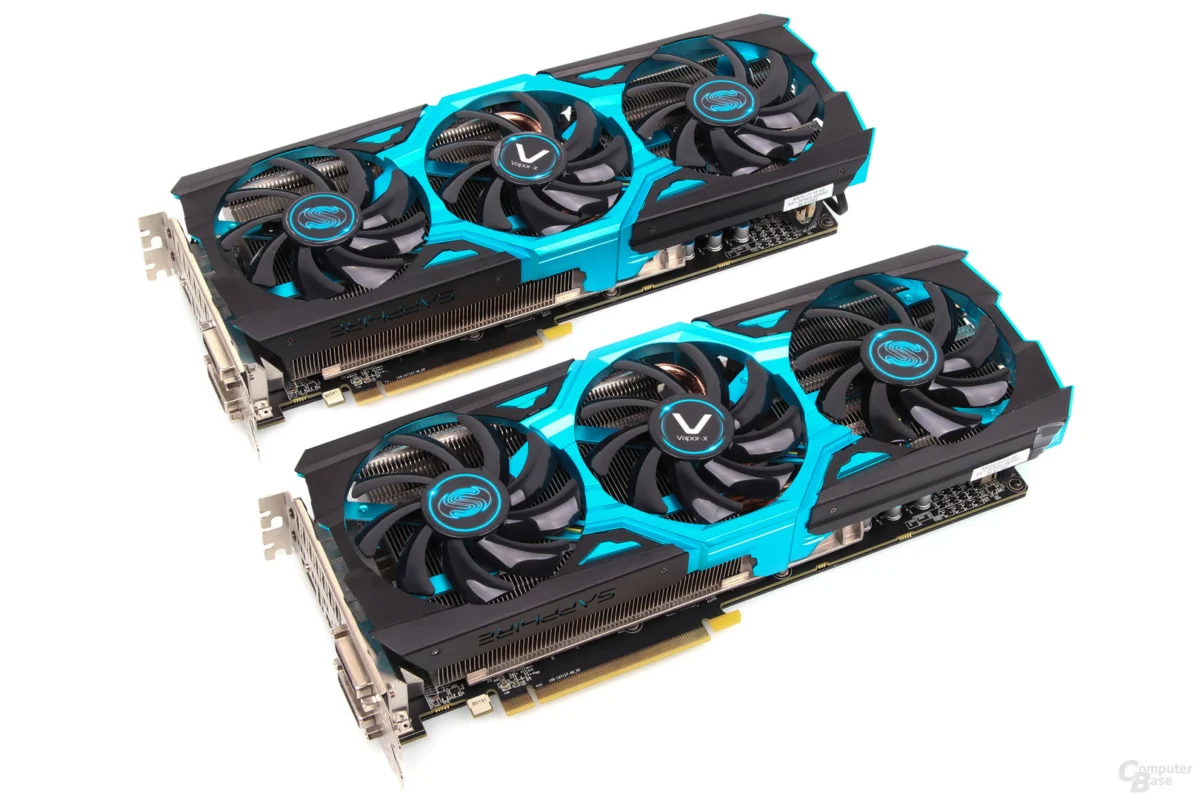
Twelve years ago today, the hardware enthusiast landscape was forever altered when ComputerBase published its first review of a gaming graphics card equipped with 8 GB of VRAM. At the time, this was a figure bordering on the absurd—a "feasibility study" that felt more like a tech demo than a necessity. The culprit behind this audacious move was Sapphire, an AMD board partner that decided to take matters into its own hands by doubling the memory on the Radeon R9 290X.
Today, the 8 GB threshold sits in a strange, liminal space: it is both a historical milestone and a modern-day bottleneck. As we look back at the journey from the "forbidden" R9 290X to the current landscape of the RTX 50-series and RX 9000-series, it becomes clear that while technology has advanced at breakneck speed, the industry’s struggle with VRAM capacity remains a recurring, often controversial, narrative.
The Forbidden Pioneer: The Sapphire R9 290X Vapor-X
In the autumn of 2013, AMD launched its "Hawaii" GPU architecture, which powered the high-end Radeon R9 290 and 290X. At launch, both cards were strictly limited to 4 GB of GDDR5 memory over a 512-bit bus. For the era, 4 GB was the undisputed gold standard for high-end gaming.
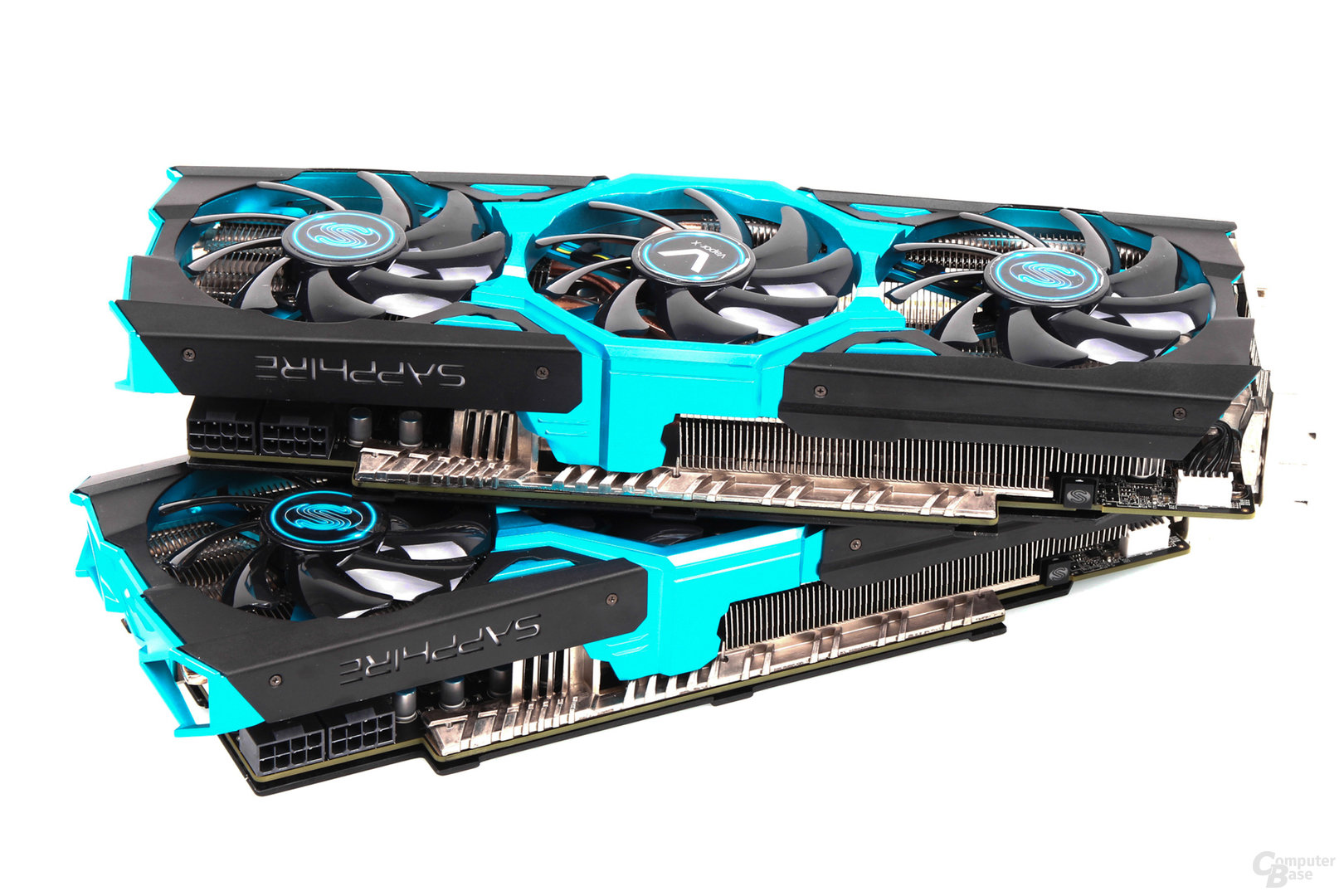
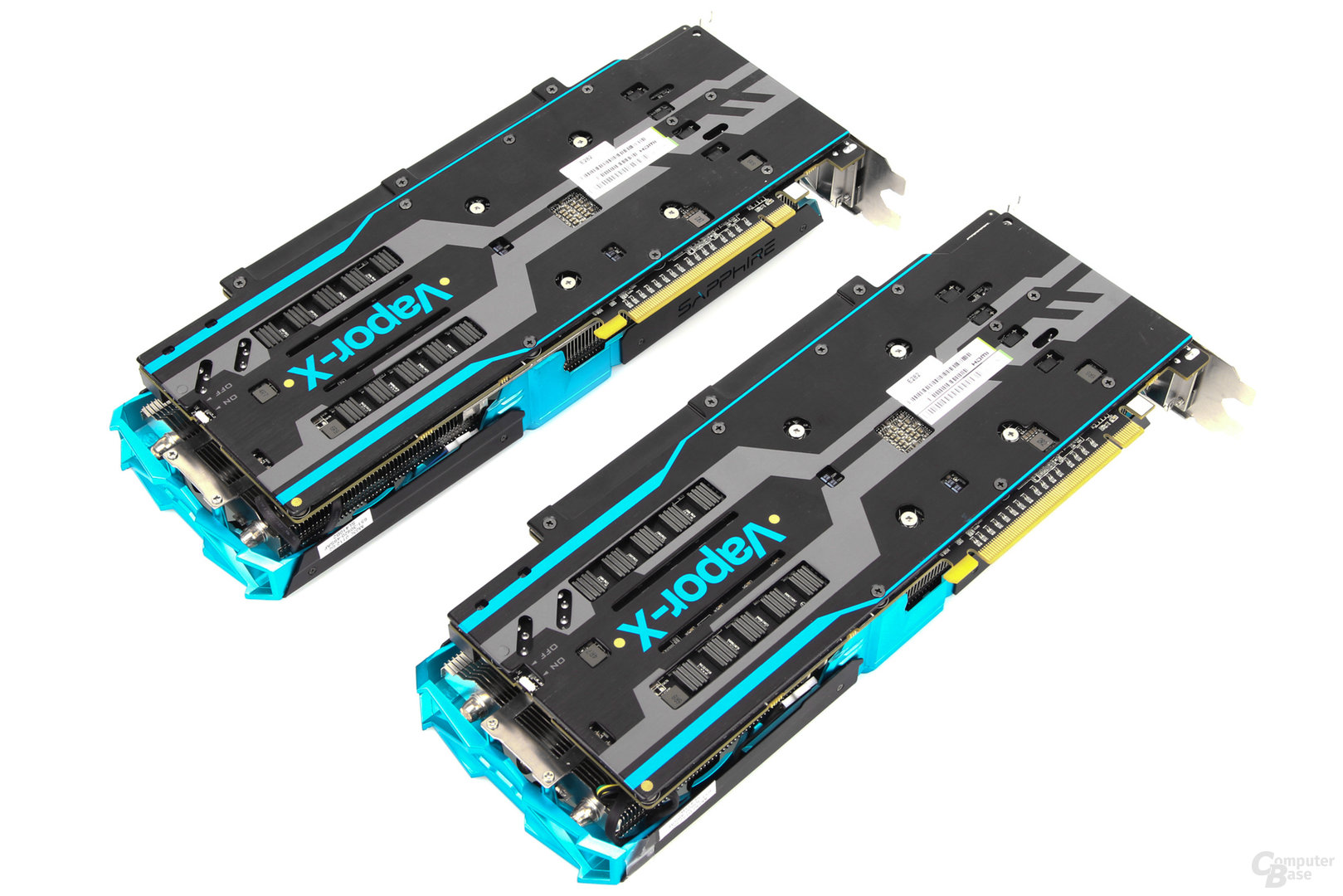
However, in March 2014, Sapphire shocked the market by announcing the Radeon R9 290X Vapor-X, featuring a doubled 8 GB VRAM capacity. The reaction from AMD was immediate and frosty: the upgrade was not sanctioned. Sapphire was forced to cancel the project almost as quickly as it had been announced.
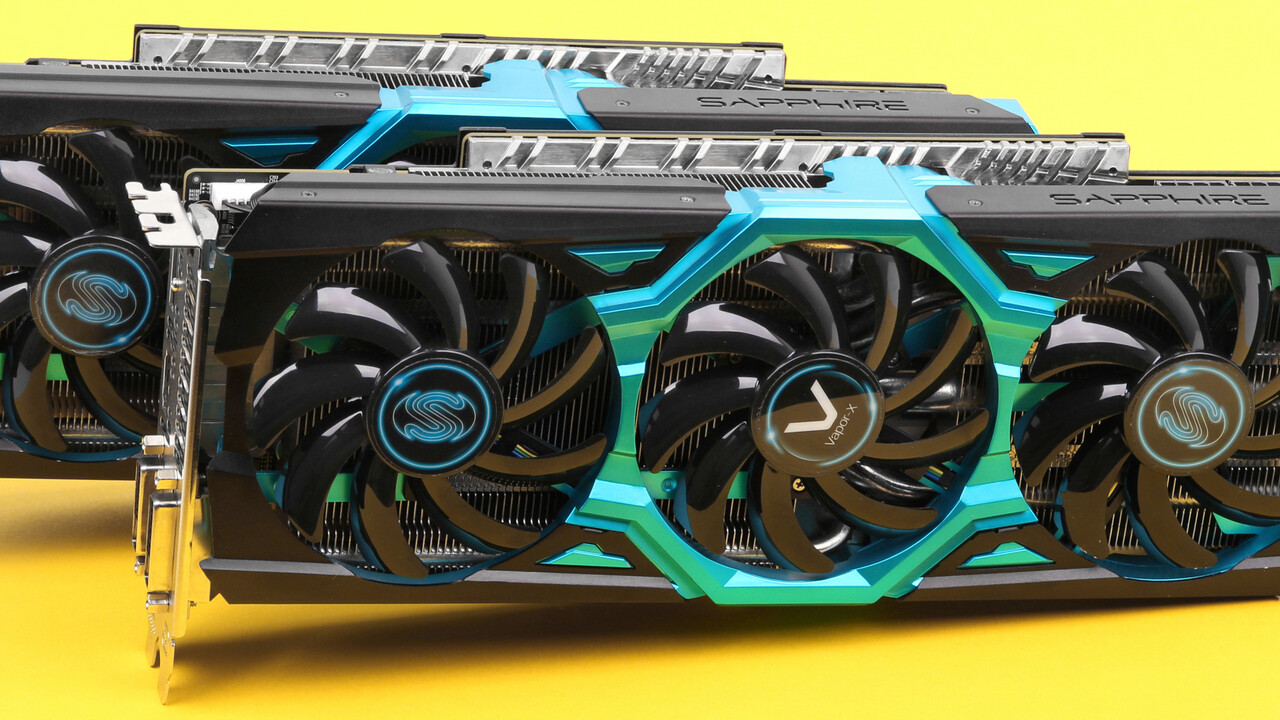
The rationale behind the "ban" was largely tactical; AMD did not want to complicate the product stack or potentially cannibalize sales of upcoming professional-grade hardware. Yet, the story didn’t end there. Just a month later, the card appeared at retailers like Overclockers UK and Caseking. AMD had begrudgingly granted permission to sell the approximately 250 units that had already been manufactured. When these cards reached the hands of reviewers, they were treated as a curiosity—an enthusiast’s plaything that would soon be rendered obsolete by the industry’s shift toward more efficient memory management.
Chronology of an Evolving Standard
The timeline of VRAM growth is punctuated by significant milestones that reveal the industry’s hesitation to move forward:
- 2014: The Sapphire R9 290X 8 GB debuts as a "rogue" experiment. 4 GB remains the standard for top-tier cards.
- 2015: AMD finally embraces the change with the release of the Radeon R9 390 and 390X, which shipped with 8 GB of VRAM as a standard specification.
- 2016: Nvidia finally catches up to the 8 GB standard with the Pascal-based GeForce GTX 10-series.
- 2019: The GeForce RTX 2060 Super introduces 8 GB as a mid-range standard.
- 2026: 8 GB remains the subject of intense debate, appearing on budget-tier cards like the RTX 5060 and the Radeon RX 9060 XT, often to the chagrin of the enthusiast community.
The Performance Gap: How We Tested in 2014
When ComputerBase tested the 8 GB Sapphire card against its 4 GB sibling in 2014, the findings were stark. To force a scenario where the memory would actually matter, the testing was conducted exclusively in UHD (3,840 x 2,160 pixels).
In standard scenarios, there was almost no difference. However, when testers enabled 8x MSAA and 16x anisotropic filtering—the height of graphical luxury at the time—the 4 GB card hit a hard wall. In Company of Heroes 2, the 8 GB model achieved 28.5 FPS, while the 4 GB version sputtered at 3.6 FPS. In Battlefield 4, the 4 GB version refused to even launch with maximized settings.
From the perspective of 2026, these test parameters seem archaic. Post-processing anti-aliasing has been almost entirely replaced by temporal solutions and AI-driven upscaling like DLSS and FSR. Meanwhile, 16x AF is now a background constant that users rarely even need to toggle. Yet, the core lesson remains: memory capacity is an insurance policy against future graphical complexity.
The Modern VRAM Crisis: A Case of Deja Vu?
Fast forward to the present day, and the debate surrounding 8 GB of VRAM has taken a darker, more corporate turn. The industry is currently witnessing a strange phenomenon where manufacturers seem almost ashamed of their 8 GB offerings.
Nvidia’s Curated Previews
The release of the GeForce RTX 5060 Ti 8 GB and the base RTX 5060 highlights a recurring tension. With the 5060 Ti available in both 16 GB and 8 GB variants, the latter has been criticized as being insufficient for modern titles. Reports indicated that Nvidia actively attempted to stifle independent testing of the 8 GB variants, in some cases withholding drivers unless outlets agreed to test using "curated" settings designed to mask the memory limitations.
AMD’s RX 9000-Series Strategy
AMD faces a similar predicament. The Radeon RX 9060 XT is available in both 16 GB and 8 GB configurations, and the lower-tier 8 GB version has frequently struggled in modern titles where textures and ray-tracing data demand significantly more than the baseline. Rumors of a forthcoming RX 9050 8 GB suggest that the industry is still attempting to squeeze the same "entry-level" memory target into a market that has moved well beyond those limits.
Implications: Why 8 GB Just Won’t Die
The persistence of 8 GB VRAM in 2026 is a byproduct of three primary factors:
- Cost Optimization: Memory modules are a significant part of a GPU’s Bill of Materials (BOM). For mid-range and budget cards, cutting VRAM is the easiest way to hit an attractive MSRP.
- Upscaling as a Crutch: Manufacturers argue that modern AI upscaling reduces the need for large frame buffers, as the card can render at lower internal resolutions. Critics, however, argue that this is a "lossy" solution that ignores the high-fidelity texture requirements of modern game engines.
- Market Segmentation: By limiting VRAM on lower-tier cards, manufacturers create a clear performance ceiling that forces power users toward more expensive, higher-tier models.
The irony is palpable. In 2014, the 8 GB R9 290X was a sign of excess. In 2026, 8 GB is increasingly viewed as an artificial constraint—a "planned obsolescence" that forces gamers to lower their texture settings or rely on aggressive upscaling, regardless of the card’s raw compute power.
Conclusion
As we look back at the twelve-year history of the Sapphire R9 290X 8 GB, we see a microcosm of the entire graphics industry. We have moved from a time where 8 GB was an "impossible" amount of memory to a time where it is barely sufficient to run modern titles at high settings.
The Sapphire experiment proved that memory is not just about raw power; it is about longevity. While the 2014 card eventually became a collector’s item, it served as a warning that the industry was moving toward higher data demands. Today, as we watch the RTX 50-series and RX 9000-series launch, that warning feels more relevant than ever. The hardware is faster, the AI is smarter, but the fundamental need for sufficient VRAM remains an immutable law of digital gaming. If there is one lesson to be learned from these twelve years, it is that memory capacity is the one spec that always ages the fastest.










No comments yet. Be the first to join the conversation!