

By João Silva
Tech News Correspondent
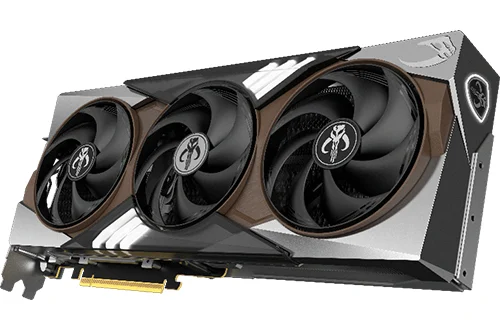
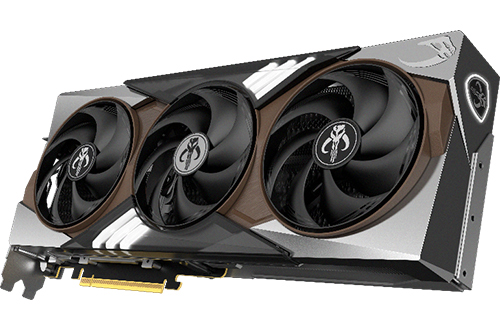
In a high-stakes crossover between the world of high-end PC gaming and the cinematic expanse of the Star Wars universe, MSI has officially unveiled its most ambitious collector’s piece to date: the GeForce RTX 5080 16G The Mandalorian and Grogu Edition OC. This limited-run graphics card, built upon the formidable Nvidia Blackwell architecture, serves as a bridge between the enthusiast PC hardware community and the global fanbase of the hit Disney+ series.
With a production run strictly capped at 500 units for the European market, this card is positioned not merely as a component, but as a centerpiece for enthusiasts. Its scheduled release on May 22nd—timed perfectly to align with the theatrical debut of the upcoming The Mandalorian and Grogu feature film—promises to be a significant moment for both gamers and cinephiles alike.
Main Facts: Engineering Meets Beskar Aesthetics
The RTX 5080 The Mandalorian and Grogu Edition is fundamentally rooted in the high-performance Gaming X Trio series, yet it undergoes a radical physical and visual transformation. At its core, the card leverages the cutting-edge Nvidia Blackwell architecture, delivering 16GB of lightning-fast GDDR7 memory. Under the hood, 10,752 CUDA cores ensure that the card is capable of handling the most demanding AAA titles, ray-tracing workloads, and generative AI tasks with ease.
The aesthetic departure from the standard Gaming X Trio is significant. The exterior features a specialized brushed-metal finish designed to emulate the iconic, near-indestructible Beskar armor worn by the Mandalorian, Din Djarin. However, the true innovation lies in the modularity of the design. MSI has implemented a magnetic backplate system that allows users to customize the GPU’s aesthetic profile on the fly. Included in the package are four interchangeable plates, each representing a distinct facet of the lore: the Mandalorian’s helmet, the likeness of Grogu, the New Republic signet, and the ominous emblem of the Imperial Remnants.
Technical Specifications
- Architecture: Nvidia Blackwell
- VRAM: 16GB GDDR7
- CUDA Cores: 10,752
- Cooling System: Tri Frozr 4 with Stormforce fans
- Power Consumption: 360W (16-pin connector)
- Connectivity: 3x DisplayPort 2.1b, 1x HDMI 2.1b
- Output Capabilities: Support for 8K resolution at 120Hz
The cooling solution has also been specifically tailored for this edition. The "Stormforce" fans utilize claw-textured blades, engineered to optimize airflow while minimizing acoustic resonance. A nickel-plated copper baseplate ensures efficient thermal dissipation from the GPU die and memory modules, maintaining stability even under sustained heavy loads. To complete the set, MSI includes a bespoke VGA support bracket shaped like Grogu, providing both structural integrity to prevent GPU sag and an added touch of narrative flair to any build.
Chronology: The Road to the Galactic Release
The announcement of the Mandalorian edition comes at a pivotal time for Nvidia’s Blackwell lineup. Since the release of the RTX 50-series, enthusiasts have been waiting for a collector’s edition that separates itself from the standard black-and-grey industrial aesthetic.
- Early 2026 (Speculation Phase): Rumors began circulating regarding a collaboration between MSI and Lucasfilm following hints dropped during CES 2026. Speculation centered on which GPU would receive the "limited edition" treatment, with many pointing to the 5080 as the sweet spot between high-end performance and market accessibility.
- April 2026 (Announcement): MSI officially confirms the partnership, announcing the "The Mandalorian and Grogu Edition." This news sent ripples through the enthusiast community, especially as the film’s release date was solidified for late May.
- May 22, 2026 (Launch): The date set for the global retail availability of the 500 units. The timing is designed to maximize synergy with the film’s marketing campaign, creating a "must-have" window for collectors.
Supporting Data: Why the Blackwell Architecture Matters
The choice of the RTX 5080 as the foundation for this collector’s item is not accidental. As the industry transitions into the era of Blackwell, the performance metrics of the 5080 have established it as the "gold standard" for 4K gaming.
The integration of GDDR7 memory marks a generational leap in bandwidth. Compared to the previous generation’s GDDR6X, the transition to GDDR7 allows for significantly faster data transfer speeds, which is crucial for high-resolution textures and complex ray-traced lighting. In professional benchmarks, the 10,752 CUDA cores provide a 20-25% uplift in performance over the RTX 4080 Super, making this not just a display piece, but a powerhouse for productivity.
The power management of the card is equally impressive. Despite the increased transistor density of the Blackwell chips, the 360W TDP (Thermal Design Power) remains efficient, provided the user has a modern ATX 3.1 power supply capable of handling the 16-pin connector requirements. The inclusion of DisplayPort 2.1b is a future-proofing necessity, supporting the next generation of high-refresh-rate 8K displays that are only just beginning to enter the consumer market.
Official Perspectives and Industry Implications
While MSI has not released a statement regarding the specific manufacturing costs of the Beskar-inspired finish, industry analysts suggest that the complexity of the magnetic backplate system and the custom-molded Grogu support bracket represent a significant investment in industrial design.
"Collaborations like this are rare," says lead analyst Sarah Jenkins. "Most manufacturers stick to software-based RGB customization. By moving into physical modularity—the interchangeable magnetic plates—MSI is addressing the ‘custom build’ culture that defines the modern PC enthusiast. They aren’t just selling a card; they are selling a narrative."
The implication for the wider graphics card market is clear: the era of the "standard" GPU is being challenged by the era of the "personalized" component. As PC building becomes more of an aesthetic pursuit, hardware manufacturers are increasingly looking toward pop-culture collaborations to differentiate their products in a crowded, competitive landscape.
The Collector’s Dilemma: Implications for the Market
The limited run of 500 units is both a blessing and a curse. For the 500 lucky individuals who manage to secure a card, it represents a unique piece of tech history. However, it also invites the inevitable issue of scalping. Given the massive cultural reach of the Star Wars franchise, demand will undoubtedly far outstrip supply.
Furthermore, the "The Mandalorian and Grogu" edition forces a conversation about the longevity of collector’s hardware. While the aesthetics are timeless, the underlying silicon will eventually be superseded. MSI has attempted to mitigate this by ensuring that the card remains a top-tier performer, but collectors will have to decide whether to treat this as a "sealed" investment piece or as a functional component for a daily-driver gaming rig.
Final Thoughts
As we approach the May 22nd launch, the excitement surrounding the RTX 5080 Mandalorian Edition is palpable. Whether it is the sleek, brushed-metal Beskar finish or the endearing Grogu support bracket, MSI has managed to synthesize the cold, calculating power of the Nvidia Blackwell architecture with the warmth of one of the world’s most beloved franchises.
For those who view their PC as a reflection of their personality—and perhaps their allegiance to the Creed—this is more than just a graphics card. It is a piece of the galaxy, brought down to Earth.
For an even closer look at this limited-edition graphics card, watch our full, in-depth unboxing on the KitGuru channel.
Related Reads:
- Intel Razor Lake-AX detailed in new rumor: High-core counts and on-package memory to define the next generation of workstation processors.
- How the Nvidia Blackwell architecture is changing the landscape of AI-accelerated rendering.










No comments yet. Be the first to join the conversation!