

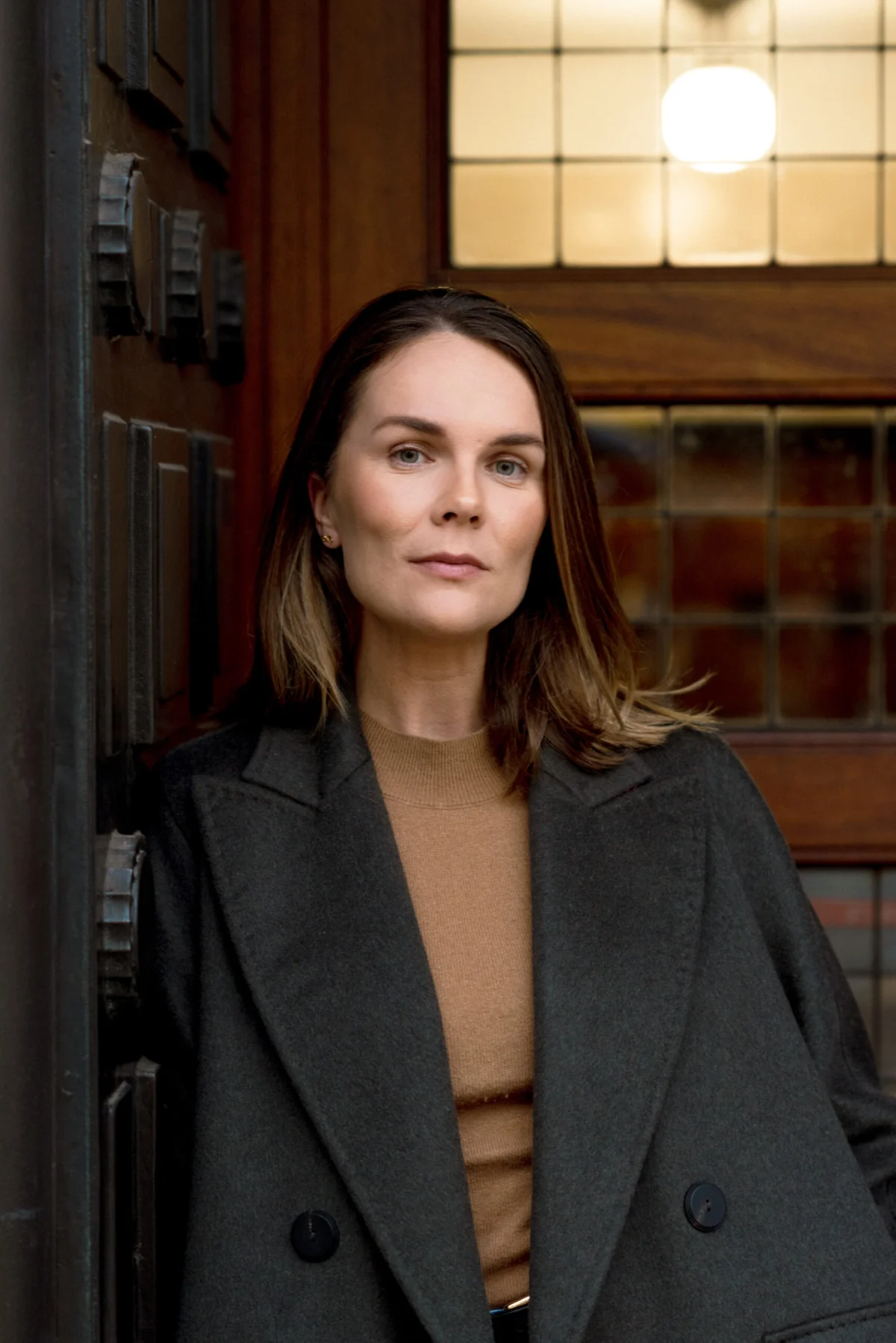
SPOILER ALERT: The following article contains significant plot details regarding Caro Claire Burke’s debut novel, “Yesteryear.” Readers wishing to remain unspoiled are advised to proceed with caution.
In the crowded landscape of contemporary literature, few debuts have managed to capture the public’s frantic, conflicted attention quite like Caro Claire Burke’s Yesteryear. Part social satire, part psychological thriller, the novel follows Natalie Heller Mills—a high-profile, tradwife influencer who finds herself inexplicably transported into the literal, rigid reality of the past. Since its release on April 7, the book has not only ascended to the No. 1 spot on the New York Times bestseller list but has also secured a prestigious “Good Morning America” book club endorsement, cementing its status as the literary event of the season.
The momentum surrounding the book has been so swift that the industry took notice before the ink was even dry. In 2024, Amazon MGM secured the film rights to the project, with Academy Award winner Anne Hathaway attached to both star and produce. As the cultural conversation around “tradwife” aesthetics, digital performance, and the commodification of domesticity reaches a fever pitch, Yesteryear stands as both a critique and a participant in the phenomenon.
A Rapid Ascent: The Chronology of a Bestseller
The journey of Yesteryear from a manuscript in progress to a global bestseller is a testament to the volatility of modern publishing. Burke, a writer who has spent her entire adult life honing her craft, brought a unique vantage point to the project. Her background as a TikTok creator and co-host of the culture and politics podcast Diabolic Lies—where she dissects topics ranging from the "Texasification" of America to Gen Z’s “anti-woke” rhetoric—provided her with a front-row seat to the very digital behaviors she lampoons in her fiction.
When Burke sold the book in the spring of 2024, she was advised by her agent that the project had the potential to be a breakout success. However, the author remains humble about the outcome. “I had no expectation of making the New York Times bestseller list at all,” Burke admits. “I was really hopeful that this would be a book that a number of people read and that it would be enough for me to sell another book.”
Following the book’s April release, Burke embarked on an intensive, cross-continental book tour. Spanning London, New York, Boston, and, pointedly, "tension-heavy" regions like Waco, Texas, and Salt Lake City, Utah, the tour has been a grueling logistical challenge. Reflecting on the whirlwind, Burke notes, “I just wake up each day and think, ‘Okay, I need coffee and some yogurt, and to make sure I’m where I need to be on time.’”
The Anatomy of an Influencer: Themes and Influences
At the heart of the novel is Natalie, a character who is intentionally difficult to categorize. Unlike many contemporary protagonists designed to be "plucky" or inherently relatable, Natalie is caustic, forceful, and deeply ambitious. Her descent into a manufactured domestic life is, according to Burke, a reflection of the toxic nature of social media.
“Natalie’s relationship to social media, in many ways, is my relationship to social media,” Burke explains. “I can feel out of control, I can feel paranoid, I can feel defensive. I think that I’m both the ‘Angry Women’ and Natalie and every other character.”
The title Yesteryear was chosen early in the writing process, serving as a linguistic hook for the novel’s "funhouse" atmosphere. Burke compares the setting to a Westworld-style amusement park—a place where the promise of traditional simplicity masks a sinister, claustrophobic reality. As the narrative progresses, the "tradwife" lifestyle—often sold as a serene aesthetic—is exposed as a transactional, even fraudulent, performance.
The Role of Generational Healing
While the novel focuses on the performative nature of motherhood and domesticity, it also introduces the perspective of Natalie’s daughter, Clementine. For Burke, this was a necessary inclusion to address the cycle of generational trauma. While Natalie herself is portrayed as a character who remains largely static, unable to escape her own flaws or "get better," the children offer a flicker of hope.
“Massive ideological change or unlearning happens more effectively over generations,” Burke says. “I really wanted to end the book with them stepping beyond the world that they’ve been caught up in. That was where I personally found my hope when I was writing the book.”
Official Responses and Creative Collaborations
The development of Yesteryear was characterized by high-level collaboration. In her acknowledgments, Burke credits "some of the greatest living artists and thinkers in the world" for helping her workshop the manuscript, most notably Anne Hathaway.
These discussions were not merely editorial; they were existential inquiries into the nature of surveillance and the commercialization of religion. Burke notes that her conversations with Hathaway were "grounding," helping her navigate the "genre-fluid" nature of the narrative. By interrogating the "idea" of the tradwife, the team was able to elevate the story from a simple satire to a complex exploration of modern identity.
Implications for the Film Adaptation
With production on the film adaptation currently in development, the industry is watching closely. The casting of Hathaway has set a high bar, and Burke is already envisioning the supporting cast. She cites the "crackling energy" of actors like Jesse Plemons or Woody Harrelson as potential archetypes for the male leads—men capable of oscillating between perceived harmlessness and genuine terror.
Regarding the screenplay, which is currently being penned by Hannah Friedman, Burke remains an active participant as an executive producer. While she is tight-lipped about the specifics of the film’s structure—particularly how it will handle the book’s twisty, ambiguous ending—she confirms that the project remains faithful to the novel’s core spirit.
The Cultural Context: Why Now?
The success of Yesteryear arrives at a moment of profound cultural friction. As Western media becomes increasingly saturated with ranch-focused aesthetics and a reactionary "looking backward" trend in politics, Burke’s novel acts as a mirror to the zeitgeist.
“We’re just cycling through these ideas about American nostalgia, also pitted up against these ideas of female subservience,” Burke observes. By releasing the book in a climate where "trad-wife" content is both a viral trend and a source of intense ideological debate, Yesteryear has successfully tapped into a vein of cultural anxiety that is unlikely to be resolved soon.
As for what comes next, Burke is already working on her sophomore effort. While she remains quiet on the details, the literary world is already waiting to see if she can replicate the "delightfully horrifying" success of her debut. For now, Yesteryear stands as a definitive, if uncomfortable, portrait of a society obsessed with the past, struggling to navigate the complexities of the present, and uncertain of the future.
When asked about the surreal experience of becoming a No. 1 bestseller, Burke remains grounded. "I genuinely think that I will wake up and cry 10 years from now," she says. "It’s a completely out-of-body experience."











No comments yet. Be the first to join the conversation!