

Introduction: A Jury Remains Divided
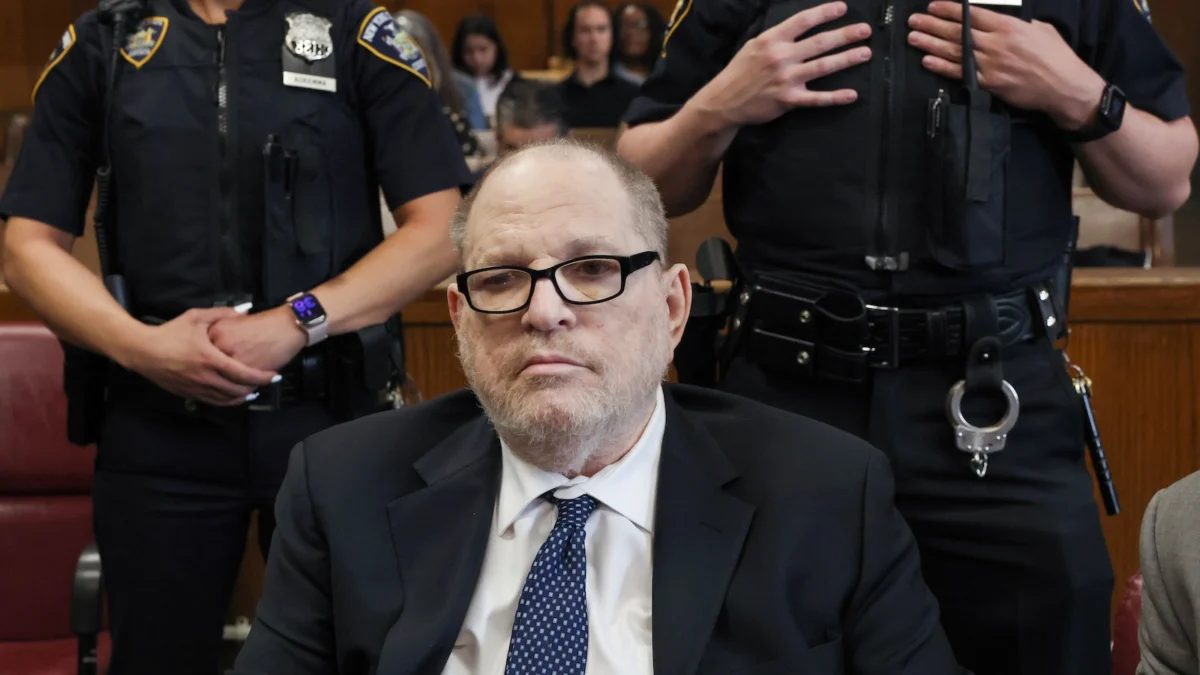
On Friday, May 15, the long-running legal saga surrounding disgraced former film producer Harvey Weinstein reached another inconclusive milestone. In a Manhattan courtroom, Justice Curtis Farber declared a mistrial after the jury, following two days of deliberation, reported that they were unable to reach a unanimous verdict. The impasse marks yet another chapter in a years-long struggle by prosecutors to secure a conviction regarding a 2013 rape allegation brought forward by aspiring actress Jessica Mann.
Justice Farber, acknowledging the gravity of the situation, dismissed the jury, stating they were "hopelessly deadlocked." In his final address to the panel, the judge emphasized the integrity of the judicial process, remarking, "I didn’t see any reason to go further in deliberations. It’s not meant to be a coercive process." The decision effectively resets the clock on this specific case, leaving the path forward uncertain for both the defense and the Manhattan District Attorney’s office.
Chronology of a Tumultuous Legal Battle
To understand the significance of this latest mistrial, one must look at the exhaustive history of the litigation against Weinstein, which has spanned multiple jurisdictions and years.
- 2013: The alleged incident involving Jessica Mann occurred. At the time, Weinstein was a titan of the independent film industry, and the accusations remained largely shielded from public scrutiny until the broader #MeToo movement began in 2017.
- 2020: In a landmark trial that served as a catalyst for national discourse on sexual violence, Weinstein was convicted of criminal sexual acts and third-degree rape in New York. He was sentenced to 23 years in prison.
- 2024: The New York Court of Appeals overturned the 2020 conviction, citing judicial errors in the lower court’s handling of the proceedings. This ruling necessitated a retrial, thrusting the case back into the spotlight.
- 2025: A subsequent trial resulted in a mixed verdict. Weinstein was found guilty of one count of criminal sexual assault against former Project Runway assistant Miriam Haley, though he was acquitted of charges involving model Kaja Sokola.
- May 2026: The current case, centered solely on the testimony of Jessica Mann, concludes in a hung jury, forcing the question of whether a fourth trial is legally and logistically viable.
The Case of Jessica Mann: A Single-Witness Challenge
Unlike the broader, multi-accuser trials that dominated headlines during the initial Weinstein proceedings, the most recent trial focused exclusively on the testimony of Jessica Mann. The prosecution’s case relied heavily on the credibility of a single accuser, as physical evidence from the 2013 incident was virtually non-existent.
In her testimony, Mann detailed a harrowing account of a morning meeting that escalated into non-consensual sexual activity. According to Mann, she had arranged to meet with Weinstein and a group of friends for a meal, only to have the producer maneuver to get a hotel room early after she expressed objections to his behavior. Mann alleged that after she accompanied him to his room, Weinstein injected himself with medication to induce an erection before forcibly raping her.
Because the case lacked forensic evidence, the trial became a contest of narrative and character. Prosecutors aimed to persuade jurors that Mann’s recollection of the events was accurate and that her account was a truthful reflection of the power dynamics and coercion Weinstein allegedly employed throughout his career. Defense attorneys, conversely, challenged the consistency of her statements, attempting to highlight perceived discrepancies to instill reasonable doubt.

Supporting Data and Legal Context
The legal system in New York is currently navigating the complexities of post-conviction appeals and retrials. Weinstein, who is currently serving his sentence at Rikers Island, remains a polarizing figure in the criminal justice system.
The decision to move forward with this trial was part of a larger strategy by the Manhattan District Attorney’s office under Alvin L. Bragg. It is worth noting that the initial charges were brought by Bragg’s predecessor; inheriting a case of this magnitude presents significant administrative and legal hurdles, particularly when juries are reluctant to return a conviction based on historical testimony without corroborating physical evidence.
Furthermore, the legal landscape is complicated by Weinstein’s concurrent legal battles. In Los Angeles, Weinstein is currently appealing a separate conviction that carries a 16-year prison sentence. These cross-country legal efforts have created a complex web of overlapping testimonies and jurisdictional challenges, making it increasingly difficult for the state to maintain a clean, efficient narrative for the jury.
Official Responses and the Path Forward
The immediate aftermath of the mistrial leaves Manhattan District Attorney Alvin L. Bragg at a critical crossroads. He must now weigh the public interest in pursuing justice against the reality of a "hopelessly deadlocked" jury.
Legal analysts suggest that a fourth trial carries significant risks. With each successive trial, the potential for witness fatigue increases, and the memory of events dating back to 2013 becomes increasingly susceptible to scrutiny. Moreover, the costs associated with mounting a high-profile prosecution are immense. The DA’s office has not yet issued a definitive statement regarding whether they will seek to retry the Mann case, noting only that they are reviewing their options.
Weinstein’s legal team, for their part, has viewed the hung jury as a victory for their client’s position. They have consistently argued that the accusations are a product of a biased narrative rather than factual reality.

Implications: The "Me Too" Era and Legal Scrutiny
The mistrial raises profound questions about the nature of justice in the #MeToo era. When a high-profile defendant is accused of crimes that occurred over a decade ago, the judicial system often struggles to meet the high burden of "beyond a reasonable doubt."
In a recent, wide-ranging interview with The Hollywood Reporter in March 2026, Weinstein maintained his innocence while offering a rare, albeit narrow, admission of his character flaws. "Did I make a pass at some of these women unsuccessfully? Did I overplay my hand? Yes," Weinstein said. "Was I pushy or overly seductive? Yes to all of that. Look, I should never have gone out with the people I went out with… I lied all the time. I improperly used my staff to hide these things. But did I ever sexually assault a woman? No. I never did that."
This statement highlights the defense’s broader strategy: to separate Weinstein’s admitted history of infidelity and workplace manipulation from the specific, criminal allegations of sexual assault. For the prosecution, the challenge lies in bridging that gap for a jury—proving that a history of "pushy" or "seductive" behavior provides the context for violent criminality.
Conclusion: A Fractured Legacy
The mistrial on May 15, 2026, serves as a sobering reminder of the limitations of the courtroom in resolving complex, long-standing allegations of sexual misconduct. As the legal system pauses to evaluate the next steps, the case of Harvey Weinstein continues to be a defining, if deeply fractured, legacy for the American judicial system.
Whether or not the state decides to pursue a fourth trial, the impact of these proceedings on the survivors, the legal community, and the public’s understanding of accountability is undeniable. For now, the courtroom in Manhattan remains quiet, but the broader conversation regarding power, consent, and the pursuit of justice remains as loud and contentious as ever. The coming weeks will likely determine whether the state believes it has the evidence to secure a conviction, or if the case of Jessica Mann will fade into the annals of legal history as a missed opportunity for closure.










No comments yet. Be the first to join the conversation!