

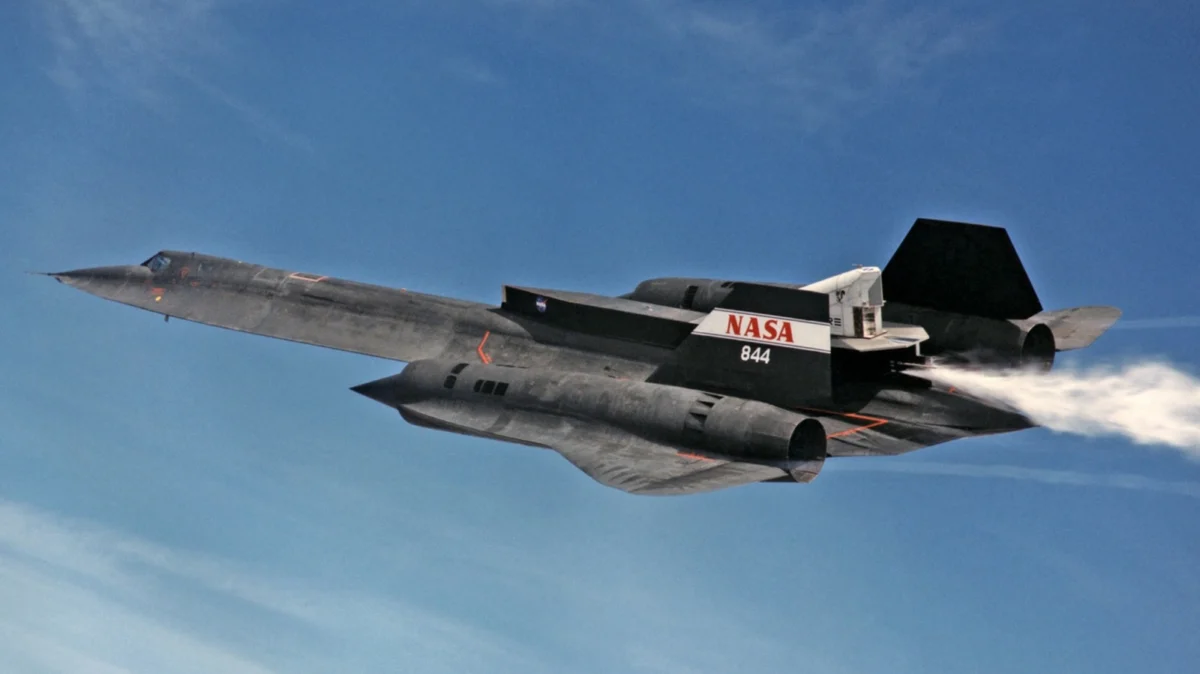
The Lockheed SR-71 Blackbird remains the undisputed titan of Cold War aviation. With a silhouette that seems plucked from a science-fiction epic and a top speed exceeding Mach 3.3, it is an engineering marvel that defies the limitations of its era. Developed by the clandestine "Skunk Works" division under the legendary Kelly Johnson, the Blackbird was designed to operate at the edge of space, outrunning surface-to-air missiles and interceptors with nothing but sheer velocity and altitude.
While history records that the United States Air Force and NASA were the only official operators of these sleek, titanium-clad aircraft, the truth is far more complex. Deep within the bureaucratic shadows of the 1970s, a remarkable incident occurred: NASA found itself in possession of an SR-71 it was never supposed to have. In an act of administrative audacity, the agency proceeded to hide the aircraft in plain sight, forging serial numbers and modifying the jet to avoid detection by the very government that owned it.
The Coldwall Project: A Catalyst for Deception
To understand how a multi-million-dollar strategic reconnaissance aircraft could "go missing" into the hands of a civilian agency, one must look at the Coldwall Project. Supported by the CIA’s Langley Research Center in the 1970s, this initiative was focused on studying the extreme thermal environments encountered during high-Mach flight. At speeds exceeding 2,300 mph, the friction against the airframe generated temperatures capable of melting standard aluminum.
The primary testbed for this research was the YF-12—an interceptor prototype that served as the direct progenitor to the SR-71. The YF-12 featured a rounded nose and specialized weapons bays, distinct from the reconnaissance-optimized SR-71. Under the auspices of the Coldwall Project, NASA was slated to receive two YF-12 aircraft for its research initiatives. However, during the transfer process, a bureaucratic error resulted in the delivery of one YF-12A and one fully operational SR-71A.
At the time, NASA was strictly prohibited from operating the SR-71. The aircraft was a highly sensitive national security asset, and its operational deployment was restricted to the Air Force’s reconnaissance wings. Rather than reporting the error and returning the sophisticated spy plane, someone within NASA—an individual whose identity remains a subject of historical speculation—made a calculated, unauthorized decision: they would keep it.
Chronology of a Classified Cover-Up
The deception was not merely a matter of parking the plane in a dark hangar; it required an elaborate campaign of obfuscation.
- 1970s (The Arrival): The misdirected SR-71A, bearing the actual serial number 64-17951, arrived at the NASA facility under the guise of being a YF-12 interceptor.
- The Rebranding: To prevent casual observers from identifying the aircraft, NASA technicians assigned it a bogus tail number: 60-6937. This specific number was selected with tactical precision; it originally belonged to a Lockheed A-12—a predecessor to the SR-71—and aligned with the sequential numbering of the three official YF-12As in NASA’s possession.
- The Modification: Recognizing that an expert eye might spot the physical differences, NASA personnel swapped the SR-71’s distinct chine-edged nose for the rounded profile of a YF-12A. They further masked the identity by installing YF-12A engine inlets and configurations.
- The Long Silence: For years, the aircraft sat on the flight line, logged in internal paperwork as a YF-12A, effectively erased from the Air Force’s master inventory while remaining under NASA’s operational control.
- 1990–1999 (The Transition to Legitimacy): The Air Force officially retired the SR-71 fleet in 1990. During the 1990s, NASA was finally granted authorization to operate the SR-71 for high-speed atmospheric research. The "ghost" plane could finally step out of the shadows, though the full extent of its clandestine history remained buried in archives for years to come.
Technical Discrepancies: The Forensic Evidence
The deception relied on the assumption that most observers would not distinguish between the A-12, YF-12, and SR-71 variants. While these aircraft share a family resemblance, they are distinct machines. The YF-12 was designed as a fighter; it featured a rounded nose to house the fire-control radar system. The SR-71, conversely, utilized a sharp, chine-edged fuselage that extended forward to the nose, optimized for aerodynamic stability and radar cross-section management.
By grafting YF-12 components onto the SR-71A, NASA managed to bypass cursory inspections. However, internal configurations—specifically the cockpit instrumentation and the specialized equipment bays—would have revealed the truth to any engineer intimately familiar with the Blackbird family. The fact that the deception succeeded for as long as it did speaks volumes about the insular nature of aerospace research programs during the Cold War, where the "need to know" doctrine often prevented cross-departmental oversight.
Official Responses and Bureaucratic Silence
For decades, the U.S. government maintained a rigid narrative regarding the SR-71’s history. Official logs from the Air Force during the 1970s show no mention of the transfer of serial number 64-17951 to NASA. When confronted with historical evidence in later years, spokespeople for both NASA and the Air Force largely remained silent, citing the classified nature of the era’s operations.
There is no public record of an official reprimand or an investigation into the "lost" aircraft. This suggests that once the discovery of the plane was made—likely long after the initial error—the stakeholders determined that the cost of reclaiming the aircraft or punishing the perpetrators outweighed the benefits. By the time the SR-71 became declassified and common knowledge in the public sphere, the "stolen" jet had become a valuable asset for NASA’s high-speed flight research, ultimately proving its worth to the scientific community.
Implications: The Ethics of Skunk Works Culture
The "stolen" SR-71 incident offers a fascinating window into the culture of the Cold War aerospace industry. It was an era where technical ambition often outpaced legal and administrative frameworks. The engineers and pilots who worked on these projects viewed themselves as part of an elite, mission-driven fraternity. To these individuals, the aircraft was not just a piece of government property; it was a tool for discovery.
The decision to keep the SR-71 was likely driven by the belief that the aircraft could do more for the advancement of flight research in NASA’s hands than it could sitting in a mothball fleet. This "ask for forgiveness, not permission" mentality is a hallmark of the Skunk Works philosophy, which prioritized rapid innovation over bureaucratic adherence.
Legacy of the Blackbird
Today, the SR-71 Blackbird is a retired legend. The fleet was briefly reactivated by the Air Force in 1995 due to a renewed need for high-altitude reconnaissance, before being permanently retired in 1997. NASA continued its own research flights until 1999, utilizing the remaining airframes to gather data on supersonic cruise and engine performance.
The remaining Blackbirds are now housed in museums, serving as monuments to an age of unparalleled American ingenuity. Among them are the survivors of the secret NASA program. When visitors walk past the cold, dark titanium skin of these machines, they are looking at more than just a relic of the Cold War. They are looking at the result of a gamble—a secret kept, a rule broken, and an aircraft that refused to be grounded.
The story of the "ghost" SR-71 serves as a reminder that history is rarely as clean or as linear as the official records suggest. Sometimes, the most interesting parts of aviation history happen not in the skies, but in the quiet, dimly lit corners of a hangar, where a few individuals decide to take the future of flight into their own hands. Whether viewed as an act of administrative theft or a bold move for the sake of scientific advancement, the tale of the hidden Blackbird remains one of the most compelling chapters in the history of the Skunk Works legacy.












No comments yet. Be the first to join the conversation!