Iffa Jayyana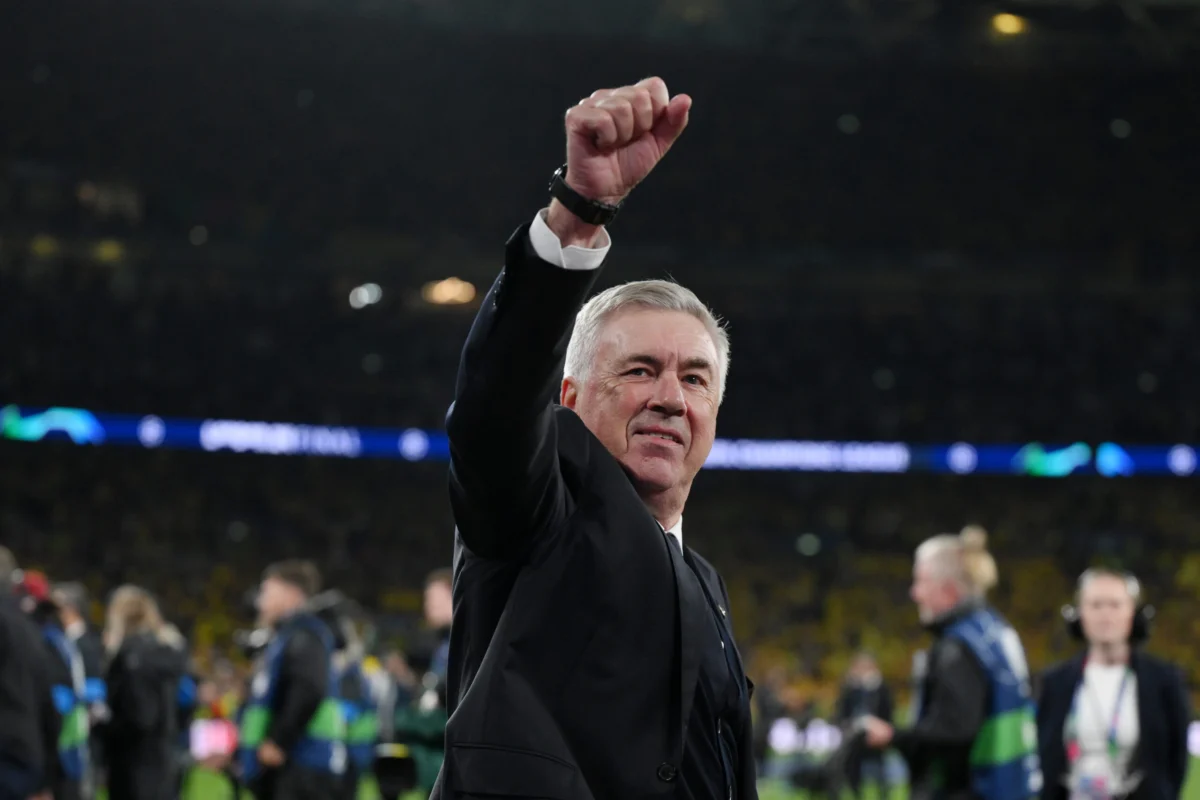
In a cinematic marriage of two of Italy’s most profound cultural exports, Oscar-winning director Paolo Sorrentino has officially confirmed he is helming a feature-length documentary charting the extraordinary life and career of legendary football manager Carlo Ancelotti. The project, which has been the subject of fevered speculation within the Italian sports media for weeks, promises an intimate, behind-the-scenes portrait of a man widely considered the most successful coach in the history of the sport.
The documentary is set to culminate in the summer of 2026, capturing Ancelotti’s tenure as the manager of the Brazilian national team during the upcoming World Cup. For Sorrentino, a filmmaker renowned for his visual grandeur and preoccupation with the intersection of the sacred and the profane, this project marks a historic departure: it is the first documentary feature in his illustrious 30-year career.
A Convergence of Visionaries
Paolo Sorrentino is no stranger to the gravitational pull of football. In his 2021 semi-autobiographical masterpiece The Hand of God, Sorrentino utilized the sport—and specifically the arrival of Diego Maradona in Naples—as a poignant backdrop to explore his own formative years, family tragedy, and the pursuit of artistic identity. By turning his lens toward Ancelotti, Sorrentino is moving from the metaphorical to the biographical, aiming to decode the quiet, often enigmatic genius of a man who has mastered the highest echelons of global football.
The documentary aims to weave a tapestry of archival footage, tracing Ancelotti’s humble beginnings, with immersive, contemporary cinematography shot across Italy, Spain, Brazil, and the United States. The production represents a high-profile collaboration, backed by an assembly of powerhouse producers, including Francesco Melzi d’Eril—known for his work on Luca Guadagnino’s Call Me by Your Name and Bones and All—for MDE Films, in association with Fremantle and The Apartment.
The Odyssey: A Chronology of Greatness
To understand the weight of this documentary, one must look at the trajectory of Carlo Ancelotti, a man whose life is a testament to longevity and tactical evolution. Born into a farming family in Reggio Emilia, Ancelotti’s path to the pinnacle of global management was paved with the grit and discipline of his roots.
The Player (1976–1992)
Ancelotti’s professional journey began as a midfielder for his local club, Parma. His intelligence and tactical discipline on the pitch quickly caught the eye of Italy’s elite. He transitioned to AS Roma, where he flourished, before joining the powerhouse AC Milan of the late 1980s. Under the tutelage of visionary coach Arrigo Sacchi, Ancelotti became the heartbeat of a team that redefined modern football, winning back-to-back European Cups in 1989 and 1990.
The Managerial Ascent (1992–Present)
Ancelotti’s transition to the dugout was as natural as his playmaking. Since the early 1990s, he has occupied the hot seats of 11 of the world’s most demanding clubs. His CV reads like a map of European footballing aristocracy: Juventus, AC Milan, Chelsea, Paris Saint-Germain, Bayern Munich, and Real Madrid.
His record is nothing short of staggering:
- Champions League Dominance: Ancelotti holds the record for the most UEFA Champions League titles as a manager, with five trophies to his name.
- The Five-League Sweep: He is the only manager in history to have won the domestic league title in each of Europe’s "Big Five" leagues (Italy, England, France, Germany, and Spain).
- Total Trophies: With 26 major honors, he has cemented his status as a titan of the game.
The Brazil Chapter: A Final Frontier
The documentary’s climax—the 2026 World Cup—is not merely a narrative device; it represents the ultimate challenge for the Italian tactician. Taking the helm of the Brazilian national team, the "Seleção," is widely regarded as the most pressurized job in international football. Brazil, a nation that views football as a religion, demands nothing less than the trophy.
By centering the film on this specific period, Sorrentino is positioning the documentary as a high-stakes drama. The film will observe the contrast between Ancelotti’s reserved, understated temperament and the fervent, volatile expectations of the Brazilian public. It is here that the documentary promises to be most "Sorrentinian"—exploring the tension between the individual’s internal peace and the external chaos of global expectation.
Official Responses and Creative Intent
The respect between the subject and the director is palpable. Commenting on the announcement, Carlo Ancelotti expressed his humility regarding the project. "It’s an honor to tell my story alongside the great Paolo Sorrentino," Ancelotti said. "I’ve always admired his masterpieces and his commitment to artful storytelling. To have my life’s work framed through his lens is a privilege."
For the production team, the challenge lies in balancing the public spectacle of football with the private interiority of a coach who rarely reveals his hand. Francesco Melzi d’Eril and his partners—Chloe McClay, Celia Babini, and Buck Andrews of Tart Productions, along with Gabriele Moratti of MeMo Films—have secured a unique access point. With FilmNation handling sales, the project is already generating significant buzz in international film markets.
Implications for Documentary Cinema
The announcement of this film signals a growing trend of "prestige sports documentaries" that eschew the standard "talking head" format in favor of auteur-driven storytelling. Paolo Sorrentino is not interested in a mere highlight reel. Given his history—from the baroque aesthetics of The Great Beauty to the existential questioning found in his latest work, La Grazia—audiences can expect a film that treats football as a lens for broader philosophical inquiry.
Why This Matters:
- Cultural Validation: The involvement of a director of Sorrentino’s stature elevates the sports documentary genre, moving it closer to the realm of serious arthouse cinema.
- The Humanization of the Elite: By focusing on the quiet, often invisible work of management, the film offers a counter-narrative to the celebrity-obsessed culture of modern football.
- The 2026 Nexus: By documenting the World Cup in real-time, the film serves as a historical document that captures the immediate pulse of the sport, rather than a reflective, post-factum analysis.
Conclusion: A Portrait of the "Quiet Man"
As the film moves into its production phase, the global football community finds itself waiting for something more than just a biography. They are waiting for a revelation. Carlo Ancelotti has spent decades keeping his cards close to his chest, his "eyebrow-raised" stoicism becoming his trademark in a sport defined by ego and outburst.
Paolo Sorrentino, the master of uncovering the hidden depths beneath the surface of the Italian psyche, is perhaps the only director equipped to peel back those layers. Whether the film ultimately serves as a celebration of Ancelotti’s tactical brilliance or a meditation on the loneliness of the man at the top, it is poised to be one of the most significant cultural projects of the next two years.
As the cameras begin to roll from Milan to Madrid and eventually to the stadiums of the 2026 World Cup, one thing is certain: the world will be watching a master of cinema observe a master of the pitch. The result, much like the beautiful game itself, promises to be an unpredictable, emotional, and deeply human experience.


 Siti Muinah
 Nana Wu