

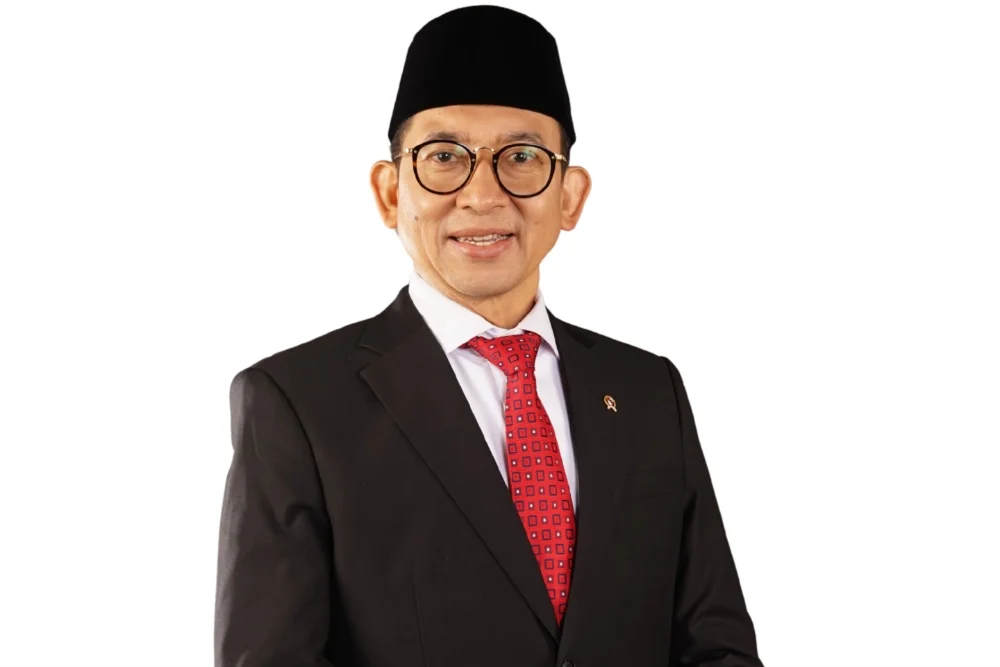
Indonesia is setting its sights on the global stage, with a bold, multi-year strategy to pivot from a regional film powerhouse to a central pillar of the international creative industry. Speaking from the prestigious backdrop of the Cannes Film Festival, Indonesia’s Minister of Culture, Fadli Zon, officially announced that the nation is targeting "Country of Honor" status at Cannes by 2028. This move represents far more than a symbolic milestone; it is the cornerstone of a comprehensive, state-backed effort to elevate Indonesian cinema, export its unique cultural identity, and integrate its filmmakers into the highest echelons of global production.
The Strategic Vision: From Margins to Mainstream
For years, Indonesia has enjoyed a vibrant domestic box office, fueled by a young, tech-savvy population and a surge in high-quality local productions. However, that domestic success has yet to translate into a consistent, permanent foothold in the international market. Minister Fadli Zon views the 2028 Cannes ambition as the catalyst needed to bridge this gap.
"That is not only about prestige, but about creating a larger international platform for Indonesian cinema, culture, and creative talent," Zon explained to Variety. The ministry’s strategy focuses on a three-pronged approach: expanding global distribution capacity, securing broader festival access for regional filmmakers, and establishing a robust, competitive incentive structure to attract international investment and co-production partners.
Chronology of a Growing Presence
Indonesia’s ascent on the international circuit is not a sudden pivot but the result of sustained diplomatic and institutional effort:
- The Foundation: The momentum is rooted in the "Borobudur Declaration," a landmark bilateral cultural agreement between Indonesia and France. This pact has facilitated deeper cooperation in film education, talent exchange, and co-production protocols.
- The Presidential Mandate: Building on the foundation of the Borobudur Declaration, President Prabowo Subianto and President Emmanuel Macron reaffirmed their commitment to cultural collaboration last year. This high-level political support has provided the ministry with the mandate to aggressively pursue European partnerships.
- Current Infrastructure (2026): The launch of Next Step Studio Indonesia serves as a focal point for current efforts. Backed by the Ministry of Culture, the Jakarta Provincial Government, the Embassy of France in Indonesia, and the Institut Français Indonesia, the program acts as a talent incubator for young filmmakers.
- The Horizon (2028): The "Country of Honor" target at Cannes serves as the primary benchmark for the current five-year plan, by which time the ministry hopes to have normalized consistent Indonesian presence in major European film markets.
Strengthening the Ecosystem: Incentives and Financial Models
In an increasingly competitive global landscape where nations like South Korea and Thailand have utilized aggressive tax rebates to dominate production flows, Indonesia is acutely aware of its current position. Minister Zon acknowledged that the architecture for tax incentives and production rebates is still under development.
"Yes, we recognize that incentives and rebates are increasingly important in the global film industry, particularly as countries compete to attract international productions, investment, and creative partnerships," Zon noted. He emphasized that the government is currently studying international models to ensure any future schemes provide measurable impact—specifically for local talent development and long-term economic value.
In the interim, the government has deployed a dual-track strategy to bridge the funding gap. First, the introduction of matching fund schemes and collaborative financing models provides a safety net for filmmakers seeking international co-production. Second, the Dana IndonesiaRaya (the nation’s cultural endowment fund) has become a vital resource, supporting international mobility, festival participation, and production assistance for independent creators.
Empowering Regional Talent: The MTN Initiative
One of the most significant aspects of the ministry’s policy is the National Talent Management Program for Film (MTN). Historically, Indonesia’s screen industry has been heavily concentrated in Jakarta. The MTN is explicitly designed to dismantle this centralization, creating structured career pathways for filmmakers in regional areas across the archipelago.
Minister Zon views this not merely as a social responsibility, but as a competitive advantage. With 1,340 ethnic groups, over 17,000 islands, and 718 local languages, Indonesia possesses an unparalleled wealth of storytelling potential. Zon argues that this cultural specificity—far from being a barrier to global appeal—is the key to universal resonance.
"The more authentic a story is, the more universal its emotional resonance can become," he stated. By mining the specific cultural nuances of the provinces, Indonesian cinema can offer a unique voice that distinguishes itself in a global market often saturated with formulaic content.
Navigating Modern Challenges: Streaming, AI, and Innovation
As the industry shifts toward digital-first consumption, Minister Zon rejects the notion that streaming platforms threaten theatrical culture. Instead, he characterizes the relationship as complementary. While streaming has democratized access to Indonesian stories and connected local content with global youth audiences, cinema halls remain vital as communal spaces. The ministry’s objective is to maintain a balanced ecosystem where theatrical and digital formats grow in parallel.
The rise of microdramas and the creator economy is also on the ministry’s radar. Zon views these formats as essential "entry points" for emerging talent, providing low-barrier avenues for experimentation.
On the contentious issue of Artificial Intelligence, the ministry is taking a cautious, human-centric approach. "AI is both an opportunity and a challenge, and our responsibility is to ensure that technology strengthens—rather than weakens—the creative ecosystem," Zon said. While the ministry welcomes AI-driven efficiencies in post-production and logistics, it is actively developing policy frameworks to protect intellectual property and ensure that human creative labor remains the core of the cinematic product.
Looking Toward 2030: Implications for the Global Market
The implications of Indonesia’s policy shift are significant for the international film community. By aligning with partners like La Fémis and the CNC (France) and the Netherlands, Indonesia is systematically integrating its industry into the European production network.
This year’s Cannes presence—marked by engagement in Cannes Docs, the Producer’s Network, and the SamaSama Lab—demonstrates a maturing industry that is ready to play by international standards. The "Indonesian Cinema Night" served as the tactical application of this strategy, providing a direct pipeline between Indonesian producers and global festival programmers and investors.
Minister Zon’s vision for 2028 is clear: success will be measured by the consistency of Indonesian films in the global festival circuit, the strength of the nation as a premier production hub, and the ability of its creators to balance commercial viability with cultural integrity.
"If we can build that ecosystem consistently," Zon concluded, "Indonesia will not simply participate in the global screen industry; it will become an important and influential contributor to it."
As the ministry continues to bridge the gap between its massive domestic potential and the international market, the world is likely to see a new, more diverse, and highly ambitious Indonesian cinema emerging in the years to come—a force that draws its strength from its 17,000 islands and projects it onto the global stage.











No comments yet. Be the first to join the conversation!