

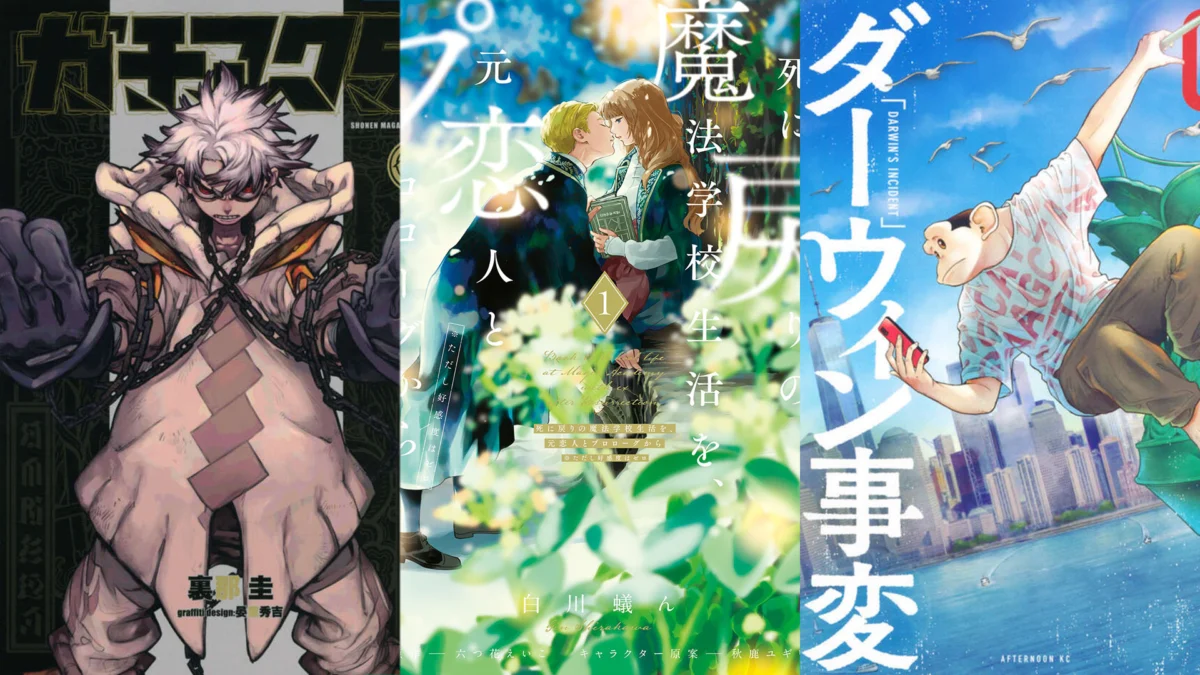
In a landmark event for the global publishing industry, Japanese manga giant Kodansha officially announced the recipients of its 50th annual Manga Awards this Monday. The ceremony marks a significant historical milestone, commemorating half a century of recognizing the artistic ingenuity, narrative depth, and cultural impact of the medium’s most influential creators.
Since its inception, the Kodansha Manga Award has served as a barometer for the industry, identifying titles that not only resonate with domestic readers but often set the trends for international manga consumption. This year’s winners represent a diverse cross-section of storytelling, ranging from high-octane shounen action to poignant, character-driven shoujo narratives and intellectually rigorous general interest works.
The 2026 Winners: Excellence Across Categories
The awards, which recognize excellence in three distinct categories—Shounen, Shoujo, and General—highlighted a stellar lineup of talent this year. The selection committee, comprised of industry professionals, critics, and editors, faced the daunting task of narrowing down a field of nominees that reflected the current peak of the manga craft.
Best Shounen Manga: Gachiakuta
Securing the top honor in the Shounen category is Gachiakuta, written and illustrated by Kei Urana, with creative support from Hideyoshi Ando. A visceral, high-stakes series, Gachiakuta has been praised for its unique visual language and its themes of societal alienation. It stood out among a competitive field of nominees, including Utsura nain desu, The Fragrant Flower Blooms With Dignity, and Ichi the Witch.

Best Shoujo Manga: Re-Living My Life with a Boyfriend Who Doesn’t Remember Me
The Shoujo category, historically the home of the most emotionally complex narratives in manga, saw a win for Re-Living My Life with a Boyfriend Who Doesn’t Remember Me. The collaborative effort of Eiko Mutsuhana, Yugiri Aika, and Gin Shirakawa has captivated readers with its exploration of memory, loss, and the persistence of love. It triumphed over notable nominees such as In the Clear Moonlit Dusk, A Star Brighter Than the Sun, and Gazing at the Star Next Door.
Best General Manga: The Darwin Incident
The General category, which often rewards works that defy standard genre tropes, went to The Darwin Incident by Shun Umezawa. A provocative and thought-provoking narrative, the series has garnered critical acclaim for its philosophical undertones and its ability to weave complex social commentary into an engaging plot. It outpaced a strong roster of contenders, including Spacewalking With You, Nezumi’s First Love, Heisei Haizan-hei Sumire-chan, and Mii-chan and Yamada-san.
A Historical Retrospective: 50 Years of the Kodansha Manga Awards
To understand the weight of these awards, one must look back at the origins of the institution. While the current iteration of the awards has been held annually since 1977, the tradition traces its roots back to 1960.
In the early 1960s, Kodansha recognized that manga was evolving from a disposable form of entertainment into a significant literary force. By establishing a formalized awards process, the publisher aimed to elevate the status of manga artists—or mangaka—and incentivize the production of high-quality, long-form narratives.

Throughout the 1980s and 1990s, the awards became a "who’s who" of manga history. Titles that would eventually become global phenomena often saw their initial critical validation through the Kodansha Manga Awards. By maintaining rigorous judging standards, the publisher ensured that the awards remained untainted by purely commercial interests, focusing instead on narrative innovation and artistic contribution.
Supporting Data and The Mechanics of the Award
The prestige of the Kodansha Manga Awards is matched by the tangible support provided to the winners. As per the organization’s long-standing tradition, the recognition goes beyond mere accolades. Each winner receives:
- A Formal Certificate: A recognition of their contribution to the canon of Japanese literature.
- A Bronze Statuette: A symbolic representation of their enduring impact on the medium.
- Monetary Prize: A significant financial reward to support future creative endeavors.
The Shounen and Shoujo category winners are awarded 2 million yen (approximately US$12,730) each. The General Manga category winner receives 1 million yen (approximately US$6,365). While these figures may seem modest in the context of the massive revenue generated by blockbuster franchises, they serve as a crucial "stamp of approval" from the industry’s most prestigious publisher, often leading to increased print runs, international licensing interest, and high-profile adaptations in anime or live-action formats.
Official Responses and Industry Sentiment
Kodansha’s official announcement emphasized the importance of storytelling in a changing world. In a statement released alongside the winners’ list, a spokesperson for the publisher noted, "The 50th anniversary of these awards is a testament to the resilience and creative evolution of manga. From the humble pages of the 1960s to the digital platforms of 2026, our mission remains to elevate the voices of those who can capture the human experience through ink and paper."

Industry analysts have praised this year’s selection, noting that the inclusion of diverse, genre-bending works like The Darwin Incident shows that the committee is not afraid to reward avant-garde storytelling. Critics suggest that these winners reflect a growing maturity in the audience, who are now seeking more nuanced, complex, and socially aware content than in previous decades.
Implications: The Future of the Manga Landscape
The announcement of the 50th-anniversary winners is expected to have a ripple effect throughout the manga ecosystem.
1. Market Influence and Consumer Behavior
For consumers, these awards serve as a definitive "curated list." Many readers, overwhelmed by the sheer volume of new manga releases every month, use the Kodansha Manga Awards as a filter for quality. Booksellers across Japan and the West often see a sharp increase in sales for winning titles, as the "Award-Winning" sticker becomes a powerful marketing tool.
2. The Global Shift
As manga consumption continues to skyrocket in North America and Europe, the Kodansha Manga Awards have gained international relevance. Publishers outside Japan are now closely watching these announcements to determine which titles have the "prestige factor" required to succeed in translation. With Gachiakuta already making waves internationally, this award is likely to accelerate its path to becoming a global franchise.

3. Creative Trends
The focus on themes of memory, societal judgment, and systemic oppression among this year’s winners suggests a shift in the creative zeitgeist. Mangaka are increasingly utilizing their platforms to address the complexities of the modern era. We can expect future nominees to mirror this trend, as the success of these winners sets a new benchmark for what is considered "award-worthy" storytelling.
Conclusion: A Legacy of Ink and Imagination
As the dust settles on the 50th-anniversary celebrations, the legacy of the Kodansha Manga Awards remains clear. They are not merely an exercise in corporate marketing; they are a vital institution that validates the hard work of thousands of artists and writers. By honoring creators like Kei Urana, Eiko Mutsuhana, and Shun Umezawa, Kodansha continues to reinforce the idea that manga is a sophisticated art form capable of profound empathy and intellectual depth.
For the casual reader, these titles offer a perfect entry point into the best the medium has to offer. Whether one prefers the high-energy thrills of a shounen epic or the contemplative nature of a general-interest drama, the 2026 winners provide a roadmap for the future of the industry. As we look toward the next 50 years, one thing is certain: as long as there are stories to be told, the Kodansha Manga Awards will be there to champion the ones that define our time.












No comments yet. Be the first to join the conversation!