Raul Delapena Setiawan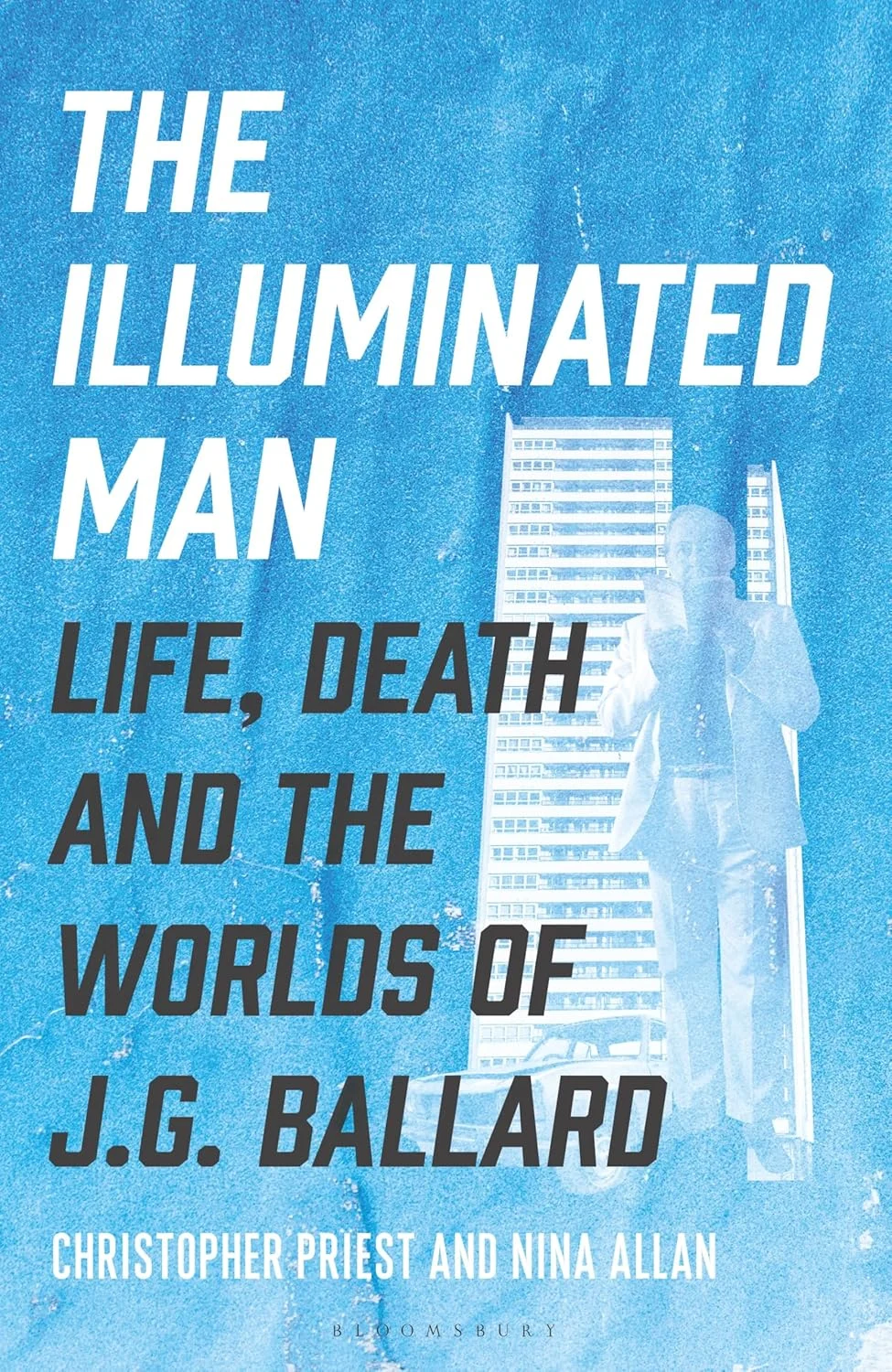
In the literary landscape, few books arrive with as much structural complexity and emotional baggage as The Illuminated Man: Life, Death and the Worlds of J. G. Ballard. Published posthumously, the work represents an unprecedented hybrid: a biographical study of a literary giant, J. G. Ballard, written by the late British science fiction luminary Christopher Priest, and completed by his partner, author Nina Allan.
To the casual observer, it is a singular volume. To the reader, it is a tripartite structure—"three books in an overcoat," as it has been described—that functions simultaneously as a critical biography, a meta-textual exploration of the form, and an intimate, heartbreaking memoir of a dying writer.
Main Facts: A Study in Duality
The Illuminated Man was conceived in January 2023 by Christopher Priest, best known for his novels The Prestige and The Inverted World. Priest, a titan of the British New Wave, sought to provide a definitive, non-psychological assessment of J. G. Ballard’s oeuvre. However, six months into the project, Priest received a terminal cancer diagnosis.
Faced with the inevitable, Priest and Allan made the decision to finish the manuscript together. The resulting book is a structural paradox. It retains the blunt, often prickly prose of Priest’s initial chapters while seamlessly transitioning into the fluid, empathetic, and deeply investigative voice of Allan. The book is not merely a biography of Ballard; it is a document of the shifting boundaries between the biographer and the subject, and between the writer and their own mortality.
Chronology: The Evolution of a Manuscript
The genesis of the book lies in an unpublished chronology compiled by editor David Pringle, which Priest rediscovered while discussing a separate essay project with Allan.
- January 2023: Priest begins work on the biography, aiming to strip away the "psychological analysis" he felt plagued previous studies of Ballard.
- Mid-2023: Diagnosis of terminal cancer. The project pivots from a solo endeavor to a collaborative effort.
- 2024: Priest passes away. Nina Allan assumes control of the manuscript, integrating her own research and reflections into the existing framework.
- Post-2024: The book is released, presenting a "beast with two heads"—a mixture of Priest’s clinical, often repetitive biographical notes and Allan’s expansive, human-centric chapters.
The reading experience is intentionally jarring. As readers move through the chapters, they are often signaled by typography or stylistic shifts that the authorial voice has transitioned. While the book claims to be a cohesive whole, it is arguably a "hydra-headed" work, where the reader can clearly discern the panic-buying of a dying man—evidenced by Priest’s late-stage reliance on Wikipedia summaries—against the meticulous, poignant synthesis provided by Allan.
Supporting Data: The Conflict of Method
A central point of contention within the text is the utility of biography itself. Priest’s approach, as outlined in his introduction, was to "examine and evaluate the literary work" while ignoring the "psychological analysis" he deemed intrusive. Yet, this creates a glaring inconsistency in the text.
Priest frequently relies on anecdotes from Ballard’s own autobiography, Miracles of Life, often smoothing them out into bland, objective-sounding facts. For example, the treatment of Ballard’s "hapless" White Russian governess is a point of recurring tension. Where Ballard described her with nuance and a degree of cynical detachment, Priest renders her as a mere narrative prop.
In contrast, Allan’s contributions act as a corrective. She interviews those who knew Ballard, digs deeper into the domestic sphere, and challenges the very notion that a biography can—or should—be free of the human element. The "supporting data" of the book is thus not just the facts of Ballard’s life, but the contrast between two writers: one who wanted to keep the subject at a distance, and one who understood that true insight requires an empathetic closeness.
Official Responses and Internal Reflections
The book’s meta-commentary is perhaps its most compelling feature. Allan’s inclusion of her own internal monologue—her struggles to respect Priest’s original, unpolished drafts while acknowledging their limitations—provides a rare window into the ethics of posthumous editing.
Allan notes: "Chris was a writer. He told his own stories. The fact that he can no longer speak for himself is one I must respect, accept, protect, keep in mind always."
This deference creates a palpable tension. The reader sees the "second-rate conjuror" that Ballard warned against—the cobbling together of unfinished drafts—yet this failure is transformed into a source of profundity. When Allan details the moment she discovered Priest had resorted to pasting Wikipedia entries into a chapter he titled "Chapter Z," the reader is not offered a critique of his decline, but a heartbreaking portrait of a man attempting to "shore up a dam that was about to break."
Implications: The Legacy of a Shared Endeavor
The implications of The Illuminated Man for the genre of biography are significant. It challenges the "Great Man" theory of literary history by insisting that the biographer’s own life—and the life they share with their subject—is inseparable from the final product.
1. The Death of the Objective Biographer
Priest’s failure to maintain a purely objective distance actually serves as the book’s greatest strength. By showing the impossibility of the task, the book succeeds as an exploration of human fragility. It implies that we cannot know another person, not even an icon like Ballard, without filtering them through the lens of our own biases, fears, and life circumstances.
2. Biography as Memoir
The most striking section of the book occurs toward the end, where the focus shifts entirely from Ballard to the final days of the Priest-Allan marriage. This is not a distraction; it is the culmination of the book’s thematic arc. The biography of J. G. Ballard becomes the scaffolding upon which Allan builds a memoir of grief, love, and the act of writing as a survival mechanism.
3. The Ethical Burden of Editing
The decision to leave Priest’s chapters "intact" creates a work that is, in traditional terms, flawed. However, the implication here is that aesthetic perfection is secondary to historical and emotional honesty. The book demands that the reader accept the inconsistencies as part of the "beast," honoring the collaborative reality of its creation over the sterile demands of a polished manuscript.
Conclusion: A Privilege to Read
The Illuminated Man is an inherently messy, occasionally frustrating, and profoundly moving document. It is a work that cannot be separated from the context of its creation. For the reader, it serves as a reminder that the act of writing—whether it is a biography, a novel, or a critique—is fundamentally an act of reaching out.
While literary criticism might take issue with the book’s structural unevenness, the "impregnable statement" of the authors’ shared journey renders such critiques secondary. This is not just a study of J. G. Ballard; it is an interlocking trilogy of lives. It stands as a testament to the fact that, in the face of death, the most important thing is not the completeness of the work, but the truth of the connection that fueled it. To read The Illuminated Man is not merely to learn about Ballard; it is to witness two writers trying, against all odds, to make sense of the world as their time within it runs out.

 Sagoh
Sagoh