Raul Delapena Setiawan
The landscape of global equity markets is bracing for what could be the most significant initial public offering (IPO) in modern history. According to recent reports, SpaceX—the aerospace juggernaut led by Elon Musk—has dramatically accelerated its timeline to enter the public markets. Sources indicate that the company is aiming for a Nasdaq listing as early as June 12, with a formal announcement expected as soon as next Wednesday.
This move marks a definitive transition for the Hawthorne-based firm, shifting from a privately held disruptor to a publicly traded titan. With a target valuation of $1.75 trillion, SpaceX is not merely entering the stock exchange; it is attempting to redefine the scale and scope of what a commercial enterprise can achieve in both low-Earth orbit and beyond.
The Chronology of an Accelerated Launch
The path to this IPO has been a masterclass in rapid-fire corporate maneuvering. While rumors of a public offering have circulated for years, the concrete steps toward the ticker symbol "SPCX" began in earnest earlier this year.
- Early 2026: SpaceX officially filed its preliminary IPO paperwork. At the time, market analysts projected a late-June or early-July launch, expecting a deliberate process to satisfy regulatory scrutiny.
- May 15, 2026: Reports from Reuters confirmed that the company had moved its target date forward, signaling a high level of confidence in market conditions and internal readiness.
- June 4, 2026 (Projected): The commencement of the IPO roadshow. During this period, company executives and financial underwriters will meet with institutional investors to gauge interest and finalize the pricing strategy.
- June 11, 2026 (Projected): The anticipated date for the pricing of shares, setting the stage for the official trading debut on the Nasdaq exchange the following day.
This condensed timeline reflects a company that is confident in its narrative and eager to capitalize on the current investor appetite for high-growth, technology-driven assets.
Supporting Data: The Anatomy of a $1.75 Trillion Valuation
To justify a valuation of $1.75 trillion, SpaceX has presented a financial and operational roadmap that dwarfs its competitors. The company is reportedly seeking to raise up to $75 billion in the offering—a figure that would shatter existing records for capital raised in a single IPO.
Institutional giants are already positioning themselves for a piece of the pie. The Information has reported that BlackRock, the world’s largest asset manager, is weighing a multibillion-dollar investment of between $5 billion and $10 billion. Such a commitment from a firm of BlackRock’s caliber serves as a powerful validation of the company’s business model, suggesting that the "SpaceX premium" is viewed as a foundational pillar for future portfolios.
Revenue Streams and Operational Scope
The valuation is buoyed by three primary pillars of growth:
- Starlink: The satellite internet constellation has transitioned from a proof-of-concept to a global necessity, providing connectivity to remote regions and critical infrastructure.
- Launch Services: SpaceX remains the undisputed leader in launch cadence, holding a near-monopoly on cost-effective, reusable heavy-lift capabilities.
- The xAI Integration: In a move that surprised many analysts, SpaceX acquired Elon Musk’s artificial intelligence firm, xAI, earlier this year. This acquisition is central to the company’s pitch, as it suggests the creation of an "orbital data center" where AI processing power is integrated directly into satellite infrastructure.
The Strategic Pivot: From Mars to the Moon and Beyond
The company’s prospectus for potential investors is not just about logistics; it is about grand, Musk-ian visions. The mission statement has evolved significantly over the last six months, signaling a pivot that could have profound geopolitical and economic implications.
In January, the company unveiled plans for a "constellation of a million satellites." This isn’t just about high-speed internet; it is an infrastructure play designed to facilitate the computational demands of global artificial intelligence. By placing massive data centers in space, SpaceX aims to solve the latency and energy-consumption issues that currently bottleneck terrestrial AI development.
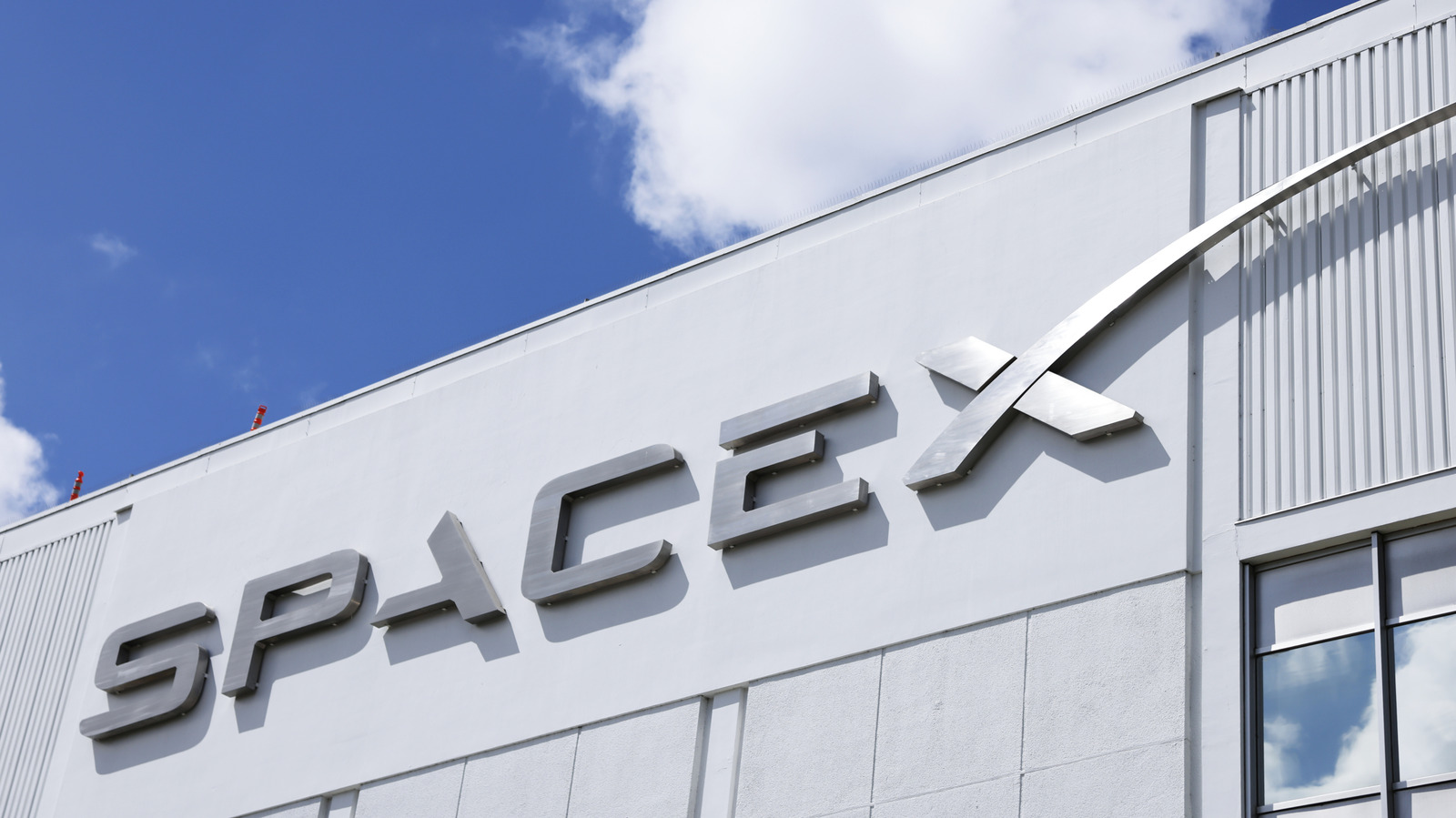
Furthermore, in a notable recalibration of long-term goals, Musk announced a pivot from the immediate colonization of Mars to the establishment of a sustainable lunar city. This strategic shift is designed to create a "stepping stone" economy. By focusing on the Moon, SpaceX positions itself as the primary logistics provider for lunar mining, research, and long-term habitation, creating a revenue stream that is both nearer to home and more politically palatable to international partners.
Official Responses and Regulatory Outlook
As of this writing, SpaceX has maintained a disciplined silence regarding the specific dates reported, consistent with the quiet period restrictions typically observed by companies approaching an IPO. However, the regulatory path is being cleared with intensity.
The Securities and Exchange Commission (SEC) has been working closely with the company to ensure that the unique risks—including the inherent danger of space flight and the volatility associated with Musk’s leadership style—are clearly communicated to prospective retail and institutional investors. The inclusion of xAI into the corporate structure has added a layer of complexity to the filings, as regulators must now assess the risk profile of an entity that merges aerospace hardware with advanced, autonomous software.
Implications for the Global Economy
The transition of SpaceX into a public entity will have a "ripple effect" across several sectors.
1. The Space Economy
SpaceX’s entry onto the Nasdaq will provide a liquid benchmark for the entire aerospace industry. Competitors such as Rocket Lab and various satellite providers will find their valuations compared against the behemoth that is SpaceX. It will likely trigger a new wave of venture capital investment in the "New Space" sector, as private equity firms look to emulate the SpaceX model of reusability and vertical integration.
2. The AI-Aerospace Convergence
By folding xAI into its operations, SpaceX is creating a new category of technology company. If successful, this integration will set a precedent for how data and infrastructure converge. Investors are effectively buying into a firm that controls both the "pipes" (satellites) and the "intelligence" (AI) that flows through them.
3. Corporate Governance and Musk’s Role
One of the primary points of contention for analysts will be the influence of Elon Musk. As a CEO who manages multiple high-profile entities, his time and focus remain a critical variable. Investors will be scrutinizing the company’s governance structure to ensure that the interests of public shareholders are protected even as the company pursues the audacious, long-term goals that define Musk’s leadership.
Conclusion
The impending SpaceX IPO is more than a financial transaction; it is a declaration that the future of the global economy is increasingly tied to the stars. Whether the market will support a $1.75 trillion valuation remains to be seen, but the sheer ambition of the company’s trajectory suggests that June 2026 will be remembered as the moment the space industry finally arrived in the public consciousness.
As the roadshow begins and the ticker symbol "SPCX" nears its debut, the world will be watching to see if SpaceX can turn its galactic ambitions into a tangible, high-performing asset for the modern investor. The countdown to June 12 has begun, and the stakes for the aerospace industry have never been higher.


 Laily UPN
 Azzam Bilal Chamdy