Siti Muinah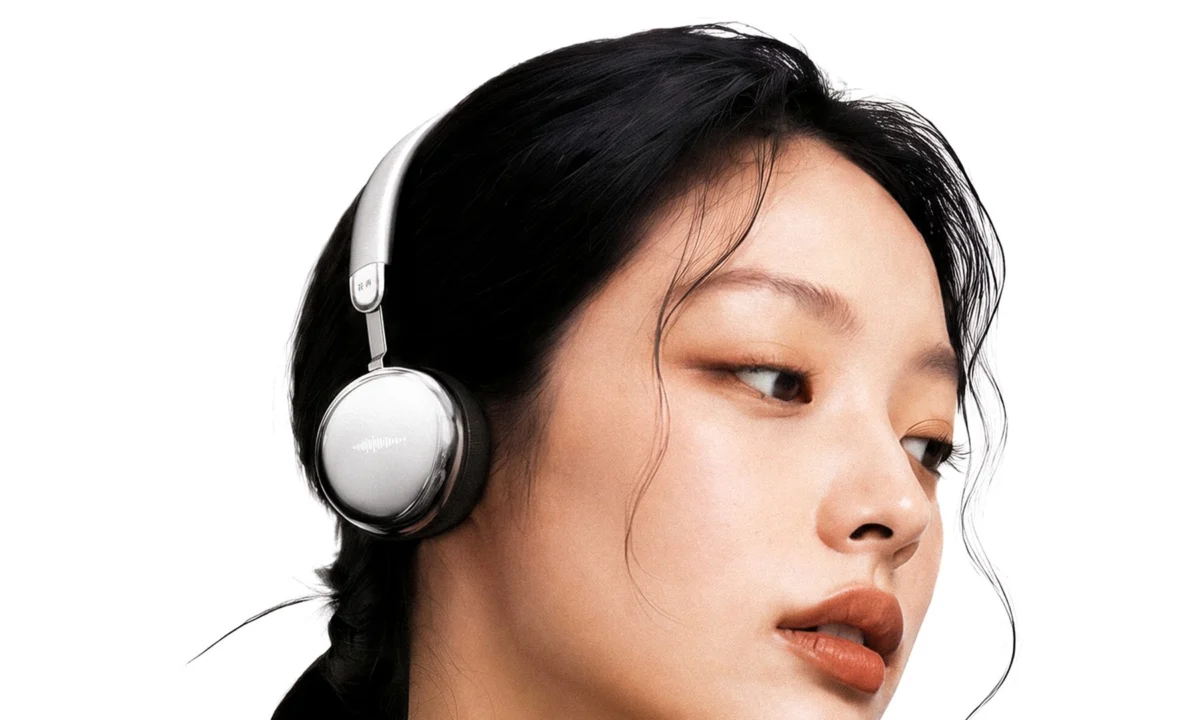
The consumer audio landscape has, for the better part of a decade, fallen into a state of aesthetic and functional stagnation. Walk into any big-box electronics retailer, and you are met with a sea of matte-black plastic, faux-leather ear cushions, and marketing copy that promises "deep bass" and "industry-leading noise cancellation" with such ubiquity that the phrases have lost all meaning. It is a market driven by iterative safety.
Enter the Edifier Auro Ace—a pair of headphones that seems to have looked at the current industry trend of "boring reliability" and decided to do the exact opposite. By integrating a customizable dot-matrix display directly into the exterior of the earcups, Edifier is attempting to pivot the budget headphone category from a utility-first market into a fashion-forward, expressive one. While the concept is undeniably "weird," it represents a daring attempt to inject personality into a commodity space.
The Core Specs: Surprising Competence Under the Hood
While the flashing lights and scrolling text on the Auro Ace grab the headlines, the underlying hardware suggests that Edifier is not merely relying on a gimmick to sell units. Priced at approximately 279 yuan (roughly $40 USD), the Auro Ace enters a fiercely competitive budget tier. To succeed here, a device must be more than just a novelty; it must be a functional tool for daily consumption.

Technical Specifications at a Glance:
- Driver Technology: 32mm high-fidelity dynamic drivers.
- Connectivity: Bluetooth 6.0 integration, ensuring future-proof low-latency connections.
- Audio Versatility: Multi-point dual-device connectivity and dedicated USB audio support.
- Voice Clarity: AI-backed noise reduction algorithms for call processing.
- Power Management: Up to 62 hours of battery life (with display disabled); 15-minute quick-charge capability for 11 hours of playback.
The inclusion of Bluetooth 6.0 is particularly noteworthy. As the industry transitions toward more efficient, higher-bandwidth wireless protocols, Edifier is positioning the Auro Ace to remain relevant longer than its contemporaries still clinging to older standards. The 62-hour battery life—while certainly an optimistic figure that likely assumes moderate volume and no display usage—nonetheless places the Auro Ace in the upper echelon of battery endurance for its price bracket.
A Chronology of the "Display-Ear" Trend
The evolution toward visual-centric audio gear has been a slow burn. The history of "smart" peripherals can be traced back through several distinct phases:
- The RGB Era (2015–2020): Gaming headsets began the trend of integrating aesthetics into hardware. While mostly static LED rings or pulsating colors, this era proved that consumers were willing to pay a premium for "gamer aesthetics."
- The App-Connectivity Phase (2020–2024): Brands shifted focus to companion apps, allowing users to tweak EQs, noise-canceling profiles, and touch controls. The hardware remained static, but the software experience became the primary differentiator.
- The "Smart-Case" Integration (2025): We saw a shift with products like the JBL Live 4 series, which moved displays from the earcups to the charging cases. This provided utility (volume control, playback management) without compromising the look of the headphones themselves.
- The Auro Ace Pivot (2026): Edifier has taken the logical, if controversial, next step: moving the display onto the primary wearable surface. By allowing the headphones to act as a billboard for lyrics, text, or pixel art, the Auro Ace marks the transition of headphones from a listening device to a wearable medium of communication.
The Philosophy of the Display: Who is it For?
The most frequent criticism leveled at the Auro Ace is the existential question: Who is looking at these?

When a user is wearing headphones, the earcups are facing outward—visible to commuters, coworkers, and passersby, but entirely invisible to the wearer. The decision to display synced song lyrics on the exterior of the cup is, by definition, an extroverted design choice.
From a sociological perspective, this aligns with the "main character energy" trend prevalent in Gen Z and Alpha consumer culture. If the goal of modern fashion is to project one’s identity—what they are listening to, how they feel, or what their current "aesthetic" is—the Auro Ace serves as a digital badge. It is a way to broadcast musical taste without saying a word.
Edifier’s companion app supports multiple visual themes, ranging from retro pixel-art animations to scrolling text that can be customized to display the user’s name, a slogan, or a mood. By treating the headphones as a fashion accessory rather than a purely functional piece of acoustic engineering, Edifier is catering to a demographic that views tech as an extension of their wardrobe.

Implications for the Future of Budget Audio
The launch of the Auro Ace has significant implications for the budget audio sector.
1. The Death of the "Safe" Design
For years, manufacturers have feared that bold designs would alienate potential customers. Edifier’s willingness to experiment with the Auro Ace suggests that the "safe" design era may be coming to a close. If these headphones prove commercially successful, we should expect a wave of "smart-surface" audio gear that prioritizes personalization over the traditional, minimalist aesthetic.
2. The Blurred Line Between Audio and Wearables
We are approaching a point where the distinction between "audio hardware" and "smart jewelry" is becoming porous. As processors become smaller and screens more efficient, the surface area of our devices is becoming a canvas. The Auro Ace is likely the precursor to more advanced iterations, potentially including notification mirroring or social media integration on the earcups.

3. The Challenge to Legacy Brands
Legacy audio companies have long relied on brand heritage and "sound signature" as their primary value proposition. However, for a consumer spending $40, the difference in audio quality between two budget headsets is often negligible. When sound quality is effectively commoditized, Edifier’s gamble is that the consumer will choose the product that offers the most "fun" or the most "social utility."
Official Responses and Market Reception
While Edifier has not issued a formal press release regarding the "confusion" surrounding the lyric display, internal product marketing documents suggest the design was intentional. The goal, according to industry analysts familiar with Edifier’s roadmap, was to create a "socially visible" product that encourages organic discovery on social media platforms like TikTok or Instagram.
Initial feedback from the Chinese market, where the device has already launched, indicates a split in opinion. Critics have pointed to the potential for the display to be a distraction, or at worst, a privacy concern if users broadcast sensitive information on their earcups. However, the youth market has largely embraced the product for its "cyberpunk" aesthetic, noting that the ability to change the display to match an outfit provides a level of personalization that traditional, static-colored headphones simply cannot match.

Conclusion: A Necessary Disruption
Is the lyric-syncing feature of the Auro Ace a revolutionary audio innovation? Objectively, no. It adds weight, complexity, and potentially battery drain for a feature that the listener themselves cannot see.
However, to dismiss the Auro Ace as a mere gimmick is to miss the broader point. The budget headphone market has been drowning in a sea of monotony for years. By introducing a "weird," highly visible, and deeply customizable element, Edifier has forced a conversation about what we want our technology to do for us.
Do we want our headphones to be silent, invisible tools of our listening habits, or do we want them to be an active part of our visual presentation to the world? The Auro Ace doesn’t just answer that question—it poses it to every stranger on the street. In an era where everything is designed to look the same, there is a certain, undeniable value in being the company that dared to be different, even if that difference involves scrolling lyrics on the side of your head.


 Nana
Nana
 Basiran