

As we navigate the middle of the decade, the landscape of the internet has undergone a profound transformation. The web design trends of 2026 represent a sophisticated convergence of artificial intelligence, high-performance interactivity, and a return to user-centric simplicity. In this comprehensive review, we examine the current state of web aesthetics, the methodologies behind modern development, and the specific case studies that are defining the industry’s standard this year.
The Evolution of Web Architecture: A 2026 Perspective
In previous years, web design was often characterized by clutter and information density. However, the current trend emphasizes "intentional whitespace" and "narrative-driven flow." By observing the latest crop of websites, it is clear that developers are shifting away from feature-heavy landing pages toward streamlined, purpose-built interfaces.

The architecture of a successful 2026 website begins with a singular, clearly defined objective. Whether it is a luxury estate, a tech startup, or an artistic portfolio, the landing page acts as a digital elevator pitch. Content is now meticulously curated to ensure that every pixel serves a function, guiding the user through a logical journey without the friction of excessive navigation.
Chronology of Trends: From Static Pages to Immersive Experiences
The shift in design philosophy has been rapid and evolutionary.

- Early 2024: The industry saw the first major wave of AI-generated assets, leading to a period of "experimental chaos" where visuals were complex but user flows were often inconsistent.
- Late 2024 to 2025: A reactionary movement took hold. Designers began to favor "Brutalist" and "Minimalist" structures, stripping away unnecessary animations to focus on typography and grid systems.
- Early 2026: We have reached a state of maturity. Modern design now successfully blends the high-end, immersive storytelling capabilities of AI-assisted tools with the clean, accessible layout patterns established in the previous year.
Supporting Data: Why Structure Matters
Data consistently indicates that user retention is directly proportional to the clarity of a website’s layout. Recent analytics across diverse industries demonstrate that websites utilizing a "linear content flow"—where sections are stacked with purposeful spacing—experience a 30% increase in user engagement compared to traditional, multi-column layouts.
Furthermore, the integration of responsive templates has become the bedrock of efficiency. Designers are no longer building from scratch; they are utilizing sophisticated, high-performance frameworks that allow them to focus on unique branding rather than structural boilerplate. This transition has enabled even smaller creative studios to produce enterprise-level digital experiences.

The Design Philosophy: Less is More
The most effective websites of 2026 share a common trait: they respect the user’s time. By reducing the number of sections on a homepage and prioritizing clear, concise text, brands are seeing a higher conversion rate. When a user lands on a page, they should be able to identify the brand’s mission within seconds. If the structure is confusing, the user leaves. If the structure is elegant and intuitive, they stay to explore.
Curated Showcase: 25 Masterclasses in Web Design
Below is a selection of the most impactful website designs of 2026. Each represents a different facet of current trends, from corporate storytelling to high-impact artistic expression.

1. MR.MOLD: Narrative Interactivity
MR.MOLD exemplifies the use of AI as a storytelling partner. By turning a simple office-themed concept into a playful Christmas journey, the developers have created an emotional connection with the user, proving that even corporate websites can benefit from personality.
2. Utopia Tokyo: Atmospheric Digital Design
This site demonstrates how to use "hidden histories" to create a sense of intrigue. Through subtle motion and deep color palettes, it invites the user to scroll further, treating the webpage as a digital museum.

3. Springs: The Luxury Standard
Luxury real estate requires a sense of space and silence. Springs masters this by using wide margins and high-quality imagery to evoke a feeling of "wellness," showing that spacing is just as important as content.
4. Elecctro: The Technical Aesthetic
For a Vending Tech company, clarity is paramount. Elecctro provides a masterclass in how to explain complex hardware and software solutions through a clean, grid-based layout that prioritizes readability over flashy effects.

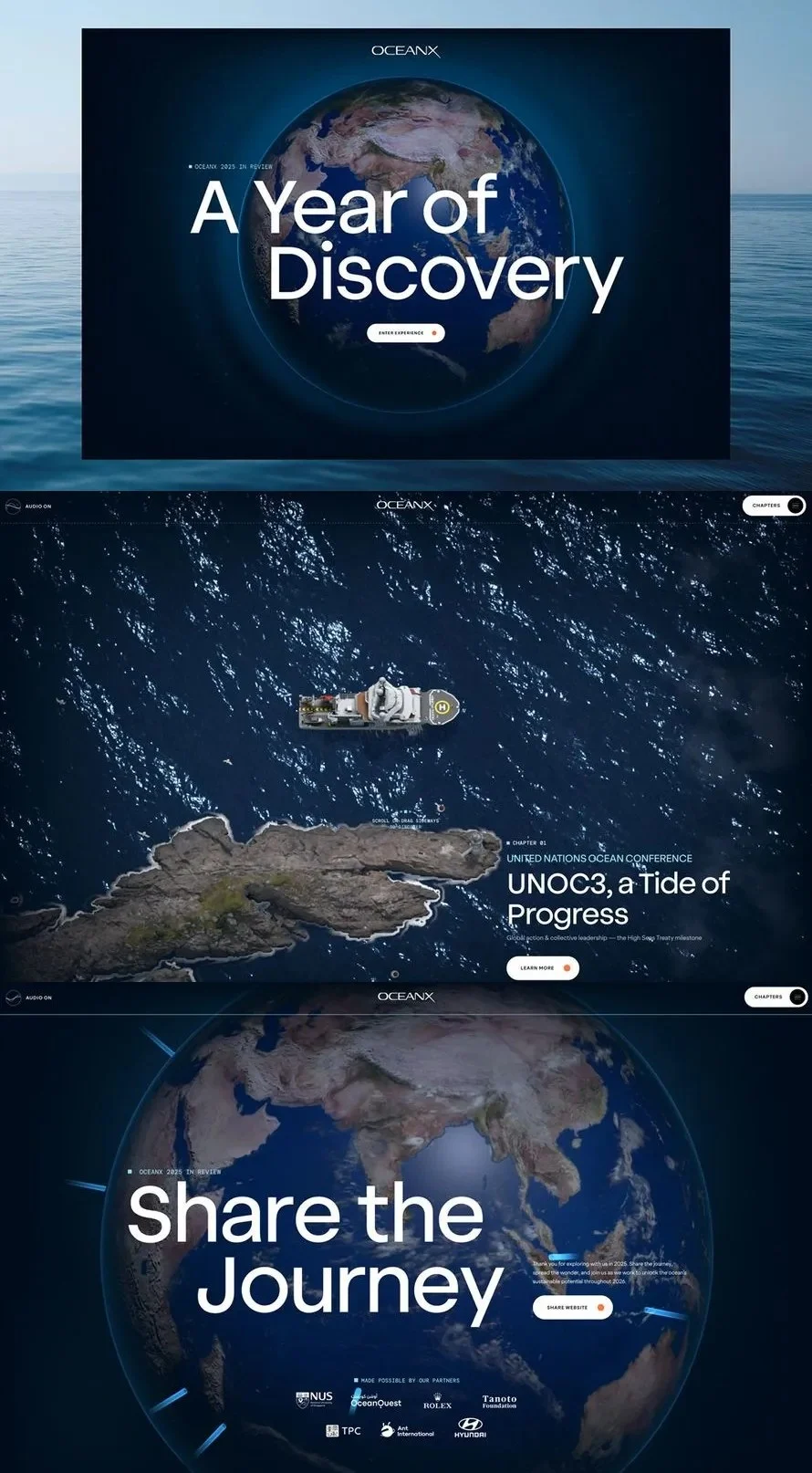
5. OceanX: Data-Driven Storytelling
The "2025 Year in Review" by OceanX is a triumph of information design. It organizes a massive amount of data into an digestible, interactive format that encourages exploration rather than passive consumption.
6. The Kraken Training: High-Impact Engagement
Unlike the more subtle designs, The Kraken Training utilizes bold, high-contrast visuals to drive immediate action. It is a perfect example of how to build excitement through a high-impact interactive layout.

7. PARADE Development: Regional Branding
PARADE captures the essence of premium real estate by using location-based imagery and a sophisticated, navigation-heavy structure that feels both professional and inviting.
8. Unseen Studio: A Creative Retrospective
A "wrapped" style site, Unseen Studio uses motion design to highlight the past year’s work. It demonstrates how designers can treat their portfolio as a living, breathing exhibition.

9. Melvin Winkeler: The Photographer’s Stage
Photography requires a neutral canvas. This site uses a bold identity to frame the work, ensuring the images remain the focal point without the interface becoming invisible or boring.
10. Max Mara: Gamified Branding
"Catch The Lantern" for the Lunar New Year is a prime example of gamification in branding. It invites the user to play, which significantly increases the time spent on the domain.

11. San Rita: The Off-Trail Approach
San Rita breaks the rules of traditional agency websites, using a design that feels "off-trail." This indicates that in 2026, breaking the grid can be a valid strategy if it aligns with the brand’s rebellious philosophy.
12. Scout Motors: Retooling a Legend
This site manages the difficult task of honoring an American legacy while signaling a new technological era. It uses a modern, capable design language that feels both rugged and refined.

13. Solais: Immersive AI Analytics
Solais turns the complex world of AI sentiment tracking into an immersive experience. It proves that even the most technical "SaaS" products can be presented beautifully.
14. Saze: Corporate Philosophy
By using symbolic visuals and motion, Saze communicates its corporate identity through emotion rather than just text.

15. Avantgarde Artist Agency: Curated Chaos
For an electronic music agency, the site needs to pulse with energy. Avantgarde manages to remain organized while feeling dynamic and modern.
16. PocketChange: Social Impact
The site is built on the premise of driving change. Its layout is focused on "the local," making the global mission feel personal and accessible.

17. Outsource Consultants: NYC Professionalism
In a city as busy as New York, this site provides a calm, professional interface that simplifies the complexity of building codes and zoning.
18. Lightship: Sustainable Innovation
Lightship’s design mimics its product: sleek, sustainable, and innovative. The use of whitespace here is masterful, echoing the feeling of an open road.

19. MoMoney: The Museum Experience
As an interactive museum, the site functions like a digital exhibit, balancing education with entertainment.
20. Pimpan: Brutalist Fashion
Pimpan embraces the "brutalist" trend, using raw textures and stark layouts to signal a high-fashion, high-end Parisian identity.

21. YURUMARU: The Art of Slow
In an age of speed, YURUMARU uses "softly unwinding" motions to encourage users to slow down and experience the site at a measured pace.
22. AVA SRG: The Educational Portal
This site solves the problem of "information overload" for students, creating a path that is both intuitive and helpful.

23. Jason Bergh: The Cinematic Portfolio
As an Emmy-winning producer, Bergh’s site is built like a film trailer—cinematic, high-definition, and story-focused.
24. Explore Primland: Immersive Travel
This site brings the mountains to the user, proving that immersive digital experiences are the future of the travel and hospitality industry.

25. The Way to Dream: Philosophical Design
This final example challenges the user. It is a critique of control, using its layout to force the user to think about their own interaction with the digital world.
Implications for the Future
The implication of these designs is clear: the "one-size-fits-all" era of web design is over. In 2026, the best websites are those that combine a deep understanding of human psychology with the efficiency of modern templates.

For designers and developers, the path forward is to continue testing. Use these examples as a library of possibilities. Modify the spacing, adjust the typography, and test the user’s reaction. By studying the structure of these successful sites, you can build your own digital presence that not only looks professional but truly connects with the audience on a fundamental level.
As we look toward the remainder of the year, the focus will likely continue to shift toward performance, accessibility, and the seamless integration of interactive storytelling. The tools are available; the challenge remains to use them with purpose.









No comments yet. Be the first to join the conversation!