

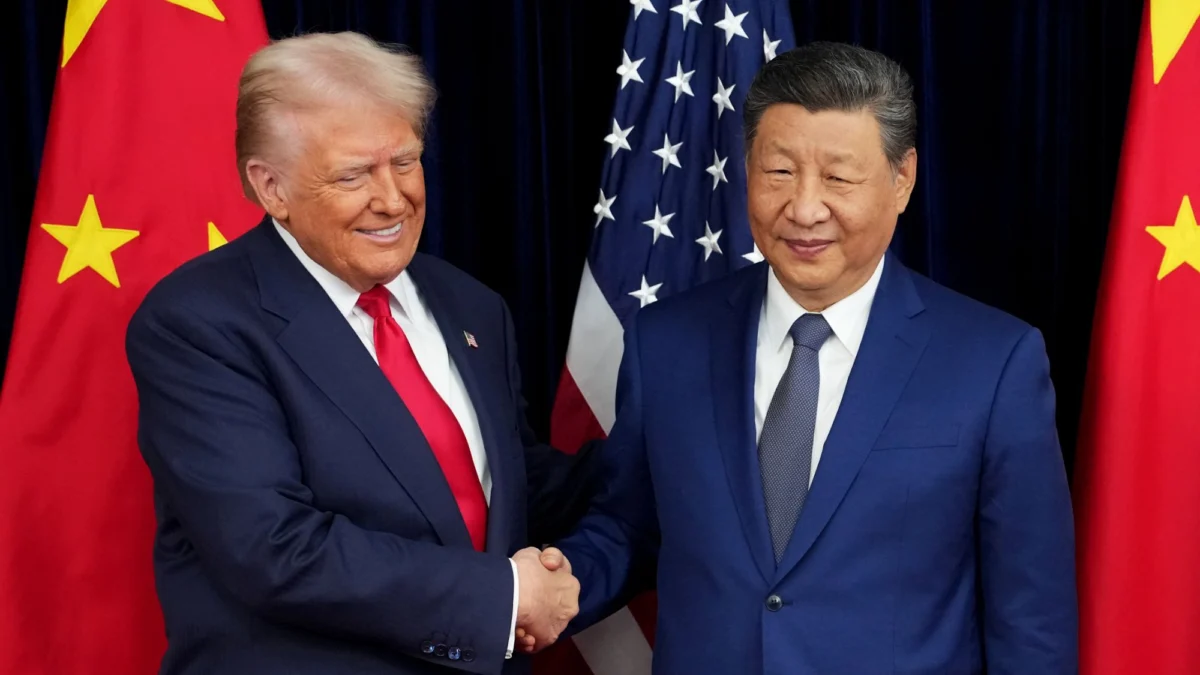
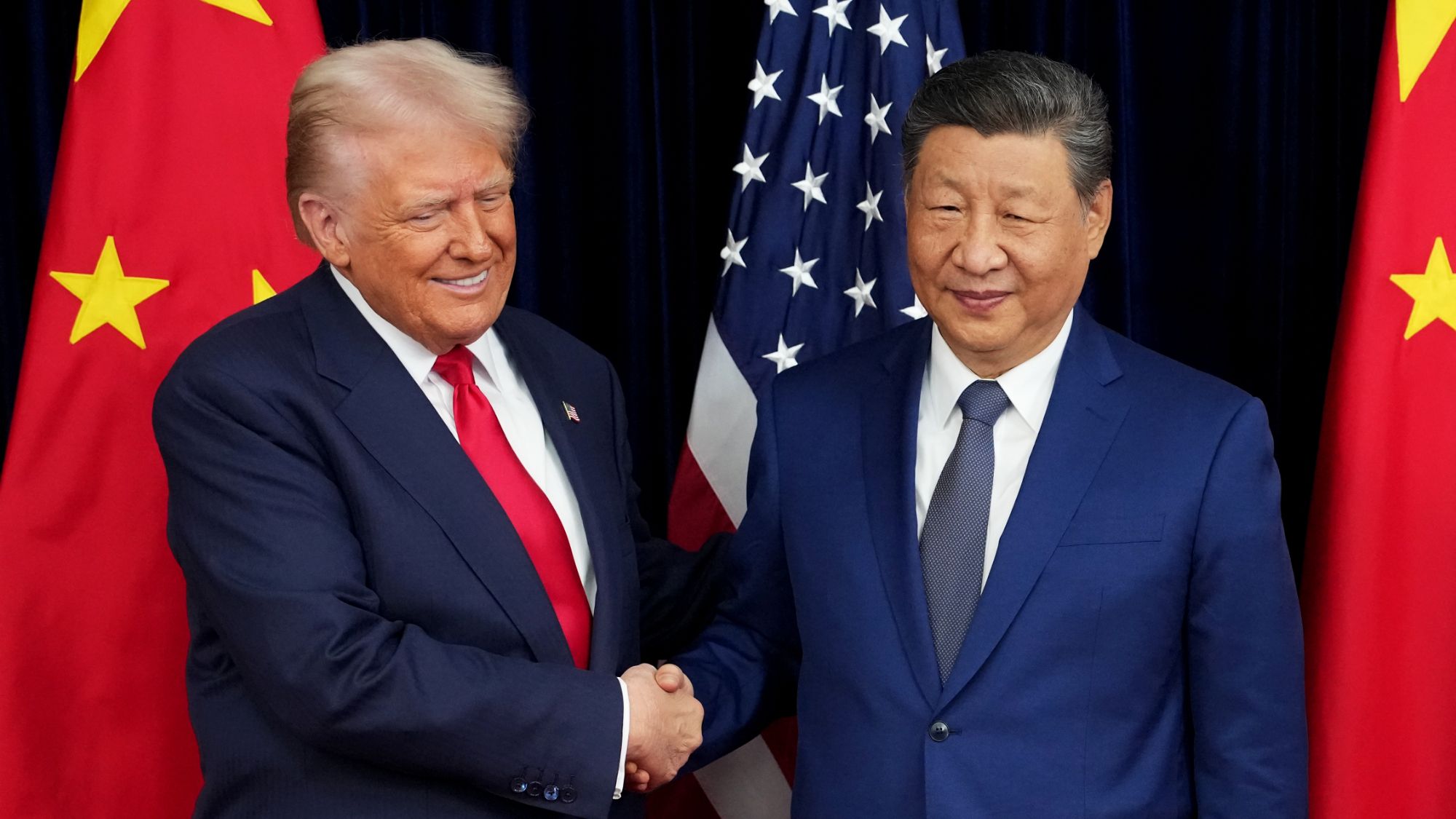
In a significant development that underscores a shift toward highly transactional foreign policy, President Donald Trump has publicly categorized a pending $14 billion arms package for Taiwan as a “very good negotiating chip” in his broader diplomatic engagement with China. The statement, delivered during an interview with Fox News while the President was in Beijing, signals a departure from traditional U.S. security commitments, positioning critical military support for the self-governing island as a fluid asset in the high-stakes theater of U.S.-China relations.
The arms package, which includes advanced PAC-3 MSE interceptors and NASAMS air defense systems, has been languishing in the executive branch since it received overwhelming bipartisan support from Congress in January. By confirming that he is holding the sale "in abeyance," President Trump has effectively linked the survival of Taiwan’s defensive capabilities to the fluctuating progress of his negotiations with Chinese President Xi Jinping.
The Chronology of a Stalled Deal
The current impasse is the culmination of months of legislative progress met with executive hesitation.
- January: The United States Congress officially approves a comprehensive $14 billion arms package for Taiwan. The package is designed to bolster Taiwan’s defensive perimeter against an increasingly assertive People’s Liberation Army (PLA), featuring high-end military hardware such as the Patriot Advanced Capability-3 (PAC-3) Missile Segment Enhancement (MSE) and the National Advanced Surface-to-Air Missile System (NASAMS).
- February – May: The package awaits the President’s signature. During this period, the White House maintains a public stance of routine review, though reports suggest internal friction regarding the potential impact of the sale on the U.S.-China trade agenda.
- Late May (The Beijing Summit): President Trump arrives in Beijing for a two-day summit with President Xi Jinping. Throughout the visit, the subject of Taiwan is reportedly a recurring theme in private deliberations.
- Friday (The Fox News Interview): Following the conclusion of the summit, President Trump speaks to Fox News, openly acknowledging that the arms deal is being used as leverage. He clarifies that while the sale has been vetted by Congress, he has intentionally refrained from finalizing it.
The Strategic Weight of the Arms Package
The weaponry at the heart of this controversy is not merely symbolic; it represents a critical component of Taiwan’s “porcupine strategy,” which focuses on asymmetric defense to deter potential mainland aggression.
PAC-3 MSE Interceptors
The Patriot Advanced Capability-3 (MSE) is the gold standard for intercepting tactical ballistic missiles. In the context of the Taiwan Strait, these systems are viewed as essential for neutralizing short-range ballistic missiles that the PLA could deploy in a blockade or invasion scenario.
NASAMS Air Defense Systems
The NASAMS is a highly versatile, network-centric air defense system. Its ability to integrate with existing radar networks makes it a vital tool for Taiwan to protect high-value assets and urban centers from cruise missiles and drone incursions.
By withholding these systems, the administration is effectively limiting Taiwan’s ability to upgrade its defensive posture, a move that military analysts argue could embolden regional adversaries.
Xi Jinping’s Red Line and the Beijing Summit
During the two-day summit in Beijing, President Xi Jinping reportedly adopted an uncompromising posture regarding Taiwan. Sources familiar with the discussions indicate that Xi identified the island as the “most important issue” in the bilateral relationship, explicitly warning that any move to deepen military ties between Washington and Taipei could lead to “clashes and even conflicts.”
President Trump’s remarks to reporters aboard Air Force One, noting that he and President Xi discussed the arms sales “in great detail,” suggest that the President is attempting to treat the arms package as a lever to extract concessions in other areas—most notably trade, intellectual property, and regional stability. However, this approach has drawn criticism from geopolitical observers who argue that security guarantees should not be treated as currency in a trade war.
Official Responses and Diplomatic Friction
The administration’s transactional approach has ignited a firestorm of debate within Washington.
Congressional Perspectives
Proponents of the arms sale in Congress have expressed deep concern. Legislators who shepherded the package through the House and Senate argue that the Taiwan Relations Act mandates that the U.S. provide Taiwan with the means to defend itself. To delay this based on negotiations with a third party, they contend, is a violation of the spirit, if not the letter, of long-standing U.S. policy.
The View from Taipei
While the government in Taipei has maintained a cautious tone to avoid further inflaming the situation, the implicit message from the White House—that Taiwan should "cool it a little bit"—has caused palpable anxiety. Taiwan’s leadership has long operated under the assumption that the U.S. security umbrella was a fixed variable. The suggestion that this umbrella is now contingent on the outcome of a trade negotiation creates a strategic vacuum that Taipei is ill-equipped to fill.
Beijing’s Strategic Calculation
For the Chinese Communist Party (CCP), the delay of the arms sale is a tactical victory. By making the arms sale a point of contention, Beijing has successfully inserted itself into the decision-making process of U.S. foreign policy toward Taiwan. This reinforces Beijing’s narrative that Taiwan is a domestic issue to be settled between the U.S. and China, rather than an independent partner of the United States.
Implications for the Future of Indo-Pacific Stability
The long-term implications of using arms sales as a “negotiating chip” are profound and potentially destabilizing.
The Erosion of Deterrence
The core of U.S. policy in the Pacific has traditionally been "strategic ambiguity," designed to prevent both sides from acting unilaterally. By signaling that the U.S. commitment to Taiwan is conditional, the Trump administration may inadvertently be dismantling the very deterrence it seeks to maintain. If Beijing perceives that the U.S. is willing to sacrifice Taiwan’s security for a favorable trade deal, the cost-benefit analysis for a military move against the island could shift in favor of the PLA.
A Precedent for Future Negotiations
If the $14 billion deal is eventually finalized in exchange for Chinese economic concessions, it sets a dangerous precedent. It establishes a roadmap for future administrations to barter away security partnerships in exchange for short-term economic gains. This would likely cause ripples throughout the Indo-Pacific, leading allies like Japan, South Korea, and the Philippines to question the reliability of the United States as a security guarantor.
The Risk of Miscalculation
Transactional diplomacy relies on the assumption that all parties are acting in good faith to reach a deal. However, in the realm of high-stakes geopolitical maneuvering, one party’s “negotiating chip” is another’s “existential threat.” By characterizing Taiwan as a "small island" compared to a "powerful country," President Trump’s rhetoric risks trivializing the security concerns of the 23 million people living in Taiwan, potentially creating a domestic backlash in the U.S. from those who prioritize human rights and democracy as pillars of American foreign policy.
Conclusion
The standoff over the $14 billion arms package is a defining moment for the current administration’s foreign policy. By moving away from ideological or values-based alliances toward a purely transactional model, the White House is fundamentally altering the architecture of U.S. power in the 21st century.
As the world watches the developments in Beijing, the fate of the PAC-3 and NASAMS systems remains a barometer for the future of the U.S.-China relationship. Whether this strategy results in a monumental breakthrough that secures U.S. economic interests or triggers a long-term erosion of regional stability remains to be seen. For now, the "negotiating chip" remains on the table, and the tension in the Taiwan Strait continues to mount.










No comments yet. Be the first to join the conversation!